Adapted from article originally published at Eat Wheat
Confusion around glyphosate (commonly known as Roundup) and its use in wheat farming has sparked concern among consumers. Is wheat “drenched” in chemicals, or pesticides, before harvest? Are glyphosate residues harming our health? Let’s separate fact from fiction.
What Is Glyphosate?
Glyphosate is a widely used herbicide that helps farmers control weeds. It’s been used for decades in crops like corn, soybeans and wheat. In wheat farming, it’s typically used to control weeds before the crop is planted or emerged. It is rarely applied before harvest and only under specific conditions.
How is Glyphosate Used in Growing Wheat?
There are four potential uses for glyphosate in wheat, with the first two listed as most common:
- Applications around the planting window before wheat emergence ensures minimal weed competition occurs throughout the growing season. This practice is most common in no-till systems.
- Fallow applications are made following harvest when no crop is present to keep weeds from using precious soil moisture. This is most commonly practiced in the Western United States and semi-arid wheat producing regions.
- Pre-harvest applications made after the wheat plant has shut down, when wheat kernel development is complete and the crop has matured. This is prior to harvest and used to dry green weeds and allow the crop to even its maturity. This is an uncommon treatment used in less than 3 percent of all wheat acres; however, it can be used to enable a harvest that would otherwise not be possible.
- “Crop destruct” applications are made to a growing wheat crop when weeds, insects, disease or adverse weather preclude the ability to produce a viable crop. This type of application is also applied to terminate cover crops which are planted to enhance soil health and provide environmental benefits for a pre-determined period between cash crops. These practices, of course, result in no harvestable grain.
Is Wheat Sprayed with Roundup Before Harvest?
Rarely and only under specific circumstances
Glyphosate may be used at the hard dough stage, when the wheat grain is fully mature and no longer absorbs nutrients or chemicals. In Texas, farmers would only use the practice to provide targeted control of excessive late-season weeds brought on by harvest delays due to wet weather. Without control, weeds may impact harvest quality and efficiency or completely prevent harvest.
Is It Safe?
Yes, when used properly and according to label instructions:
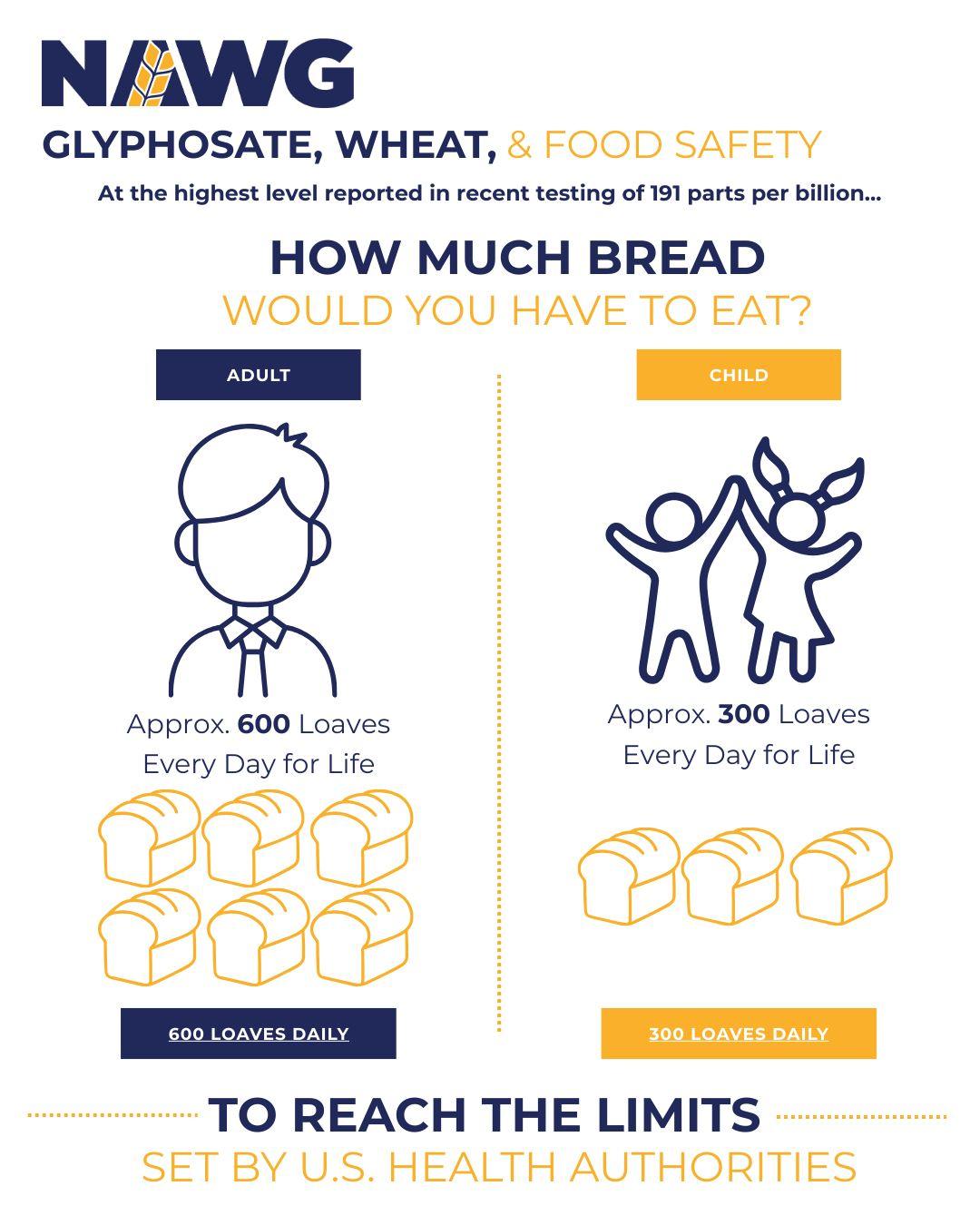
- The EPA sets strict residue limits for glyphosate in wheat (30 parts per million).
- Farmers must observe a minimum 7-day waiting period before harvest.
- Wheat kernels are protected by a natural husk called a glume, which is removed during processing and further reduces residue risk.
Myth #1: Wheat is drenched in glyphosate before harvest
Fact: Glyphosate is not routinely sprayed on wheat before harvest. In the U.S., especially in winter wheat regions like Kansas, Texas and Oklahoma, pre-harvest use is especially rare. When it is used, it’s applied only after the grain is fully mature and no longer absorbs chemicals and within other approved label guidelines.
Myth #2: Glyphosate enters the wheat grain and contaminates food
Fact: Mature wheat kernels are protected by a natural husk (the glume), which shields the grain from external substances. Residue testing consistently shows glyphosate levels in wheat are well below EPA safety thresholds.
Myth #3: Glyphosate causes gluten sensitivity or celiac disease
Fact: There’s no credible scientific evidence linking glyphosate to gluten-related disorders. Gluten sensitivity and celiac disease are autoimmune and digestive conditions unrelated to herbicide exposure.
Learn More
National Association of Wheat Growers
- Part 1: How Do Wheat Growers Use Glyphosate?
- Wheat growers primarily use glyphosate before planting or after harvest to control weeds, especially in no-till systems that help preserve soil moisture. Regulatory agencies worldwide have concluded that glyphosate, when used according to label directions, poses no unreasonable risk to human health or the environment.
- Part 2: Growing a Quality Wheat Crop with Glyphosate
- Wheat growers use glyphosate strategically to manage weeds and prevent diseases like wheat streak mosaic virus, which can severely impact crop quality and yield. Only a small percentage of U.S. wheat acres receive glyphosate pre-harvest treatment, and these applications occur after the crop has matured, ensuring grain safety and compliance with EPA residue limits.
- Part 3: How Does USDA Collect Farm Data?
- The USDA collects farm data on pesticide use, including glyphosate, through NASS, which surveys farmers about agronomic practices on a rotating schedule. These surveys focus on usage trends and quantities, not application timing, while other sources provide more detailed insights into when (before planting) and how glyphosate is applied across wheat acres.
- Part 4: Why Does USDA Collect Farm Data?
- The USDA collects farm data to support food safety, environmental protection and informed decision-making across agriculture, trade and conservation. By gathering confidential, voluntary input from farmers, the agency helps quantify benefits of practices like no-till farming and ensures accurate assessments of pesticide impacts.
- Part 5: Recap
- Glyphosate is used on roughly 30% of U.S. wheat acres, mostly before crop emergence, with pre-harvest applications limited to about 2% of acres and only after the wheat has fully matured. Studies show that glyphosate residues in harvested wheat remain well below EPA safety thresholds, supporting its responsible use in modern farming practices.
Oklahoma State University
Glyphosate Use as a Pre-Harvest Treatment: Not a Risk to Food Safety
Glyphosate is occasionally used as a pre-harvest treatment in wheat to manage late-season weeds and improve harvest efficiency, especially in wet conditions. When applied after the crop is fully mature and according to label guidelines, the grain remains protected by its husk, and residue levels stay well below EPA safety limits.
Kansas State University
The Truth about Roundup in Wheat
Roundup (glyphosate) is not routinely used as a pre-harvest treatment in U.S. winter wheat production; most applications occur before or shortly after planting to manage weeds. Experts confirm that claims of widespread pre-harvest spraying are misleading, and scientific evidence supports the safety of glyphosate when used according to label guidelines.
Food and Drug Administration
Questions and Answers on Glyphosate
Glyphosate is a herbicide that blocks a key enzyme in plant growth, and the EPA has set strict residue limits on food crops to ensure safety. The FDA monitors glyphosate residues in domestic and imported foods, consistently finding levels well below regulatory thresholds, with no evidence of risk when used according to label directions.
Final Thoughts
Wheat farmers are committed to growing safe, nutritious food. Glyphosate is one tool in their toolbox, used responsibly and only when needed. If you’re concerned about food safety, the best thing you can do is stay informed and ask questions grounded in science.