
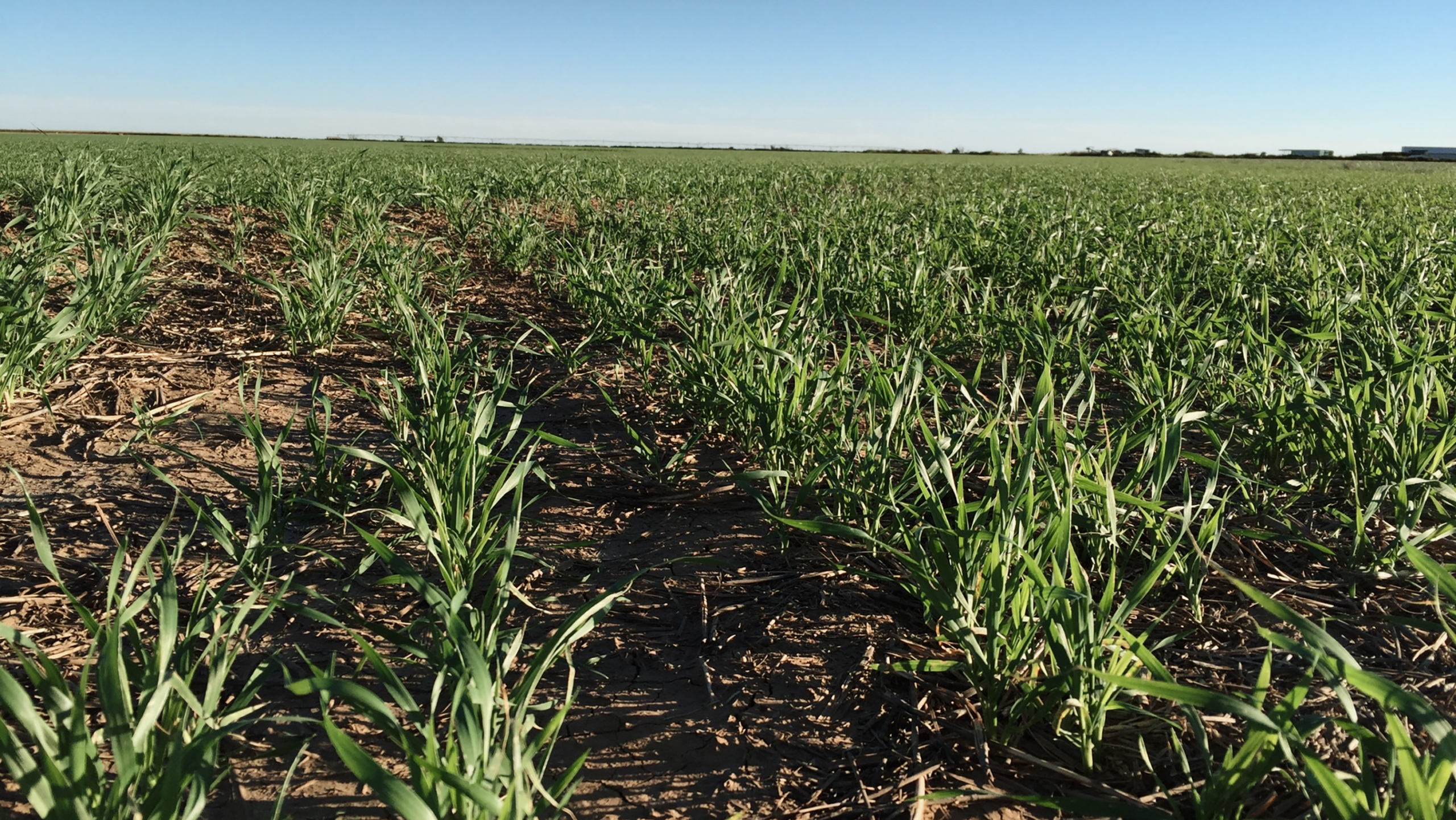
A major management decision for Texas wheat and other small grains, particularly when grown for grain, is determining when to apply mid-season nitrogen to maximize yield potential. Many Texas farmers only know that they should do so “at jointing,” but the reason behind that timing is often less clear. Jointing is identified by the onset of erect growth in the plant. It can be located by feeling the stem between your thumb and forefinger or by slicing the young stem to locate the first bump, or “BB” (Fig. 1). This will be no more than a few inches just above the soil line. The presence of this first joint indicates the stem has entered reproductive growth and that much of the field is beginning growing point differentiation (GPD). This is when the growing point switches from producing another leaf to reproductive growth—developing the head. Over the next 7 to 10 days the grain yield potential of that stem is being determined.
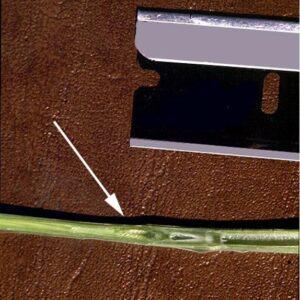
Fig. 1. A split wheat stem demonstrates the progression of physiological development. In the developing head (arrow) you can see the segmentation of developing spikelets which likely produce two and sometimes three grains. Just to the right is the bump or “BB” you can feel with your fingers or see in this split stem. A field of wheat stems like this ideally would have received topdress nitrogen into the root zone (with needed rain or irrigation) at least 7 to 10 days ago to have the maximum potential benefit. (Photo: Billy Warrick/Travis Miller.)
Adequate nitrogen, and in dry conditions, timely irrigation when available, are the two main active management decisions in setting a higher yield potential. How the cropping season progresses for weather and further moisture, heat, insects, and disease will determine how much of that yield potential is achieved.
Initial GPD and jointing across Texas ranges from early February in the Coastal Bend and South Texas to approximately March 10 at the top of the Texas Panhandle. Farmers and crop consultants should begin checking for jointing about two weeks ahead of anticipated jointing. Weather conditions and maturity differences among varieties can vary jointing by ±7 to 10 days. My personal tip to timing of topdress N is “It is better to be early rather than late.” Fields that do not have adequate N nutrition at jointing still need applied N due to the crop’s total N requirement, but this later-applied N will have less impact on yield.
Resources for Teaching and Timing of Topdress N in Texas Small Grains
Two AgriLife Extension documents explain in greater detail key considerations for understanding wheat growth and development as well as nitrogen management. Both are in the “Production Practices” link at https://varietytesting.tamu.edu/smallgrains/
• Growth Stages of Wheat: Identification and Understanding Crop Management. Travis Miller, TAMU Soil & Crop Sciences-1999-16.
• Nitrogen – Topdress N for Wheat (‘Nitrogen and Texas Wheat Grain Production—Topdress N Timing is Critical: Twelve Common Grower Questions about N for Wheat Grain’). Calvin Trostle & Jake Mowrer (2023).
This Extension Education Tip is provided by Dr. Calvin Trostle, Texas A&M AgriLife Extension Agronomist, Lubbock, (806) 777-0247, ctrostle@ag.tamu.edu