This Extension Education Tip is provided by Dr. Jourdan Bell, Texas A&M AgriLife Extension Agronomist, Amarillo, (806) 341-8925, jourdan.bell@ag.tamu.edu
Wheat is a premium forage that allows producers to diversify wheat production systems and optimize economic returns. However, a critical trade-off exists between forage yield and nutritive value. Producers must consider livestock class requirements, market prices, and system economics. When making this decision, producers usually consider between two harvest stages: boot and soft dough (Fig. 1).
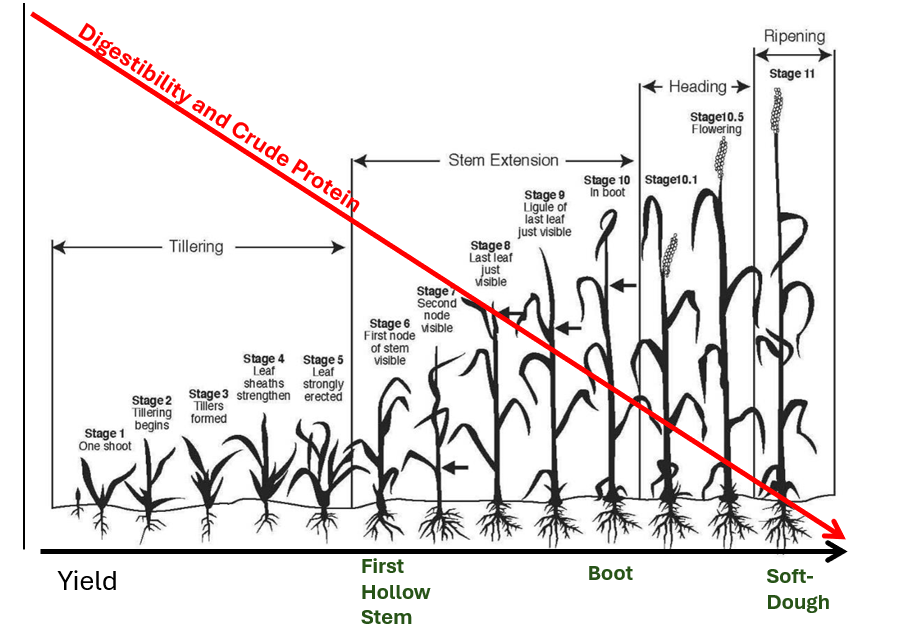
Fig. 1. Depiction of increasing yield with decreasing digestibility and crude protein (Image Source modified version of Large, E.C., 1954. Growth Stages in Cereals.)
Primary Harvest Stages
Boot: The head is developed but remains enclosed within the flag leaf sheath.
Soft-Dough: The grain has reached maximum size and contains a milky/doughy starch.
Moisture and Harvest Method
Moisture content is a primary driver of harvest method and cost. Forage packed in bunkers, piles, or bags requires a moisture level of 65% to 70%.
- Early Harvest: Forage harvested before the soft-dough stage has elevated moisture (>80%). This requires multi-step harvesting (cutting and wilting), which increases labor and equipment costs.
- Direct-Cut: Natural dry-down allows for single-pass harvests significantly reducing expenses.
Economic and Environmental Considerations
Because producers are rarely paid a premium for forage nutritive value, harvesting at soft-dough to maximize yield is often the default to maximize economic return. However, water plays a massive role.
- Water Conservation: Texas High Plains research shows harvesting at boot uses 43% to 70% less water under dryland and irrigated conditions, respectively, than harvesting at soft-dough.
- Heat Stress: Water use spikes rapidly after heading. Late spring heat drives crop water demand. Harvesting early preserves yield and nutritive value. This can prevent a loss in total tonnage if there is insufficient irrigation capacity or timely rainfall to meet crop water demand.
Ultimately, producers should choose Boot Stage for premium quality and water savings. Choose Soft-Dough for maximum tonnage and starch-driven energy.
Additional Data
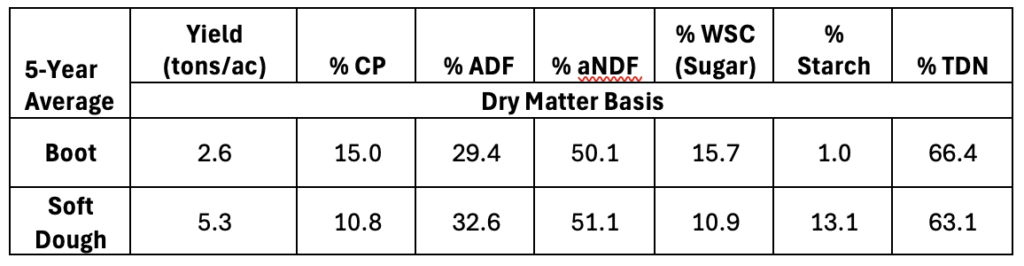
Table 1. Comparative data representing a 5-Year Average (2019-2022 and 2024) of wheat forage yield and nutritive value parameters at boot and soft-dough from Texas A&M AgriLife Small Grain Silage Trials (Bell et al., 2024). Lab analyses represent forage nutritive value and thus potential at harvest. To determine as-fed feed value, laboratory analyses should be conducted prior to feeding.
Nutritive Value Definitions:
- Crude Protein (CP): Total protein content. Higher CP can influence an animal’s ability to gain weight and produce milk.
- Acid Detergent Fiber (ADF): Cellulose and lignin; higher levels generally indicate low quality forage with lower energy.
- Neutral Detergent Fiber (aNDF): Total insoluble cell wall fraction of plants; a lower a NDF indicates lower lignification and greater digestibility.
- Water Soluble Carbohydrates (WSC): These simple sugars (fructose, glucose, and sucrose) are a rapidly digestible energy source. However, WSC decrease during ensiling because they serve as energy for bacteria during fermentation. They also decrease during hay curing.
- Starch: Starch contents can provide an indication of forage maturity and overall forage energy potential.
- Total Digestible Nutrients (TDN ): Total Digestible Nutrients provides an index of energy concentration.