
Wheat has long been tied to the foundation of Texas agriculture. While images of cattle, cowboys or cotton may be more culturally synonymous with Texas’s agricultural identity, wheat production plays a central role in the state’s agricultural industry. Every year, Texas wheat farmers plant millions of acres that help feed families and support livestock production.
Whether wheat will be harvested for grain and made into flour or used as feed and forage for the livestock and dairy industries, Texas wheat remains one of the state’s most versatile and economically important crops.
Where Wheat is Grown
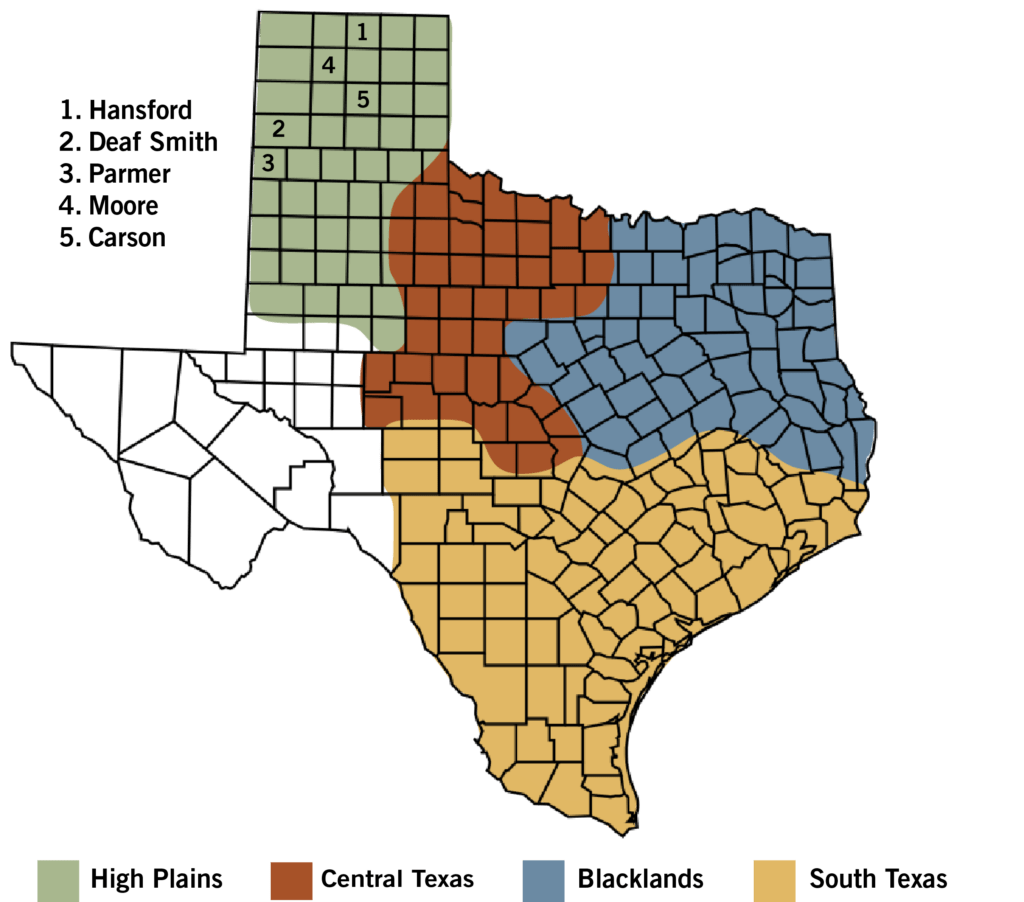
As a cool-season grass, wheat requires certain growing conditions to thrive. Because of this, wheat is primarily grown in the following regions:
- High Plains
- Rolling Plains
- Blacklands
- South Texas
The High Plains, and more specifically the Panhandle region, leads the state in wheat production. According to USDA National Agricultural Statistics Service (NASS), the top-producing counties in 2025 were:
- Hansford
- Deaf Smith
- Parmer
- Moore
- Carson
Types of Wheat
Texas primarily produces two classes of winter wheat, which is planted in the fall and harvested in the summer.
Hard Red Winter Wheat
Roughly 85% of the wheat produced in Texas is Hard Red Winter (HRW) wheat. Known for its high protein content and excellent milling and baking qualities, HRW wheat is commonly milled into all-purpose flour and used for a wide variety of baked goods. Its higher protein concentration also makes it well suited for livestock feed.
Soft Red Winter Wheat
Approximately 10% of the state’s wheat crop is Soft Red Winter (SRW) wheat, which is primarily grown in the Blacklands region. This class’s lower protein content and gluten strength make it ideal for cookies, crackers, cakes, pastries and some blended flours.
The remaining wheat acres are a mix of classes. Some growers in South Texas produce Hard Red Spring wheat, which is used for artisan and hearth breads, bagels, pizza crust, rolls and blended flours due to its high protein content and strong gluten levels. While production is limited across the state, most Hard White wheat goes to specialty markets, such as direct-to-consumer or contract sales. Learn more about the different types of wheat here.
Production Trends
Weather, market conditions and producer decisions influence wheat acreage each year. Over the past decade, Texas farmers have averaged:
| Production Measure | Ten-Year Average |
| Acres Planted | 5.2 million acres |
| Acres Harvested | 2.1 million acres |
| Bushels Produced | 70 million bushels |
| Average Yield | 33 bushels per acre |
When compared to other wheat-producing states, Texas ranked third in the number of acres planted and seventh in bushels produced based on the 2025 crop.
Uses of Texas Wheat
One of the greatest strengths of Texas wheat is its versatility. Approximately 40% of the wheat acres planted in Texas will be harvested for grain. This wheat will be turned into flour in mills throughout the U.S. and around the globe. From there, food manufacturers, commercial bakeries or home bakers will use this flour to produce high-quality, delicious and nutritious wheat-based products.
The same nutrients humans receive from flour and wheat-based products also offer high-quality nutrition to livestock, particularly beef and dairy cattle. Depending on the growing conditions, some acres may be lost to unfavorable weather. The remaining acreage not harvested for grain can be used as a cover crop to provide soil health and environmental benefits, grazed by livestock or harvested as hay or silage.
Wheat Exports
Roughly half of the wheat produced in the U.S. will be bound for international markets. The following countries ranked in the top importers in the the 2025/2026 marketing year:
- Mexico
- Phillipines
- Japan
- South Korea
- Nigeria
Texas plays an important role in meeting global wheat demand. Based on 2024 ERS analysis, Texas wheat accounted for $187.5 million in export market value. Learn more about the 25/26 marketing year and top export destinations in this article.
Why Texas Wheat Matters
From cattle grazing on wheat pasture to bags of flour at local grocery stores, Texas wheat plays a critical role in the U.S. and world’s food systems. Wheat supports farm families, strengthens local economies, provides nutritious food for people and livestock and connects Texas agriculture to consumers across the globe.
Learn More About Texas Wheat
Download the Texas Wheat Fact Sheet to explore production regions, wheat classes, end uses and industry statistics.
Learn More