
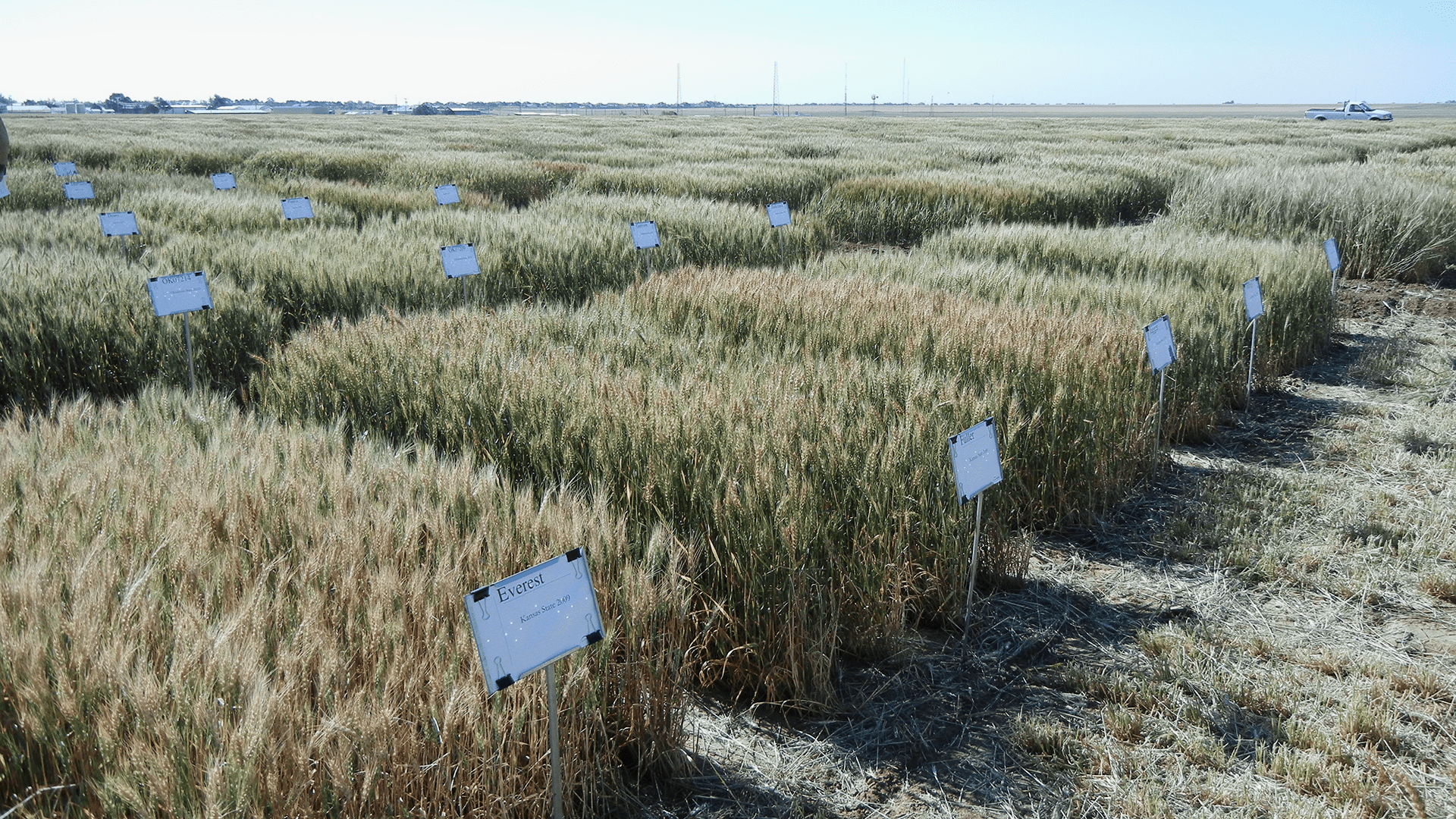
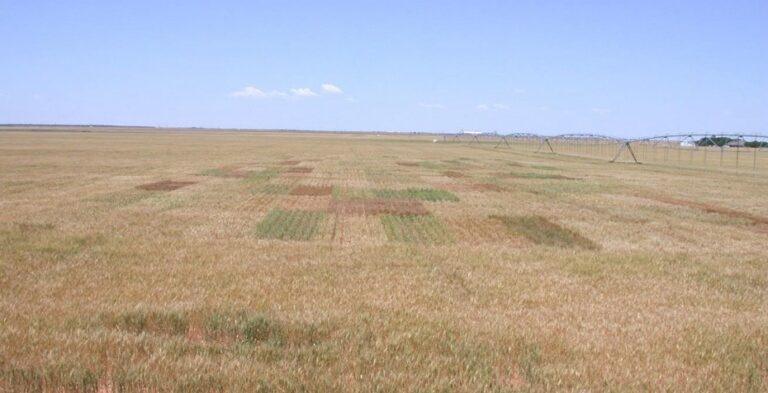
The Texas Wheat Producers Board is a strong supporter of many Texas A&M AgriLife Research projects, including the statewide variety trials. These variety trials routinely involve the analysis and comparison of varieties planted in 100 sq. foot plots. While small plot research is more common for the evaluation of established varieties, Texas A&M AgriLife wheat breeders may use a single row when observing thousands of genetic lines. Small plot research remains a key tool for AgriLife work in wheat.
A common misconception among farmers may be “I just don’t trust small plots.”
I have heard this type of skepticism many times from farmers about whether small plots provide reliable information from such a small area. The idea in many farmers’ minds is a good test runs through the field from one end to the other. However, the science behind small-plot research and demonstration can be beneficial when evaluating wheat and other crops. AgriLife personnel are trained in these small-plot set-ups to ensure the soundness of the research being conducted.
Key benefits of small-plot research include:
- Minimizing the influence of external factors like water status, slope, and soil type on trial results by testing in a more compact area.
- Allowing more varietal comparison than large plots or a strip trial across a field.
- Remaining more cost-effective than larger plots or strip trials in labor, inputs and replication.
- Maximizing efficiency and resources. The trial shown above included 32 varieties and only took one hour to plant thanks to proper equipment and planning.
- Allowing for replication. Small plots can easily be replicated three or four times per variety or treatment. This enables statistical comparisons to identify meaningful differences in measure parameters like yield, pest resistance, grain quality, etc. sometimes across multiple locations.
Some researchers do use larger strip trials for data. However, replication is still important to conduct a meaningful statistical analysis. As a result, single strip trials through a field evaluating a variety or fertility treatment is not scientific. While it may be useful for a demonstration of a particular visual wheat trait, unreplicated strip trials lack scientific rigor and should be considered a less reliable source.
Bottom Line: Small-plot research is essential to advancing Texas wheat.
While it’s understandable that some may be skeptical of the small-plot research process, this type of research continues to advance the wheat industry. Research and demonstrations that are properly designed and implemented can provide more reliable results and often earlier in the development of new genetics. AgriLife personnel have thorough training in both setting up small-plot trials and properly analyzing the results. Due to the extensive small-plot research conducted, AgriLife is more efficient and able to provide reliable, research-based results for farmers to implement on their operations at a larger scale.
This Extension Education Tip is provided by Dr. Calvin Trostle, Texas A&M AgriLife Extension Agronomist, Lubbock, (806) 777-0247, ctrostle@ag.tamu.edu