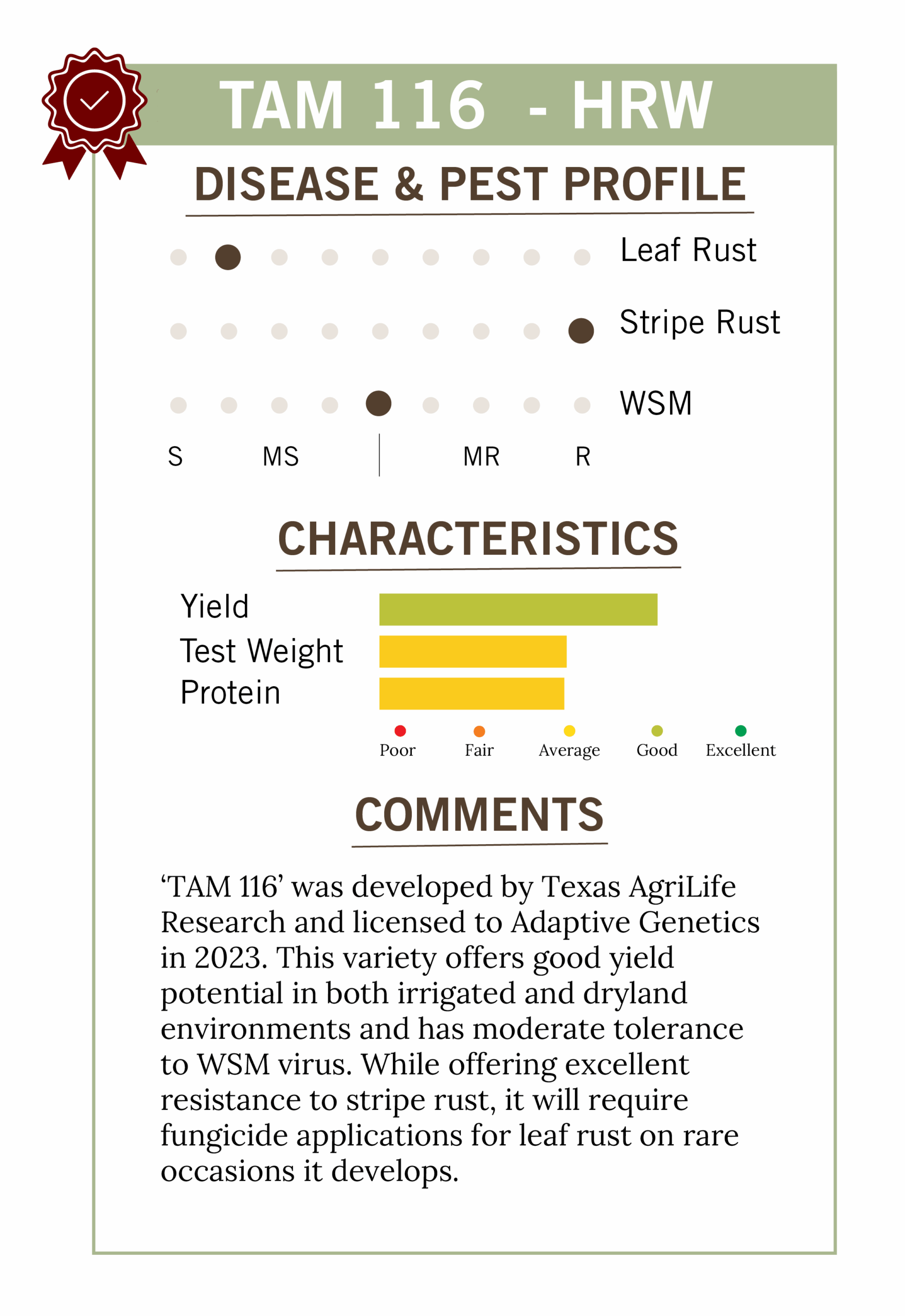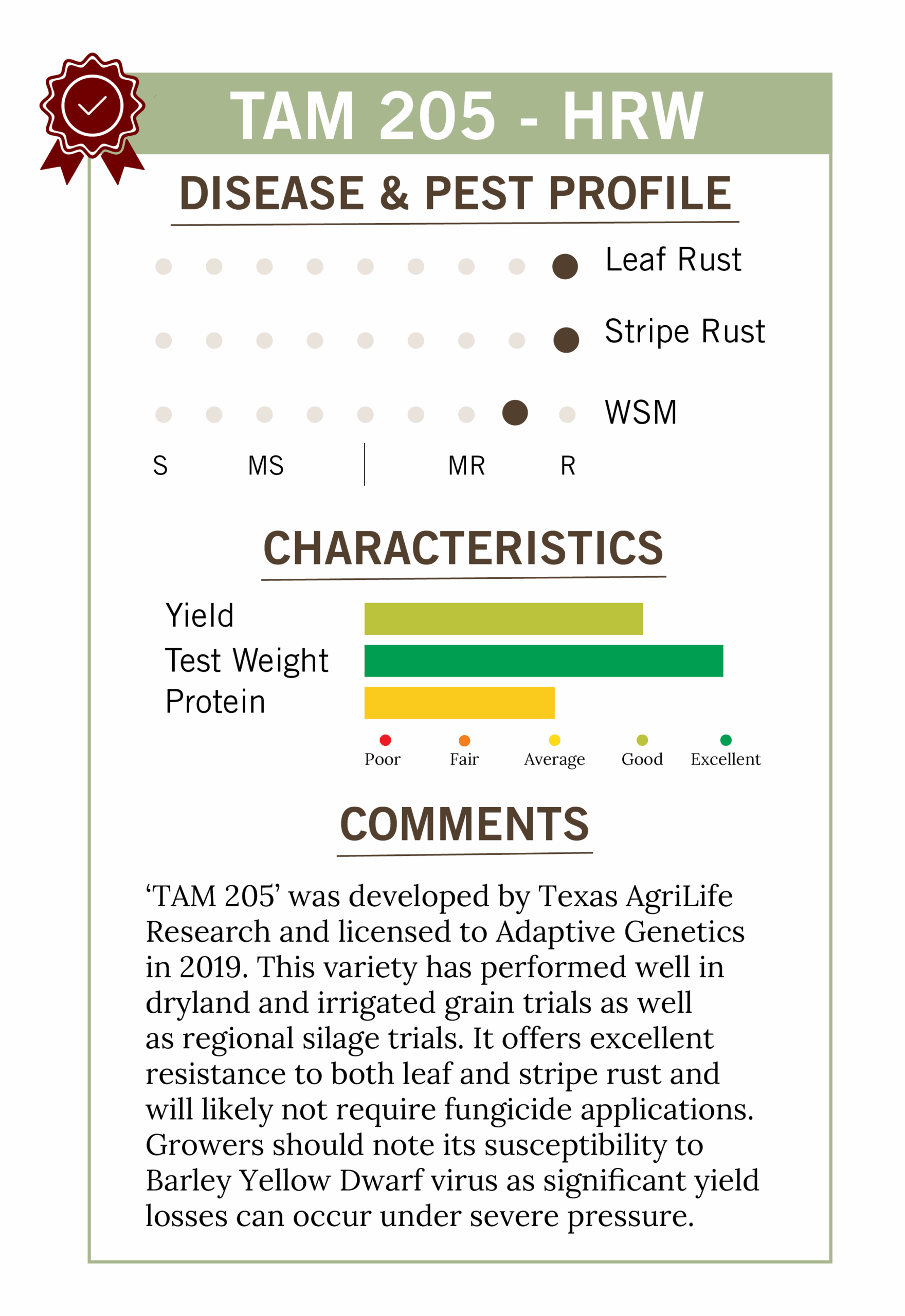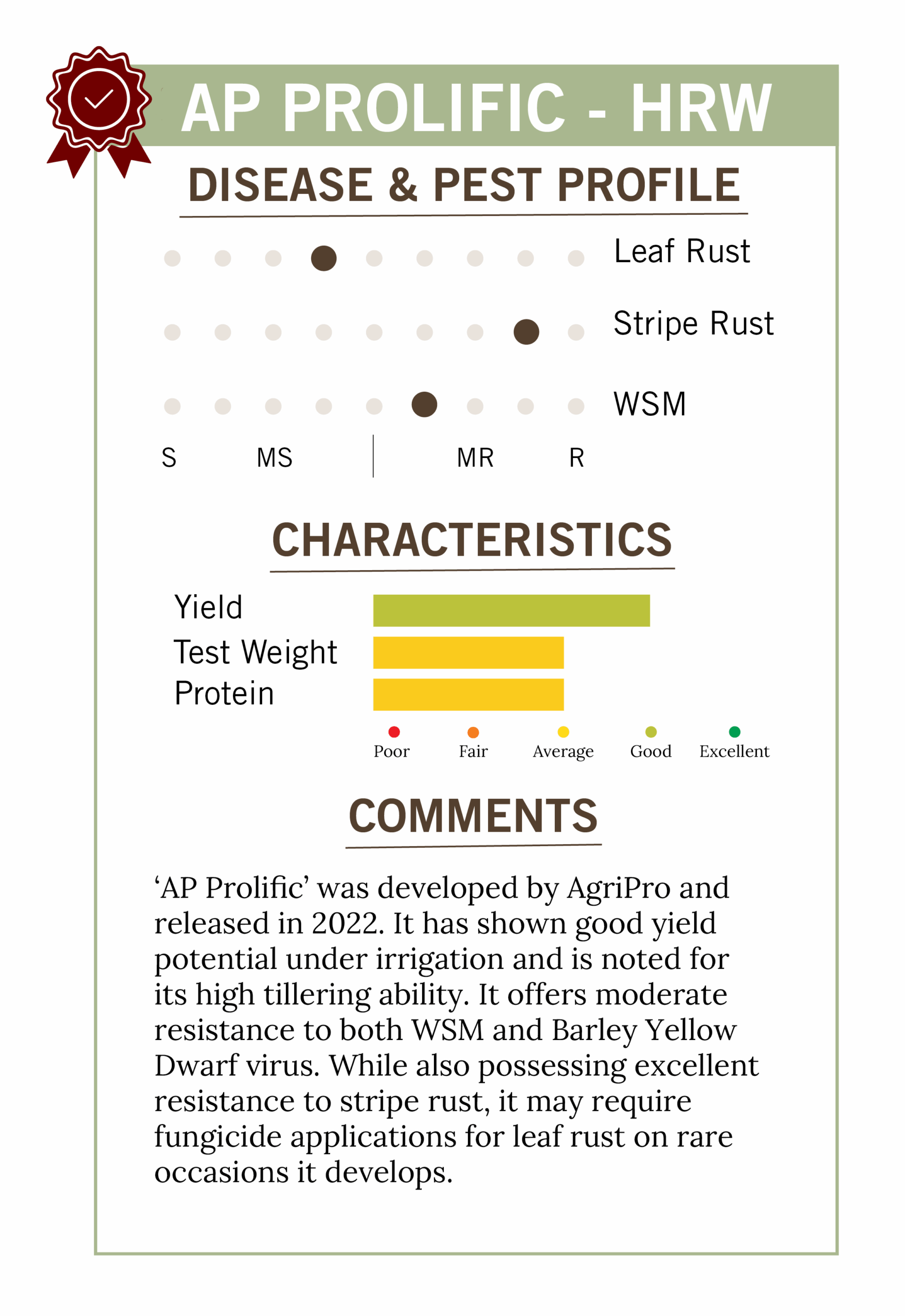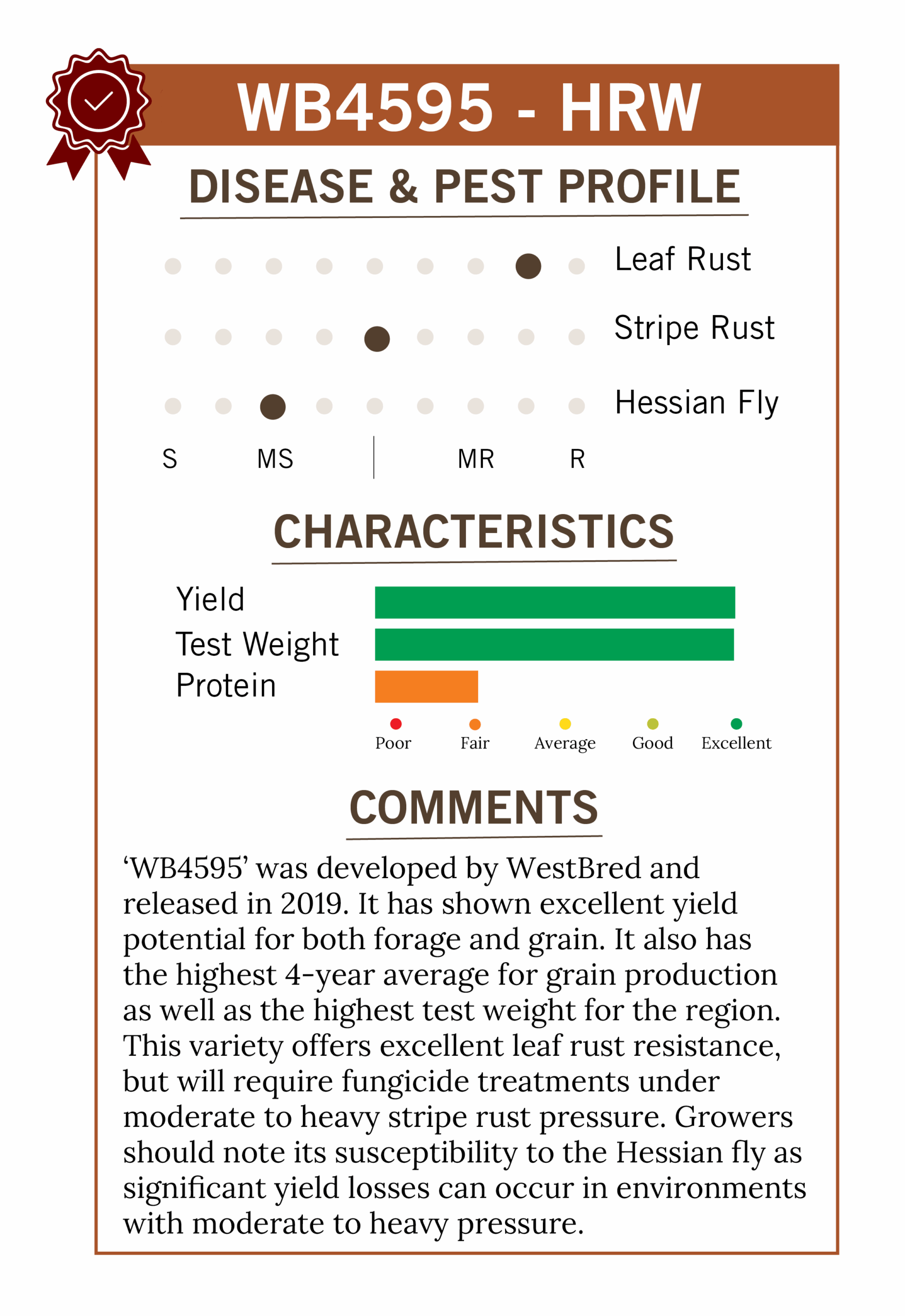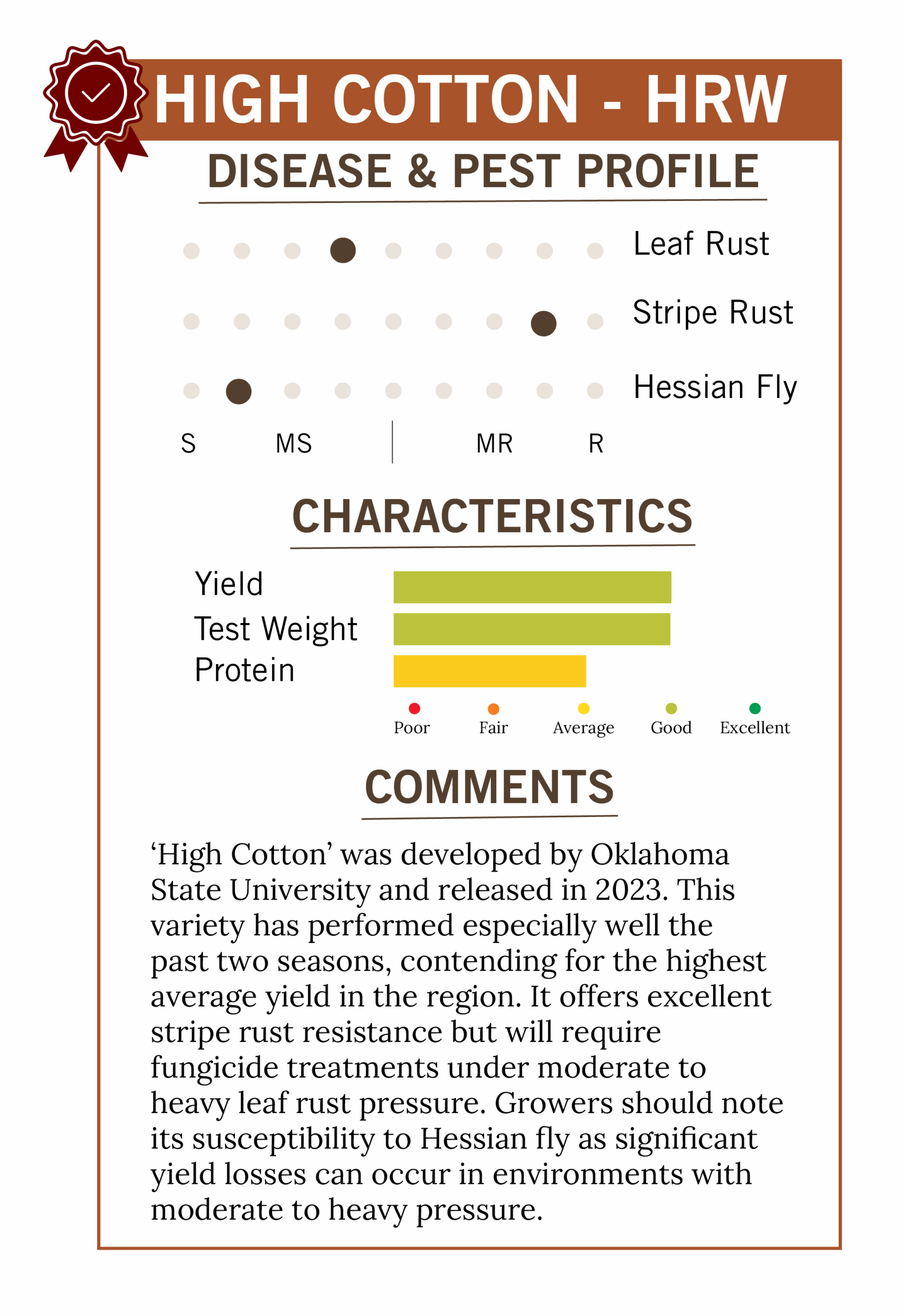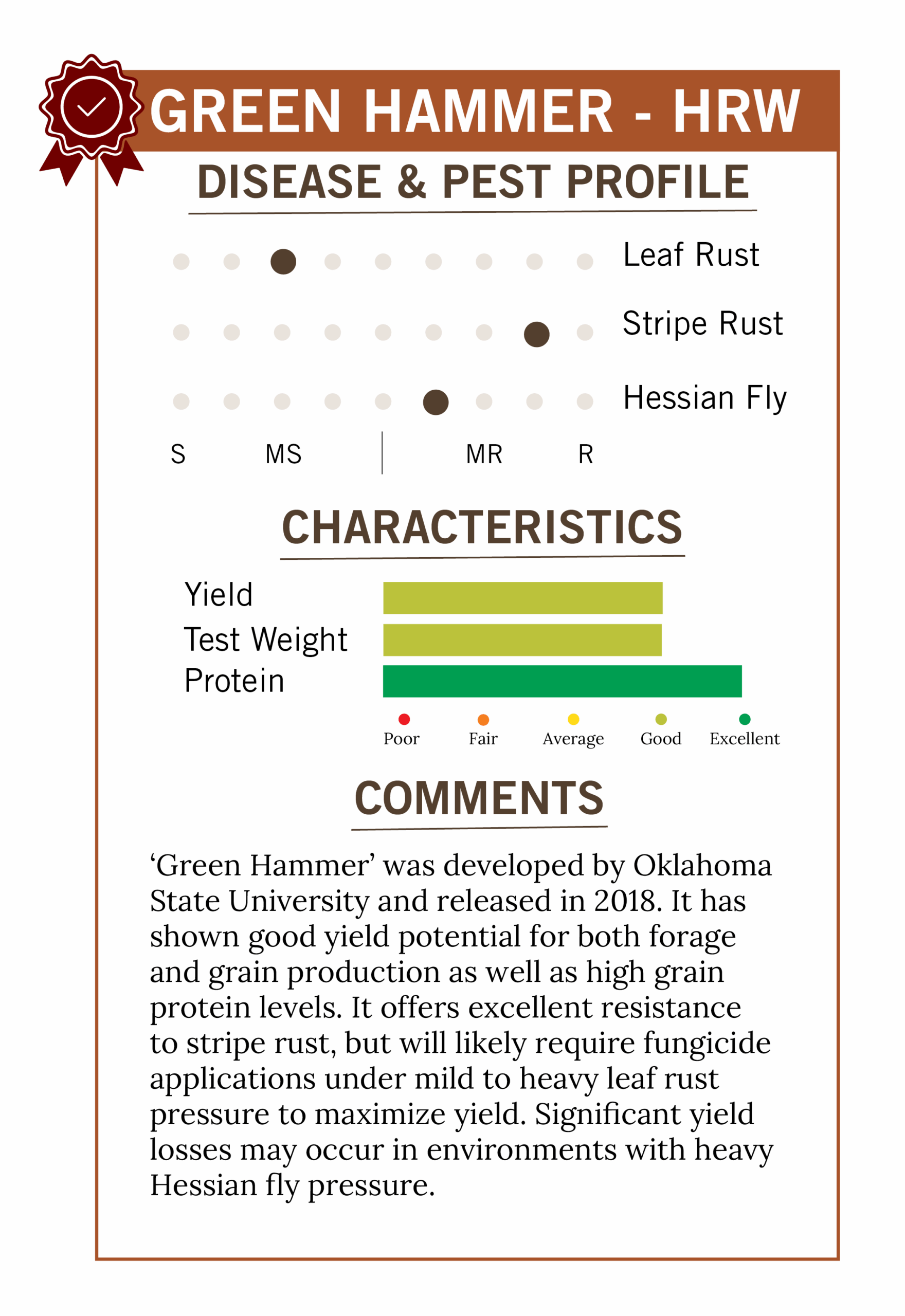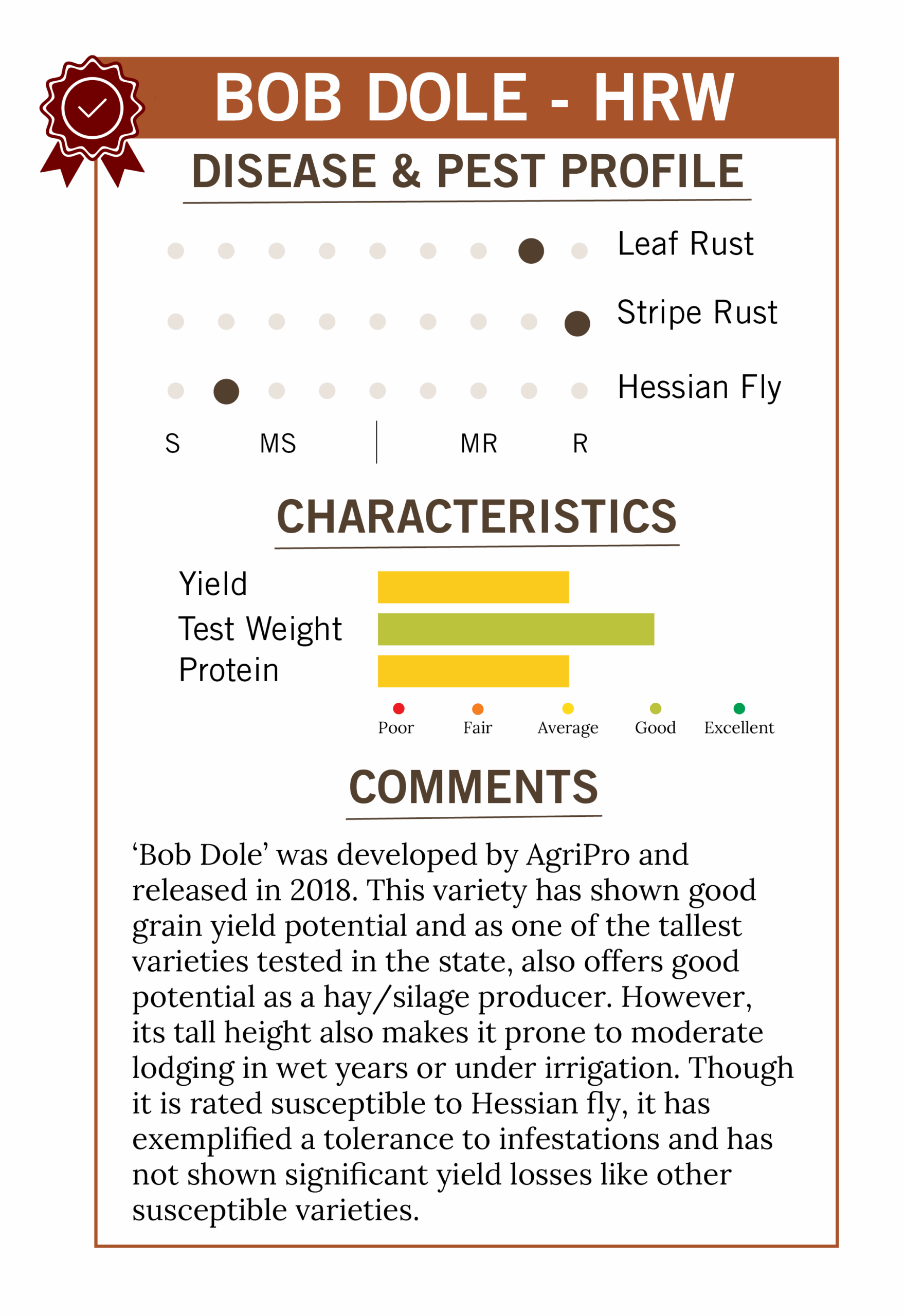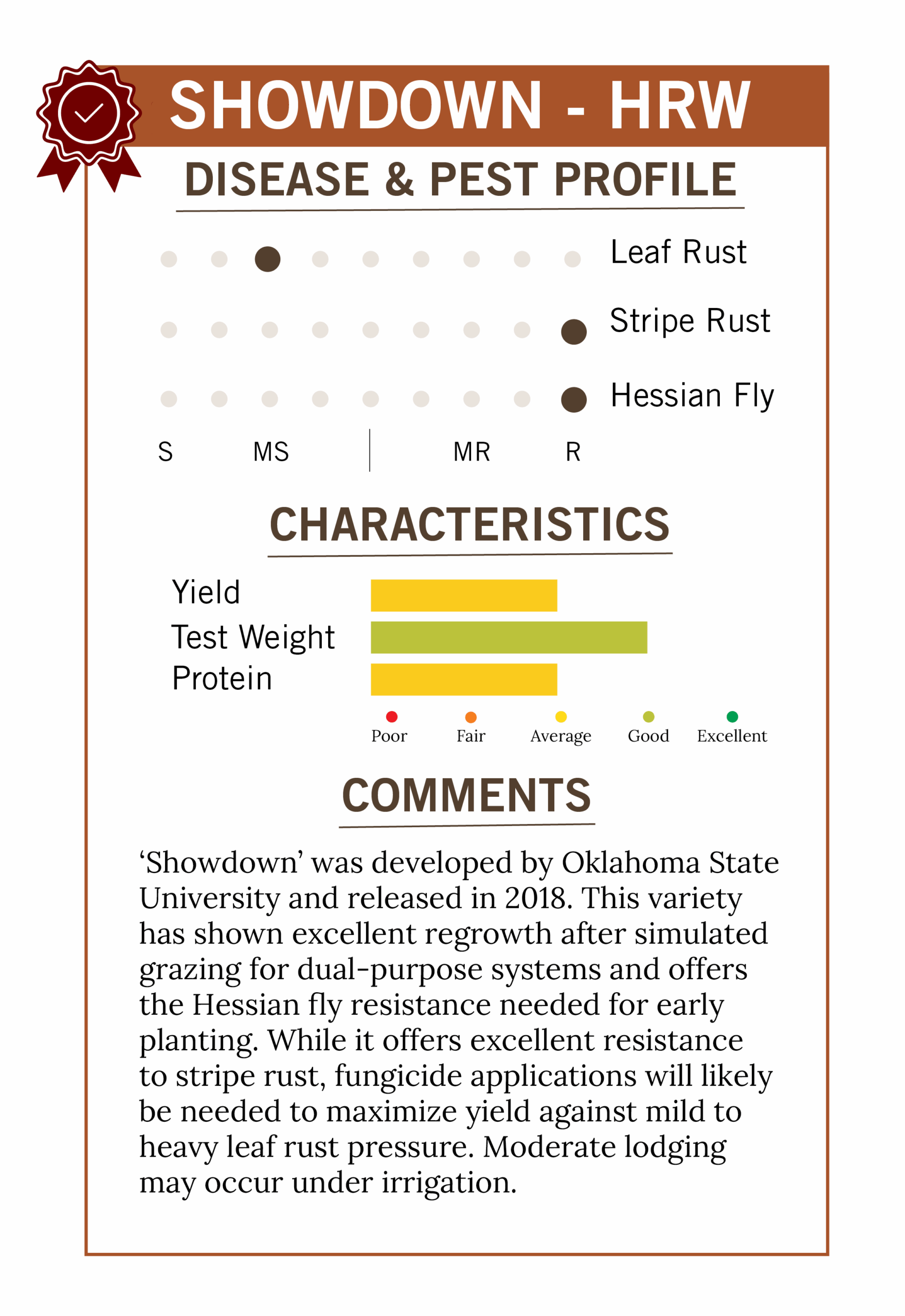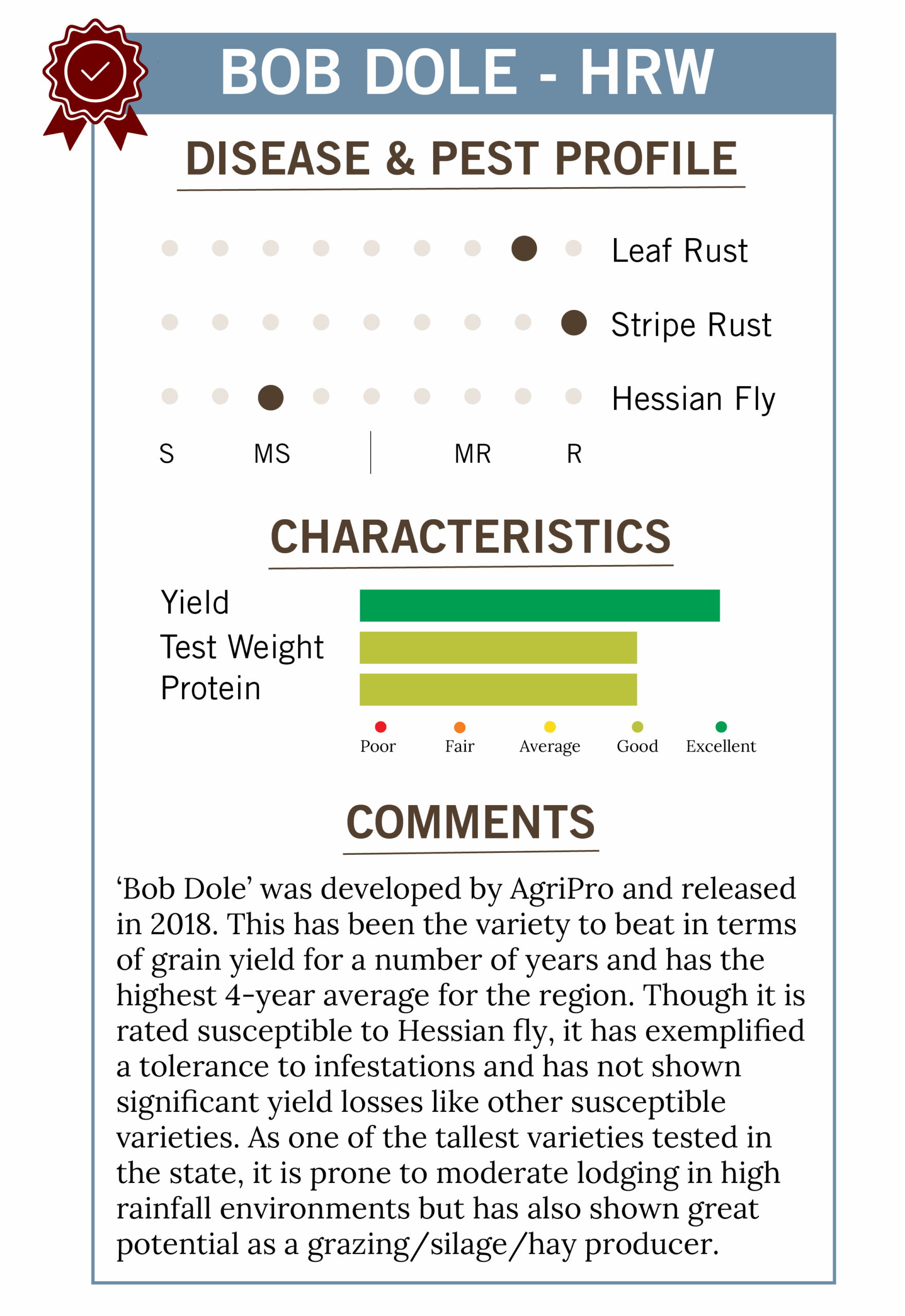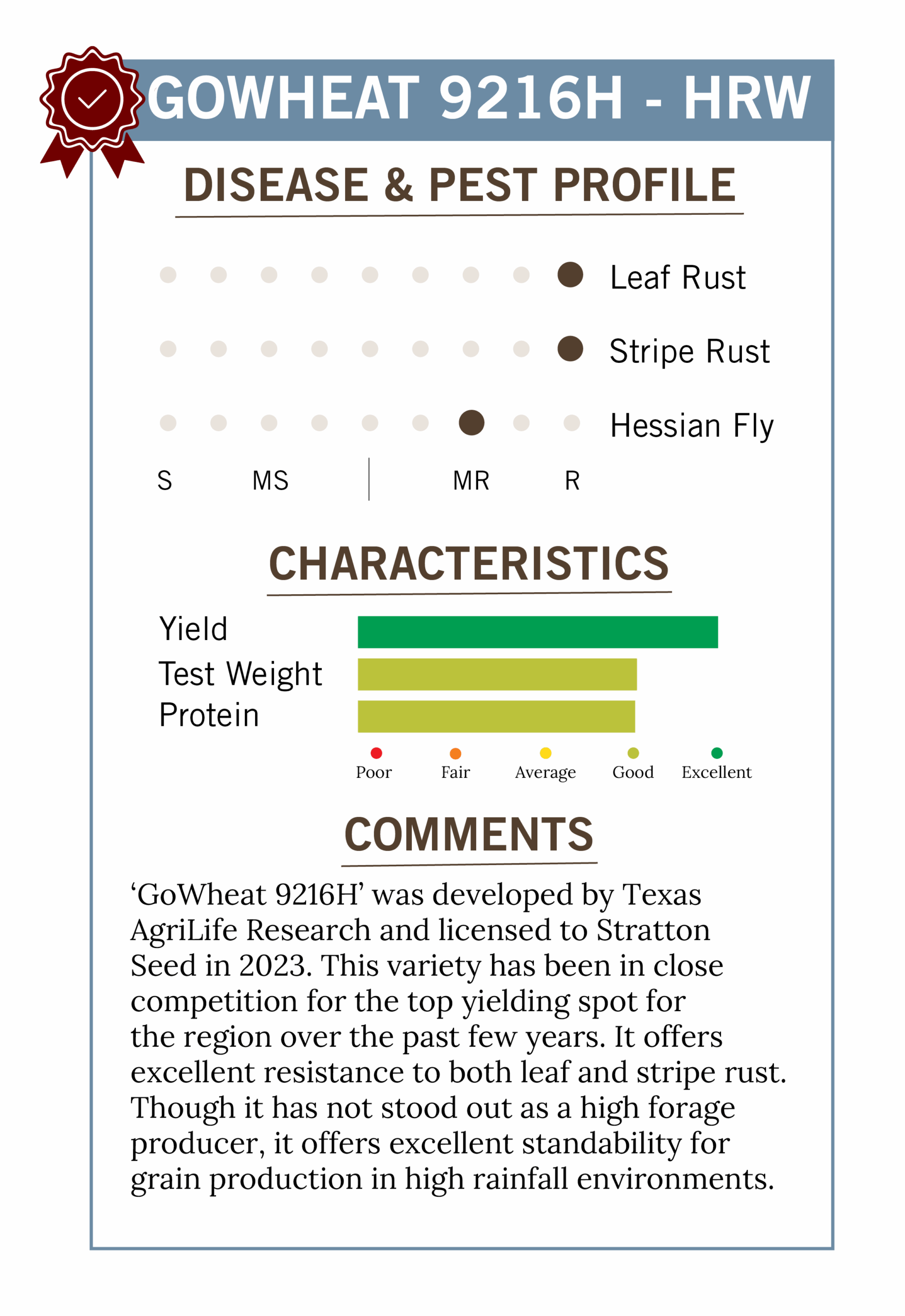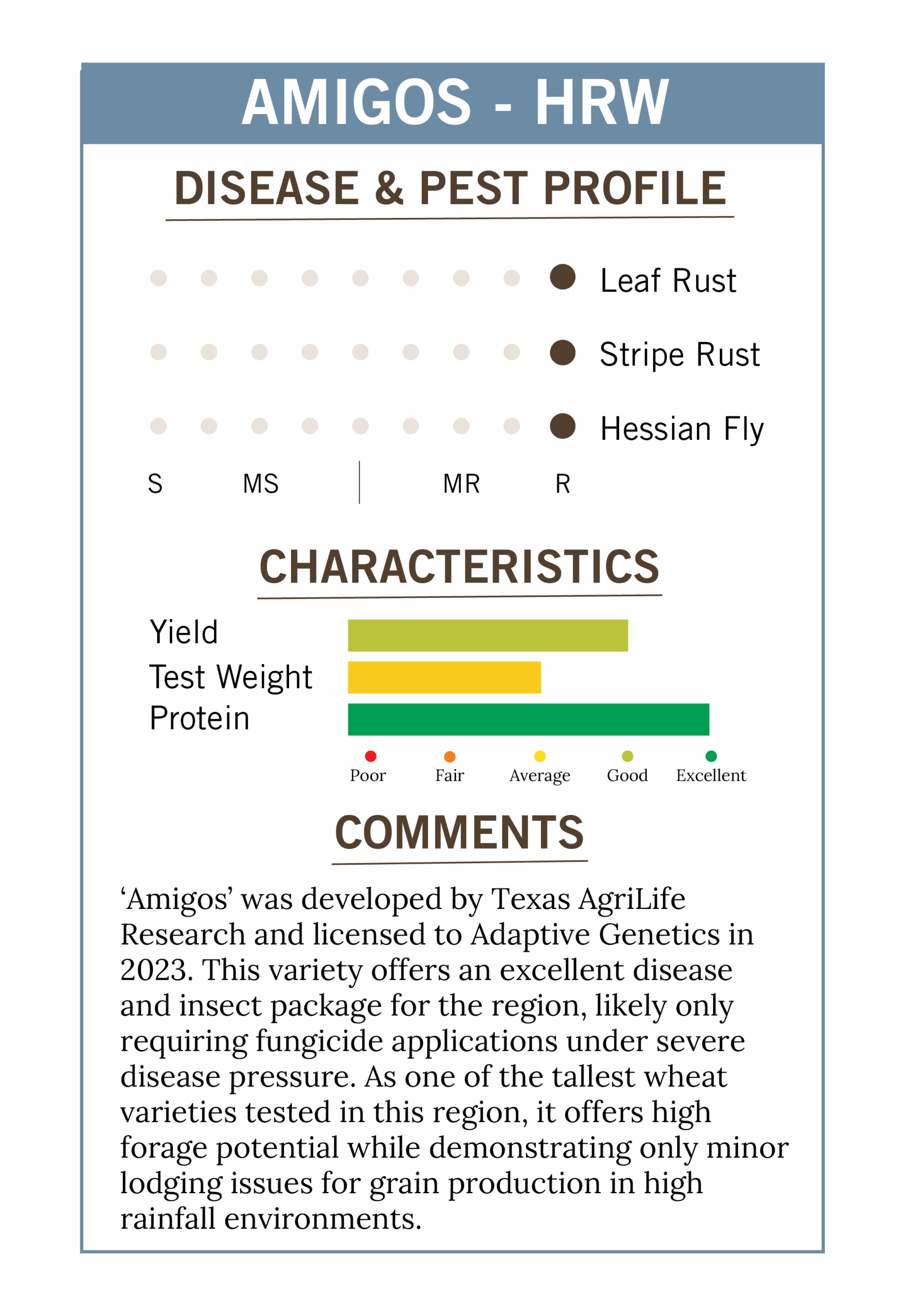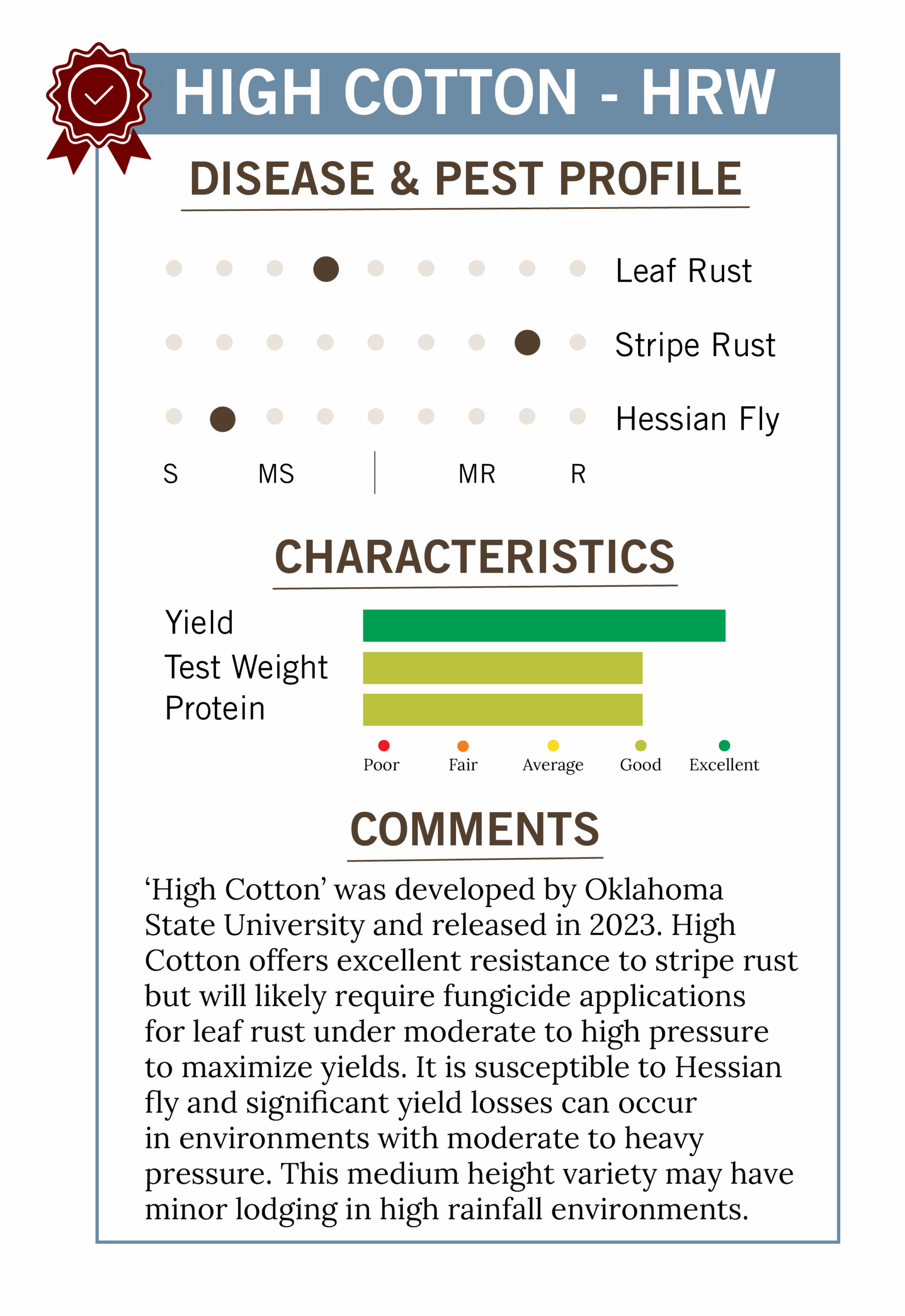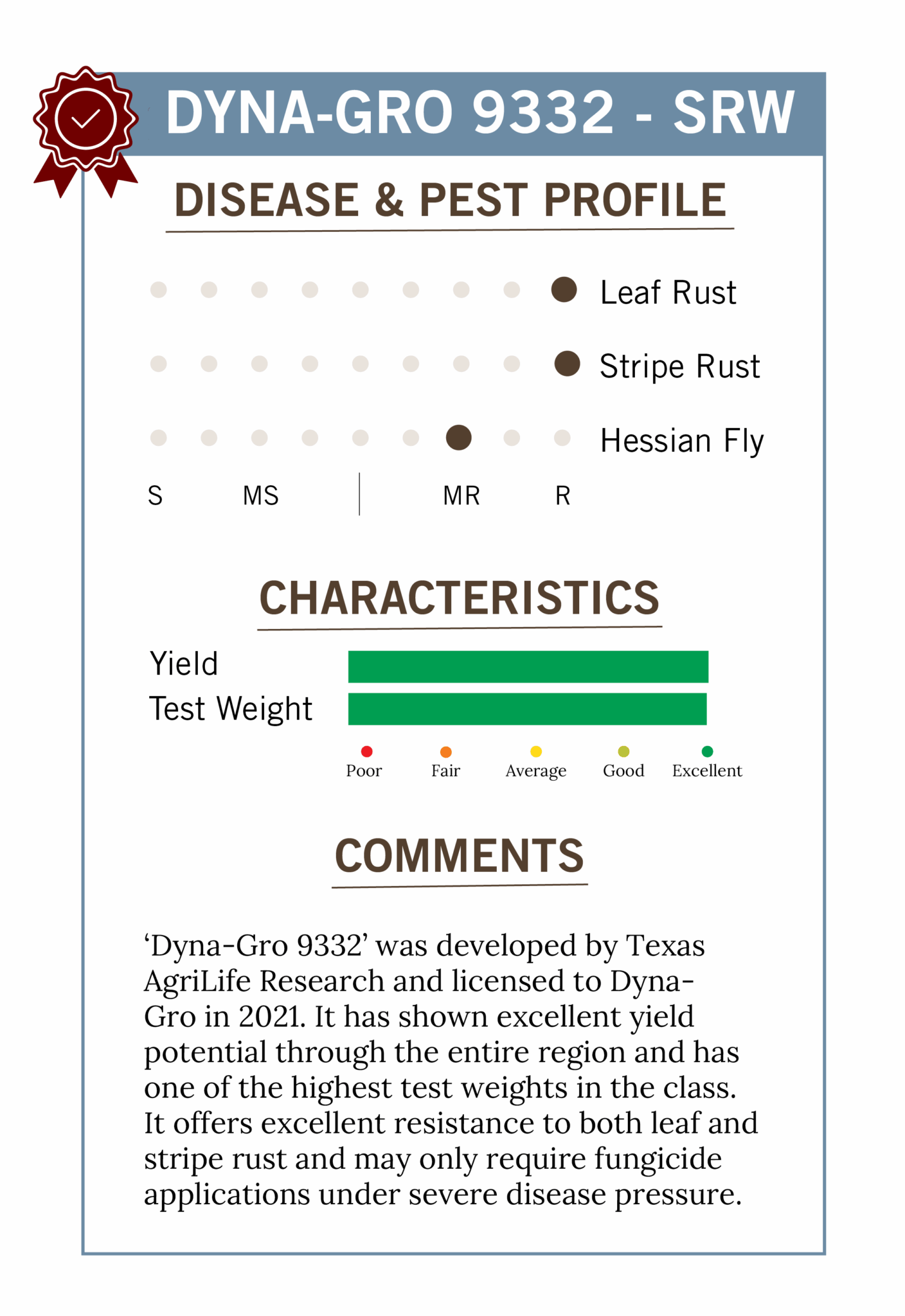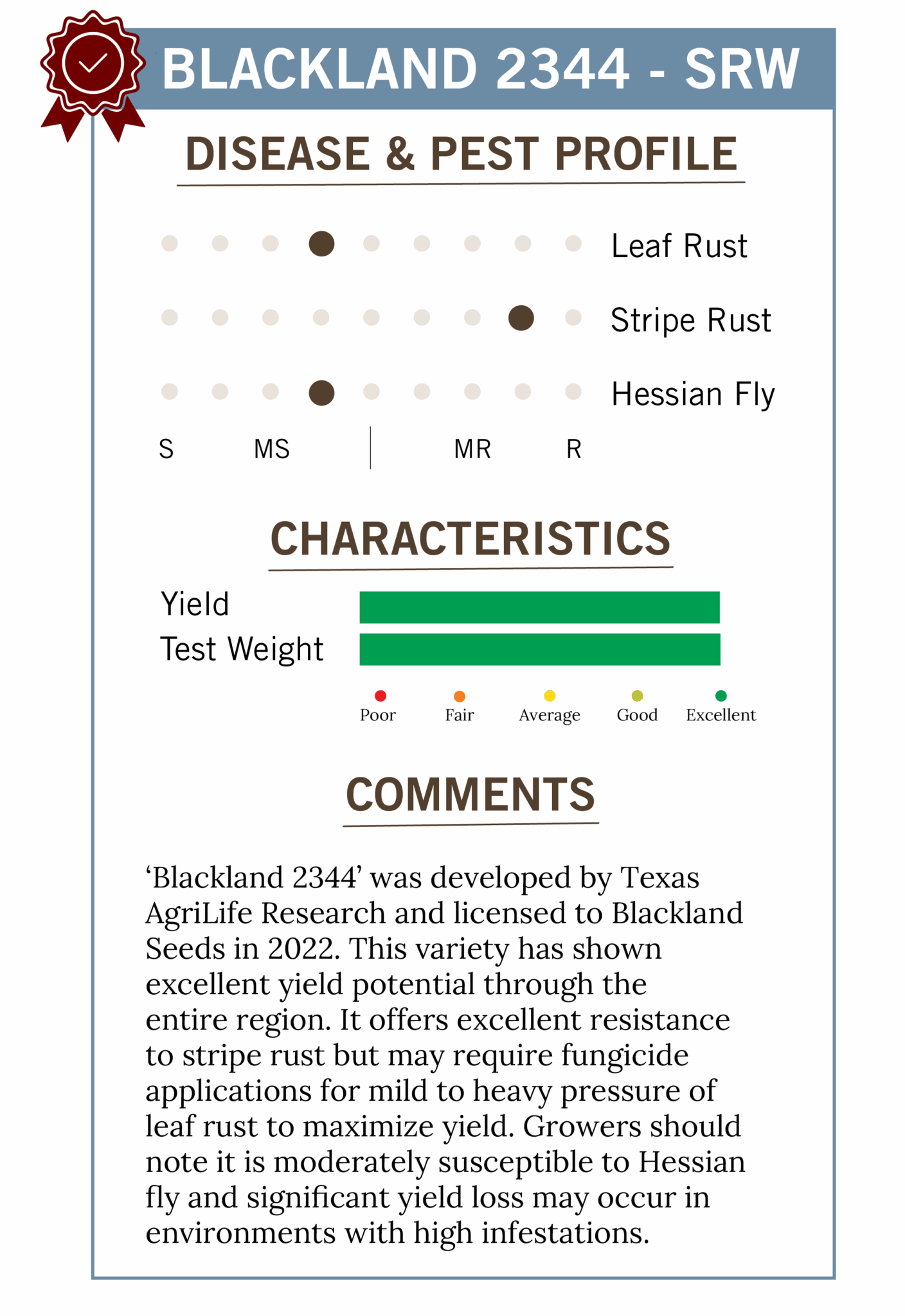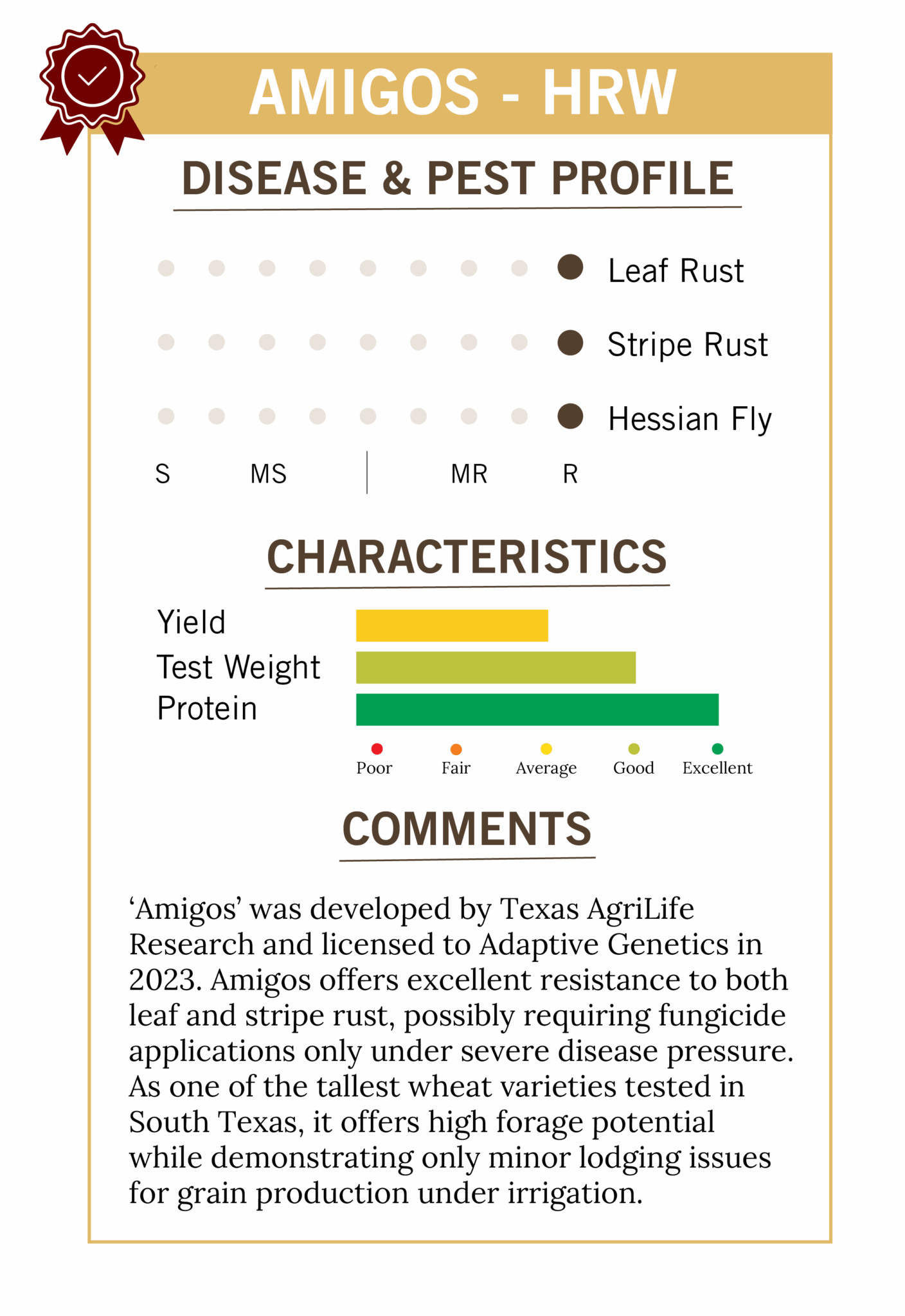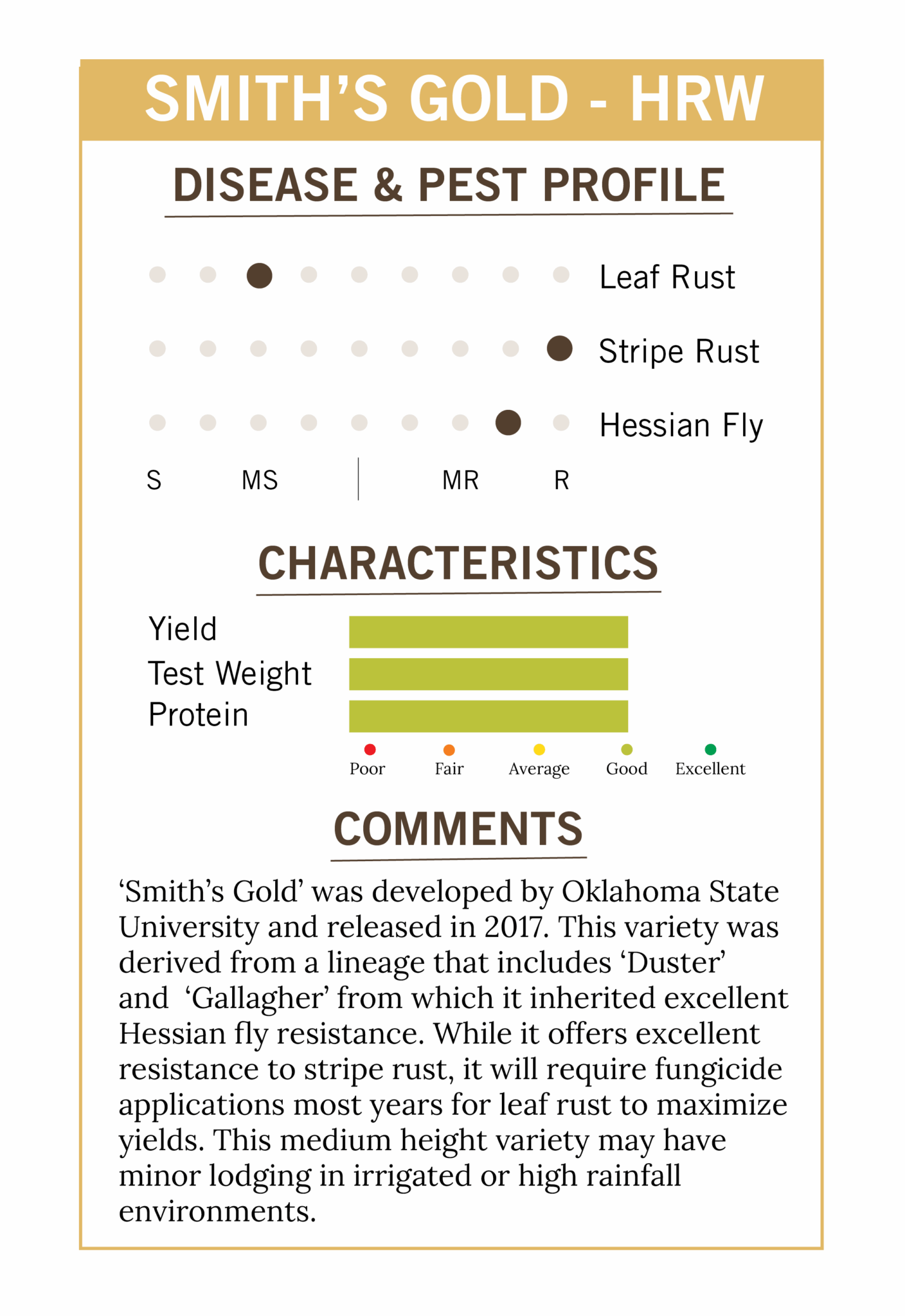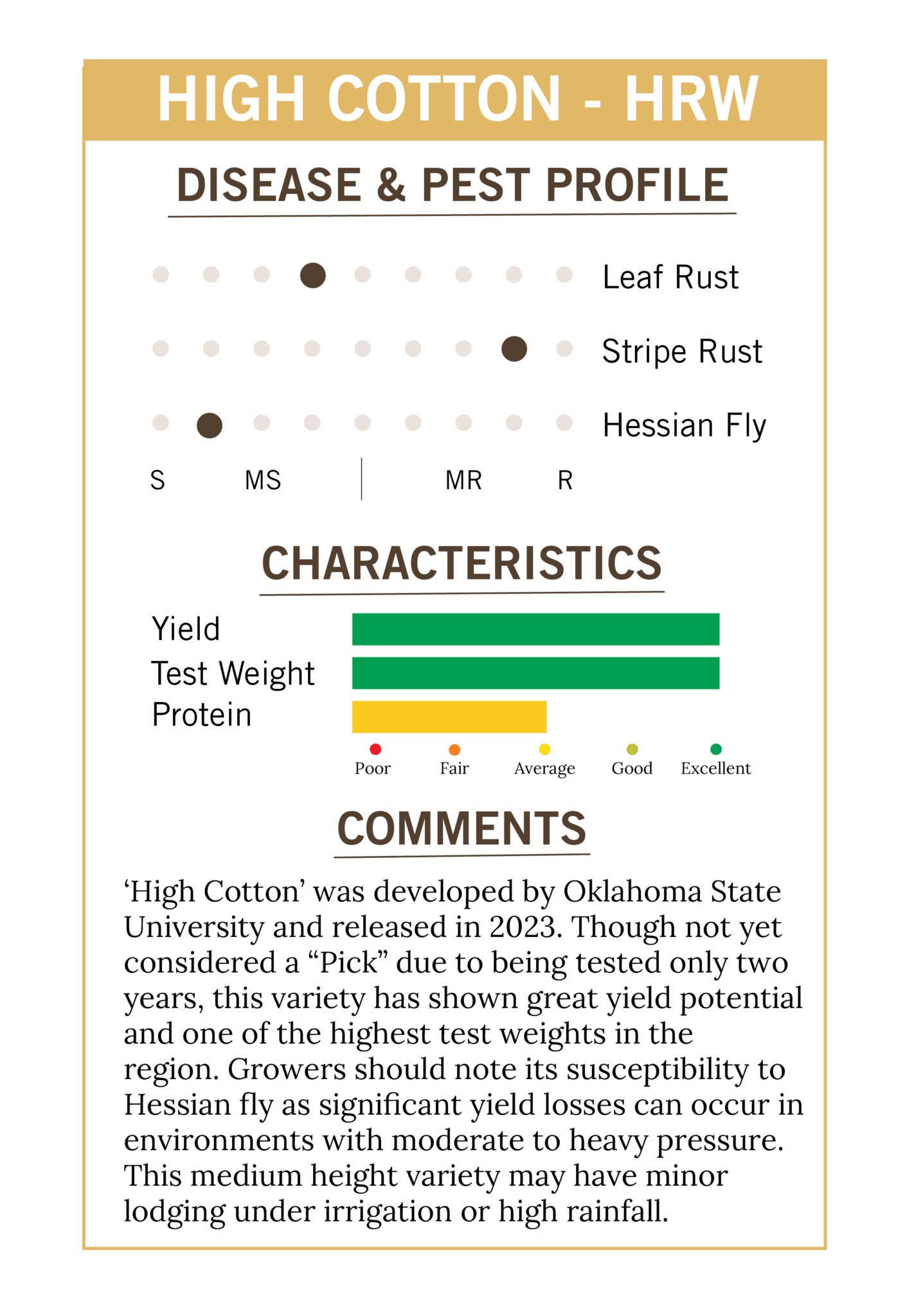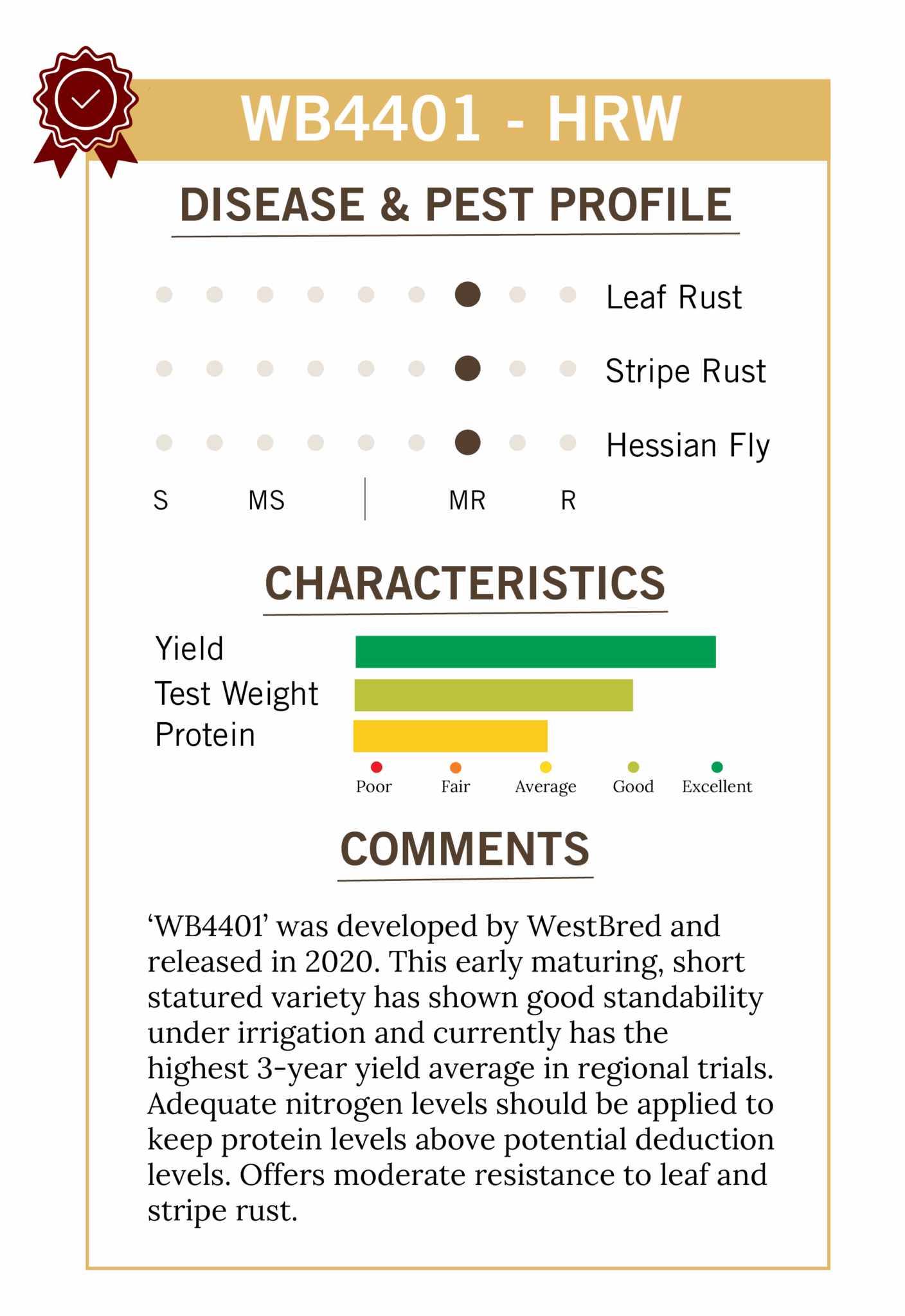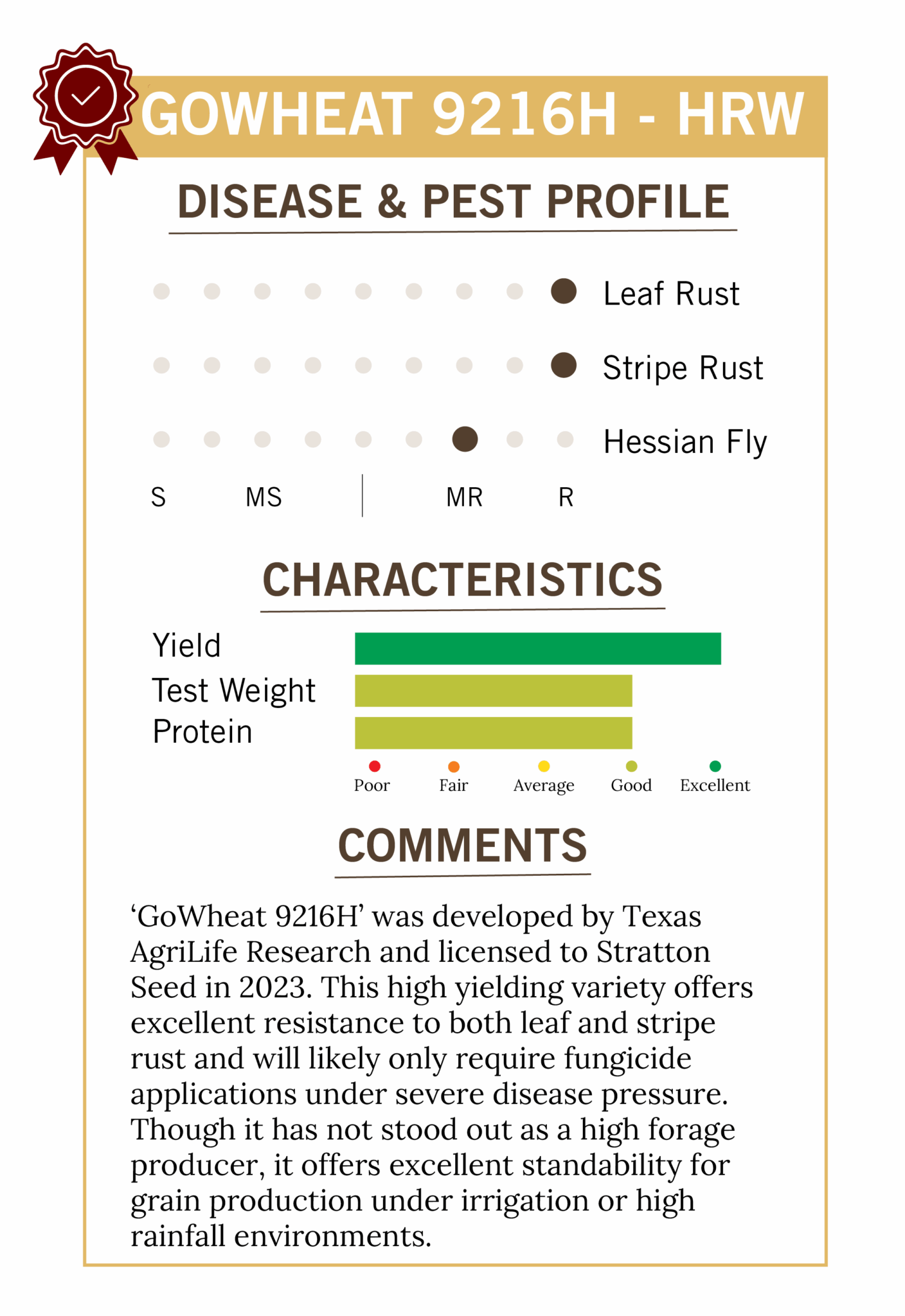
Funded by grower-supported checkoff dollars, Texas Wheat’s research and innovation programs address real-world challenges through plant breeding, disease resistance and improved production practices to strengthen yields and profitability statewide.
2025 Variety Guide
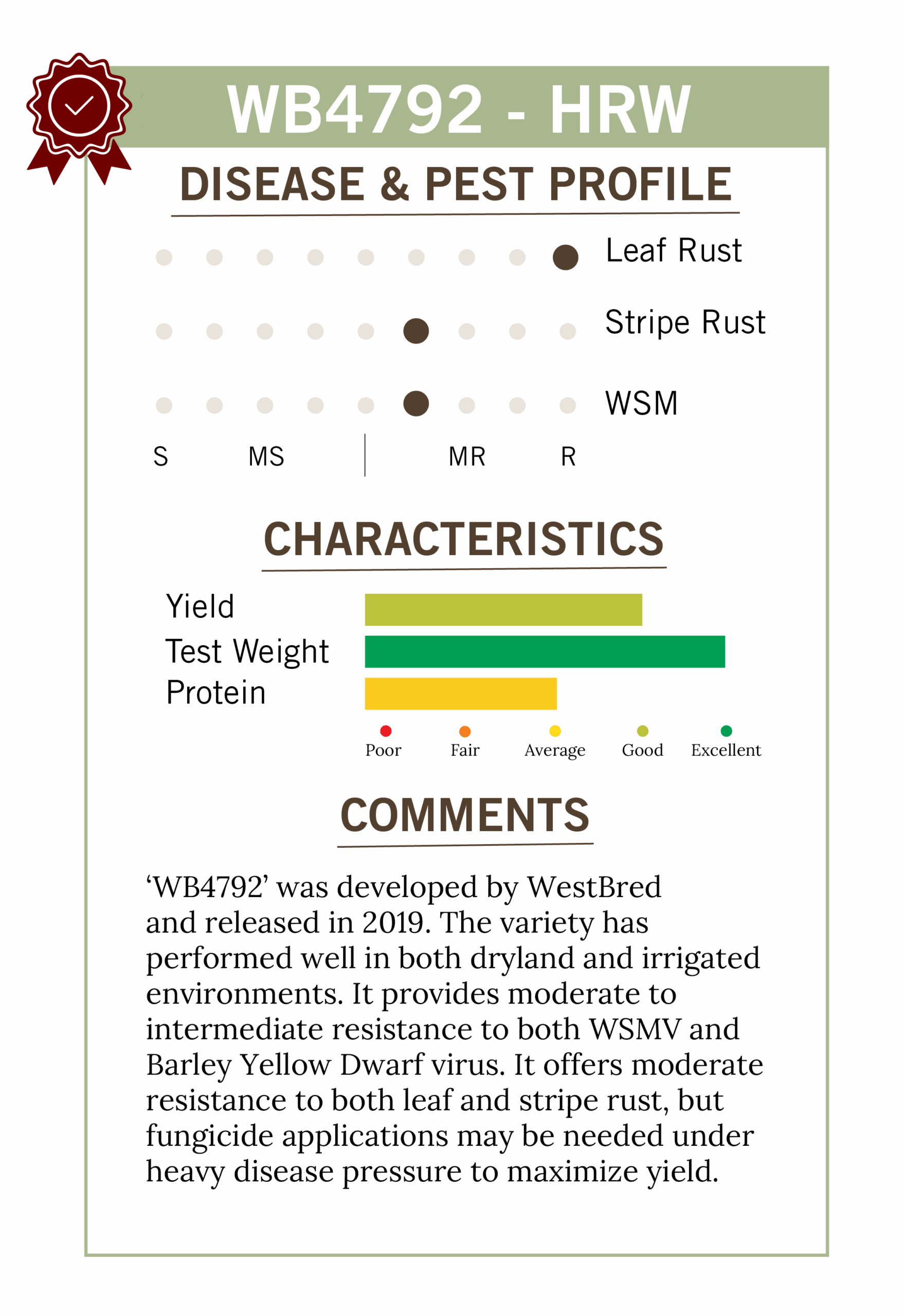
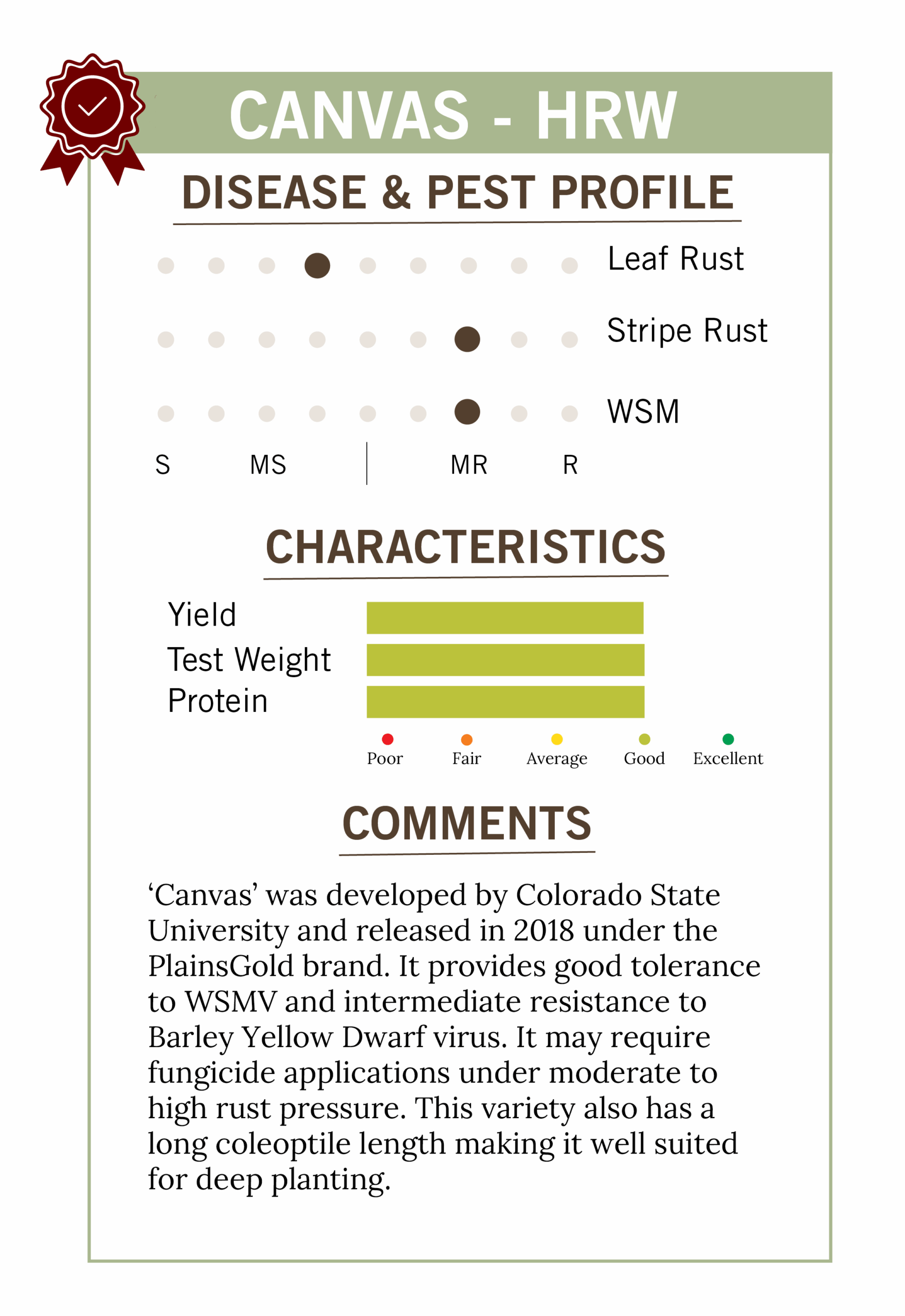
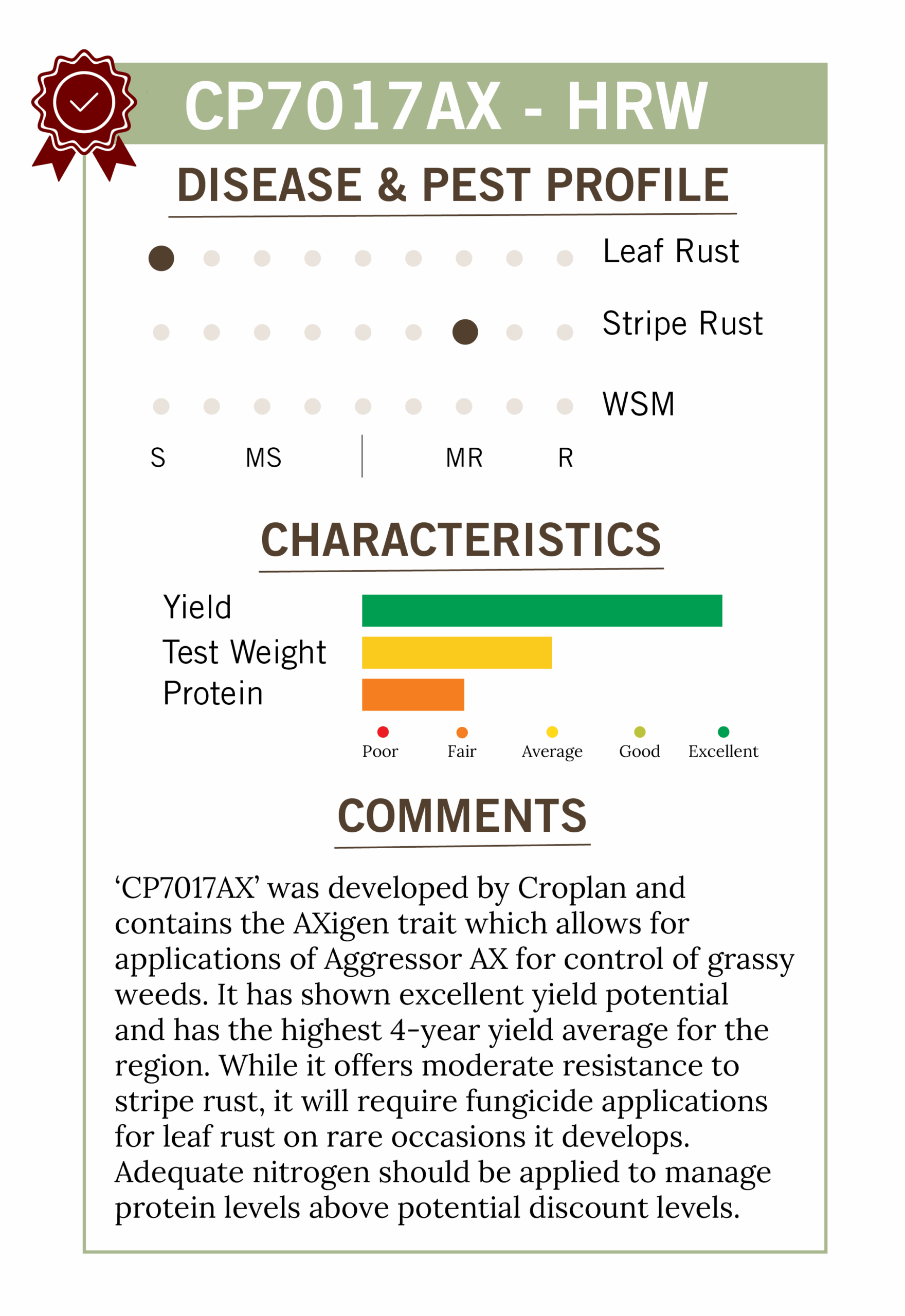
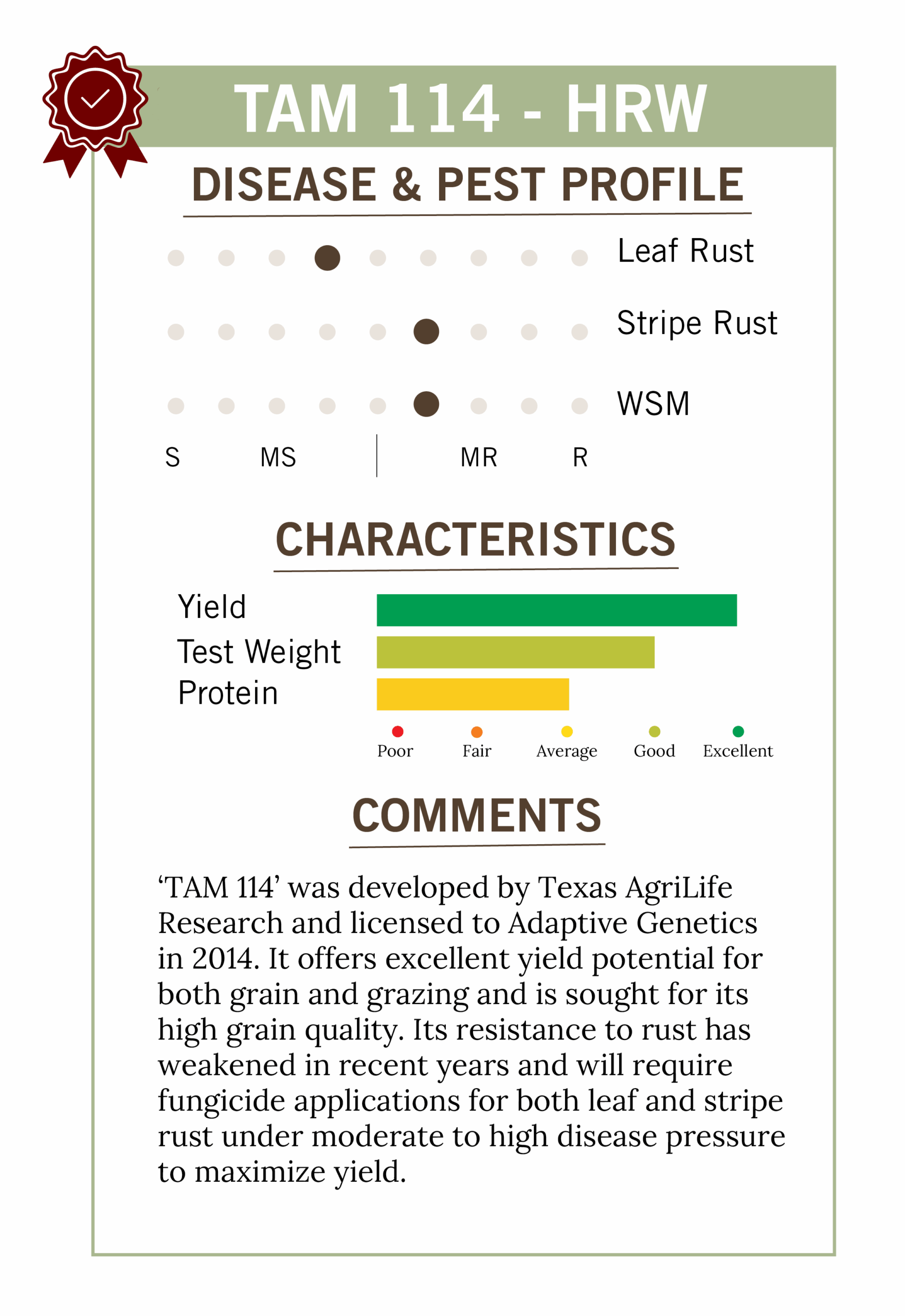
The 2025 Variety Guide includes statewide Uniform Variety Trial results, regional agronomic information and the 2025 Certified Seed Directory. Use the Variety Guide to make data-driven decisions for your operation.
Dryland Regional Overview
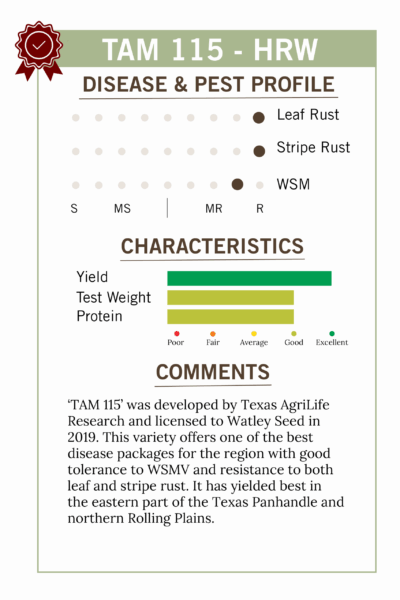
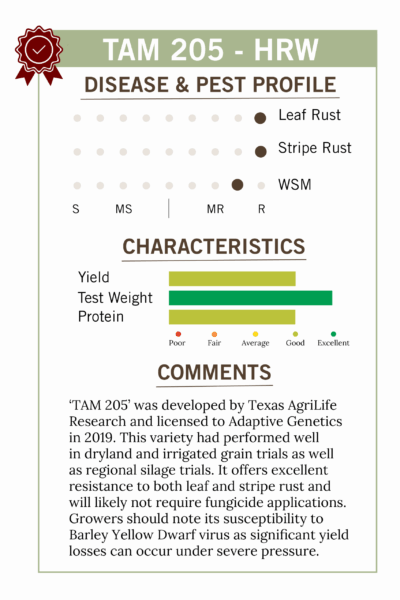
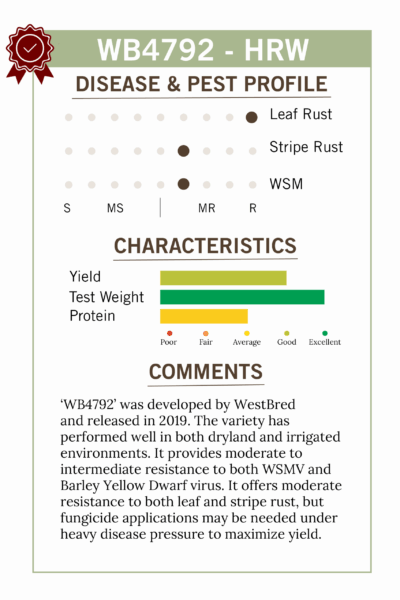
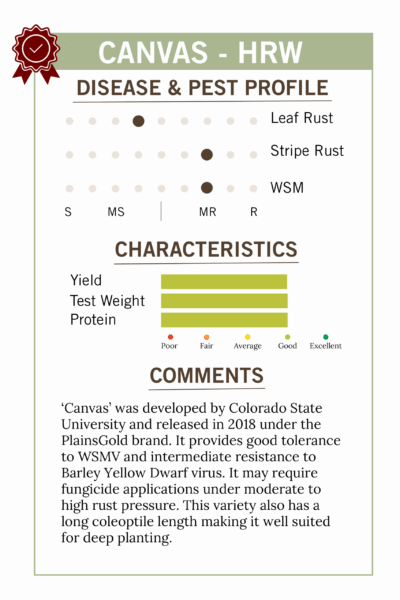
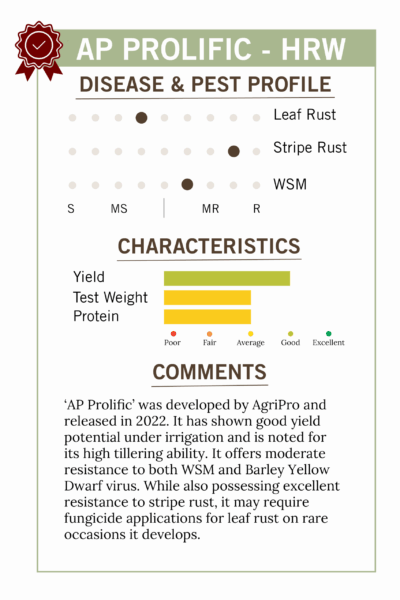
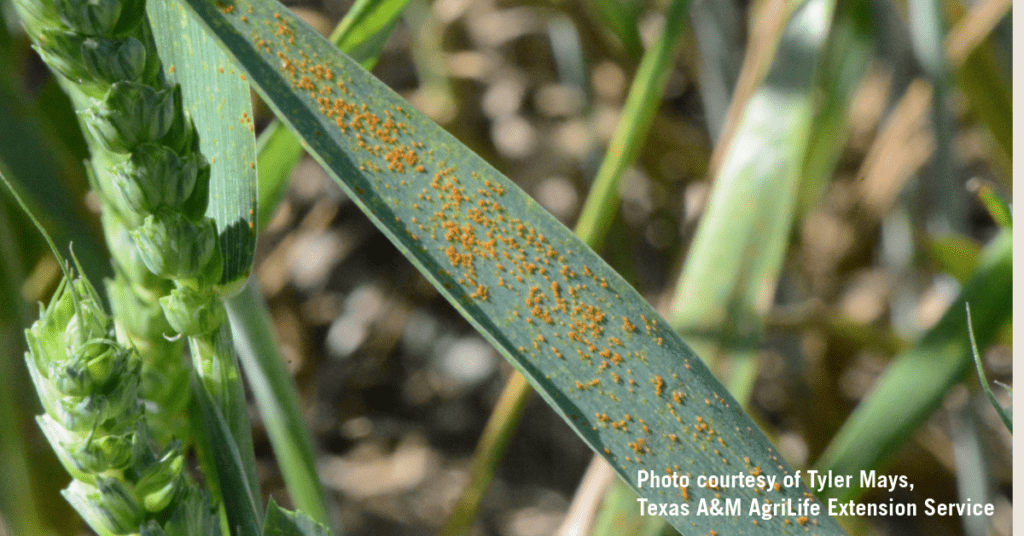
Variety testing sites located in Carson, Ochiltree and Potter counties provided the data for this region. While grain yield is the most critical component in variety selection, other attributes that can affect profitability are also considered. 1) Test weight – while some varieties naturally have lower test weights, low test weights can also be an indication of other issues such as preharvest sprouting, both of which can result in elevator discounts or rejection. 2) Virus resistance- viruses such as Wheat Streak Mosaic (WSM), transmitted by the wheat curl mite, can cause significant yield losses and is prevalent in the High Plains region. 3.) Foliar diseases- varieties with poor resistance to stripe and leaf rust, though less common in the High Plains compared to the rest of the state, can result in additional or more expensive fungicide applications which can decrease profitability. 4.) Forage production- forage production, especially for dual-purpose operations is essential for the profitability of many operations in this region.
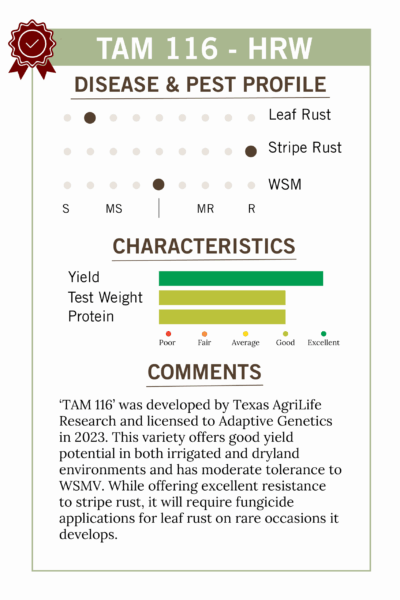
Irrigated Regional Overview
Variety testing sites located in Carson, Ochiltree and Potter counties provided the data for this region. While grain yield is the most critical component in variety selection, other attributes that can affect profitability are also considered. 1) Test weight – while some varieties naturally have lower test weights, low test weights can also be an indication of other issues such as preharvest sprouting, both of which can result in elevator discounts or rejection. 2) Virus resistance- viruses such as Wheat Streak Mosaic (WSM), transmitted by the wheat curl mite, can cause significant yield losses and is prevalent in the High Plains region. 3.) Foliar diseases- varieties with poor resistance to stripe and leaf rust, though less common in the High Plains compared to the rest of the state, can result in additional or more expensive fungicide applications which can decrease profitability. 4.) Forage production- forage production, especially for dual-purpose operations is essential for the profitability of many operations in this region.
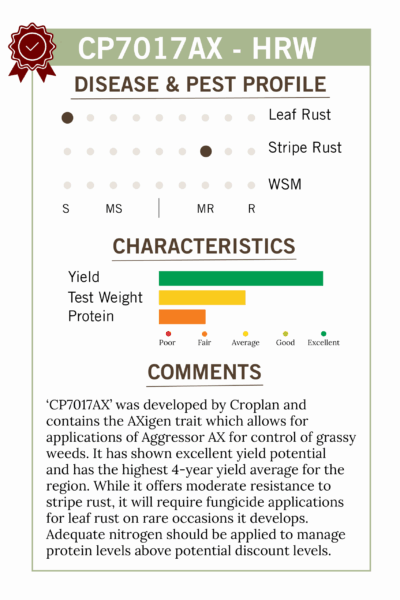
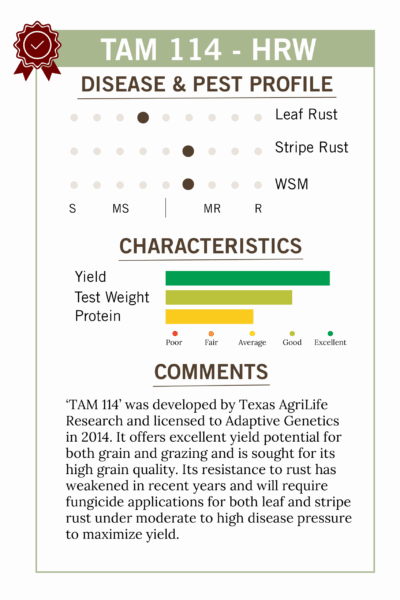
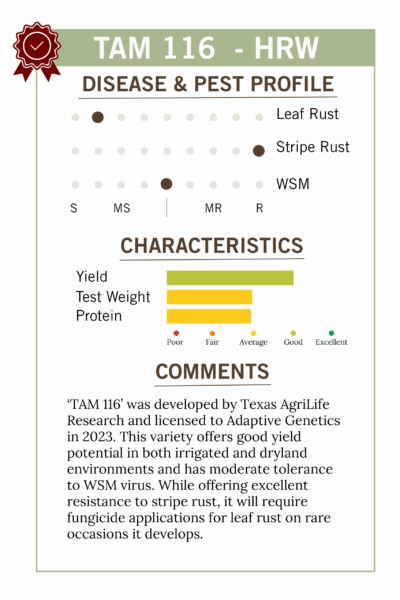
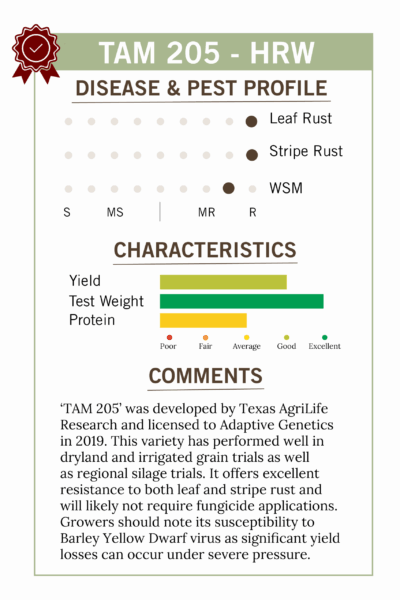
Regional Overview
Variety testing sites located in Hardeman, Knox, McCulloch, Taylor and Tom Green counties provided the data for this region. While grain yield is the most critical component in variety selection, other attributes that can affect profitability are also considered. 1) Test weight – while some varieties naturally have lower test weights, low test weights can also be an indication of other issues such as preharvest sprouting, both of which can result in elevator discounts or rejection. 2) Foliar diseases – varieties with poor resistance to stripe and leaf rust which are common in the Blacklands region can result in additional or more expensive fungicide applications, decreasing profitability. 3) Hessian fly – while data has shown that seed treatments and later planting dates can significantly reduce Hessian fly infestations, selecting a resistant variety can also reduce yield losses, especially in warm seasons. 4) Forage Production- forage production especially for dual-purpose operations, is essential for the profitability of many operations in this region.
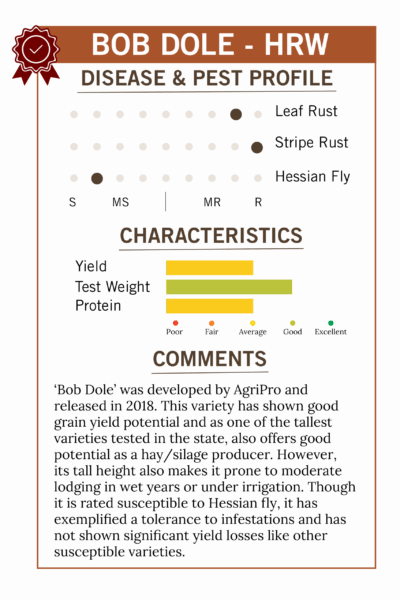
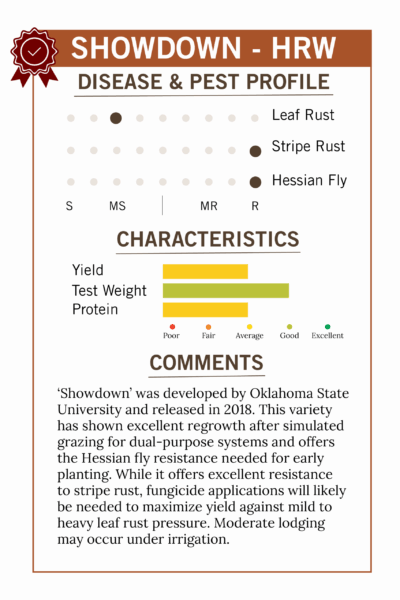
Hard Red Winter Regional Overview
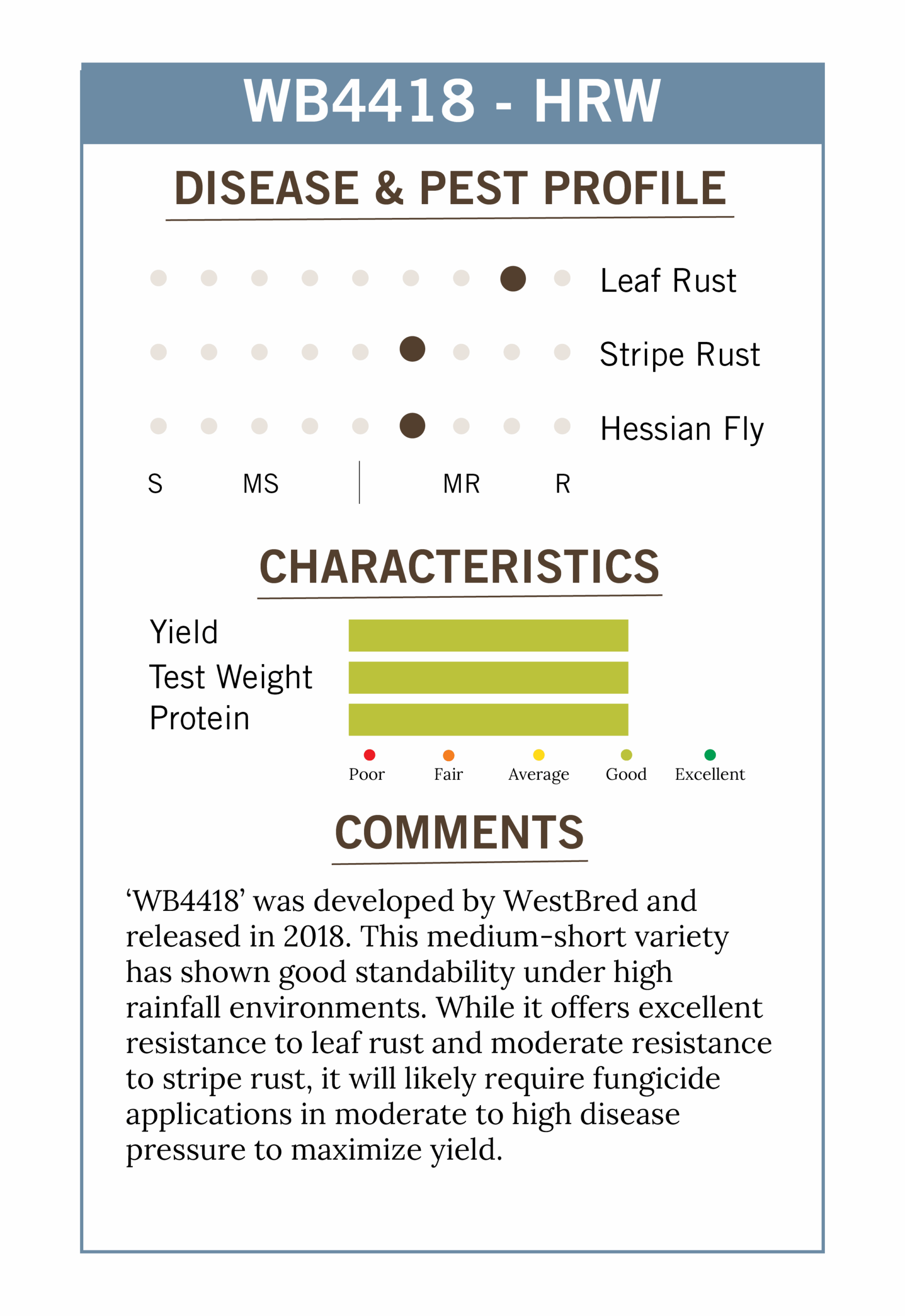
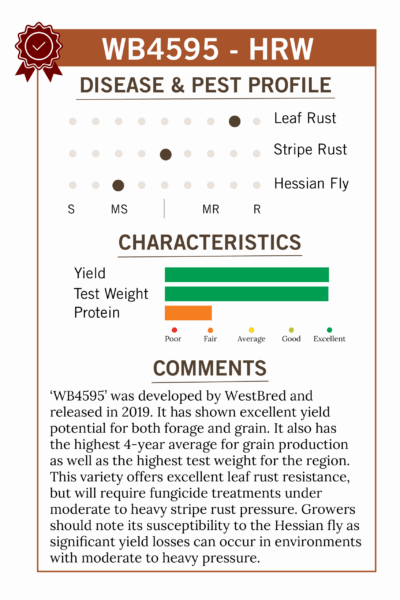
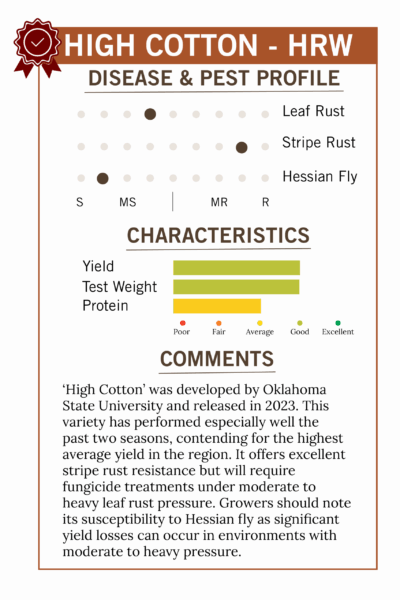
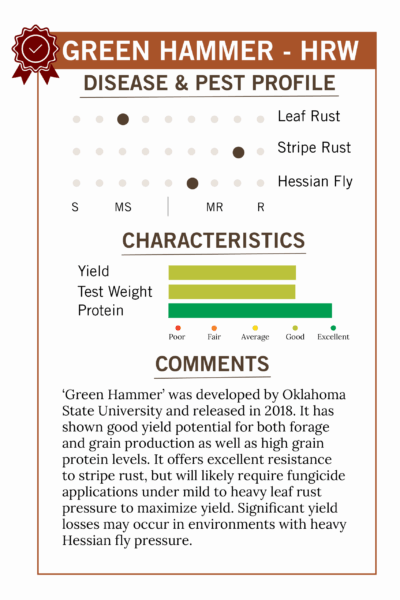
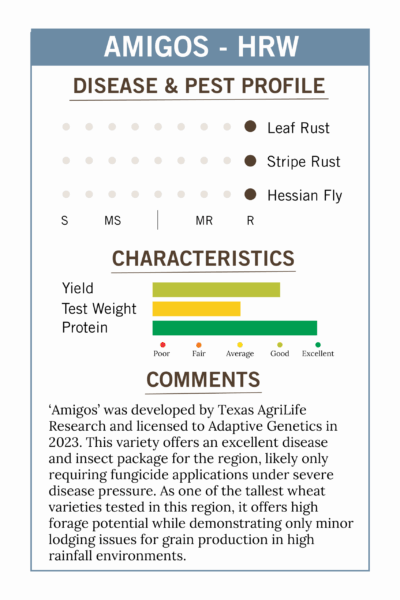
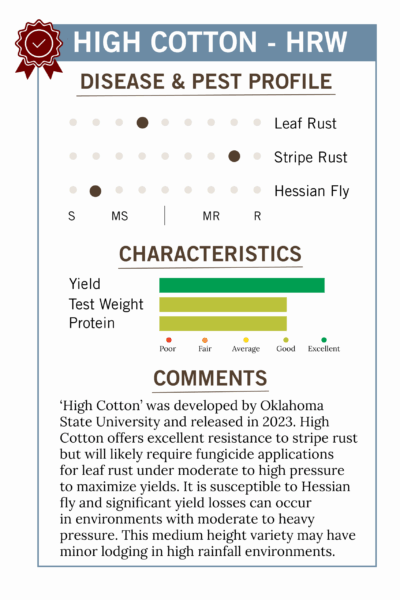
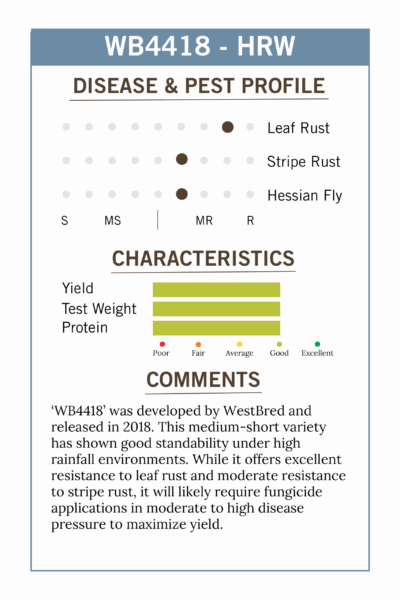
Variety testing sites located in Bell, McLennan, Hill, Ellis, Hunt and Cooke counties provided the data for this region. While grain yield is the most critical component in variety selection, other attributes that can affect profitability are also considered. 1) Test weight – while some varieties naturally have lower test weights, low test weights can also be an indication of other issues such as preharvest sprouting, both of which can result in elevator discounts or rejection. 2) Foliar diseases – varieties with poor resistance to stripe and leaf rust which are common in the Blacklands region can result in additional or more expensive fungicide applications, decreasing profitability. 3) Hessian fly – while data has shown that seed treatments and later planting dates can significantly reduce Hessian fly infestations, selecting a resistant variety can also reduce yield losses, especially in warm seasons. 4) Standability – spring storms are not uncommon to the area and varieties that easily lodge can result in increased harvest times and decreased yields/test weight.
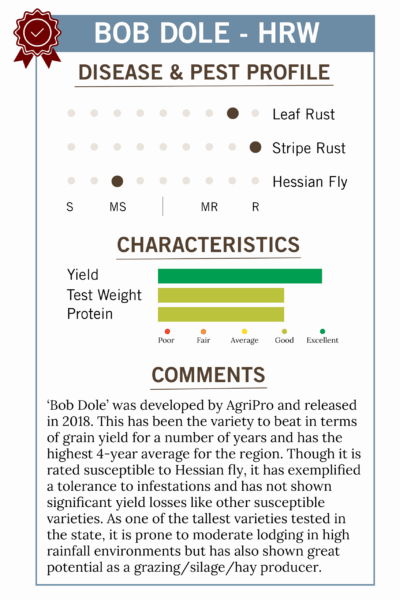
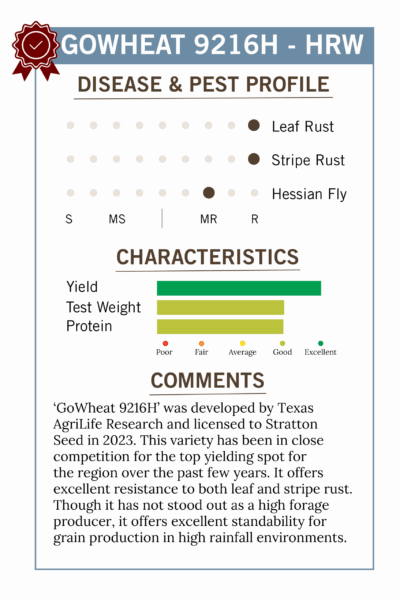
Soft Red Winter Regional Overview
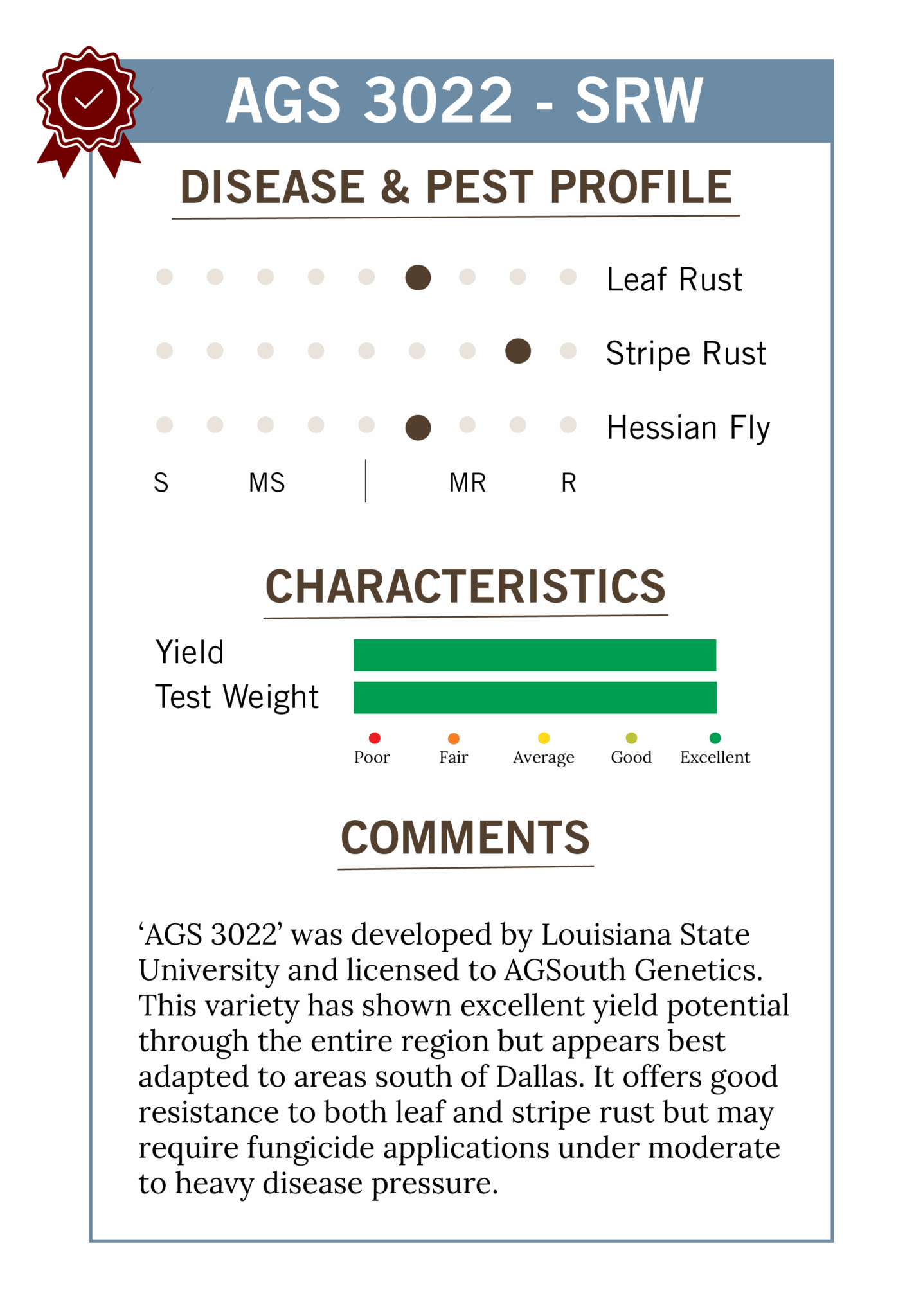
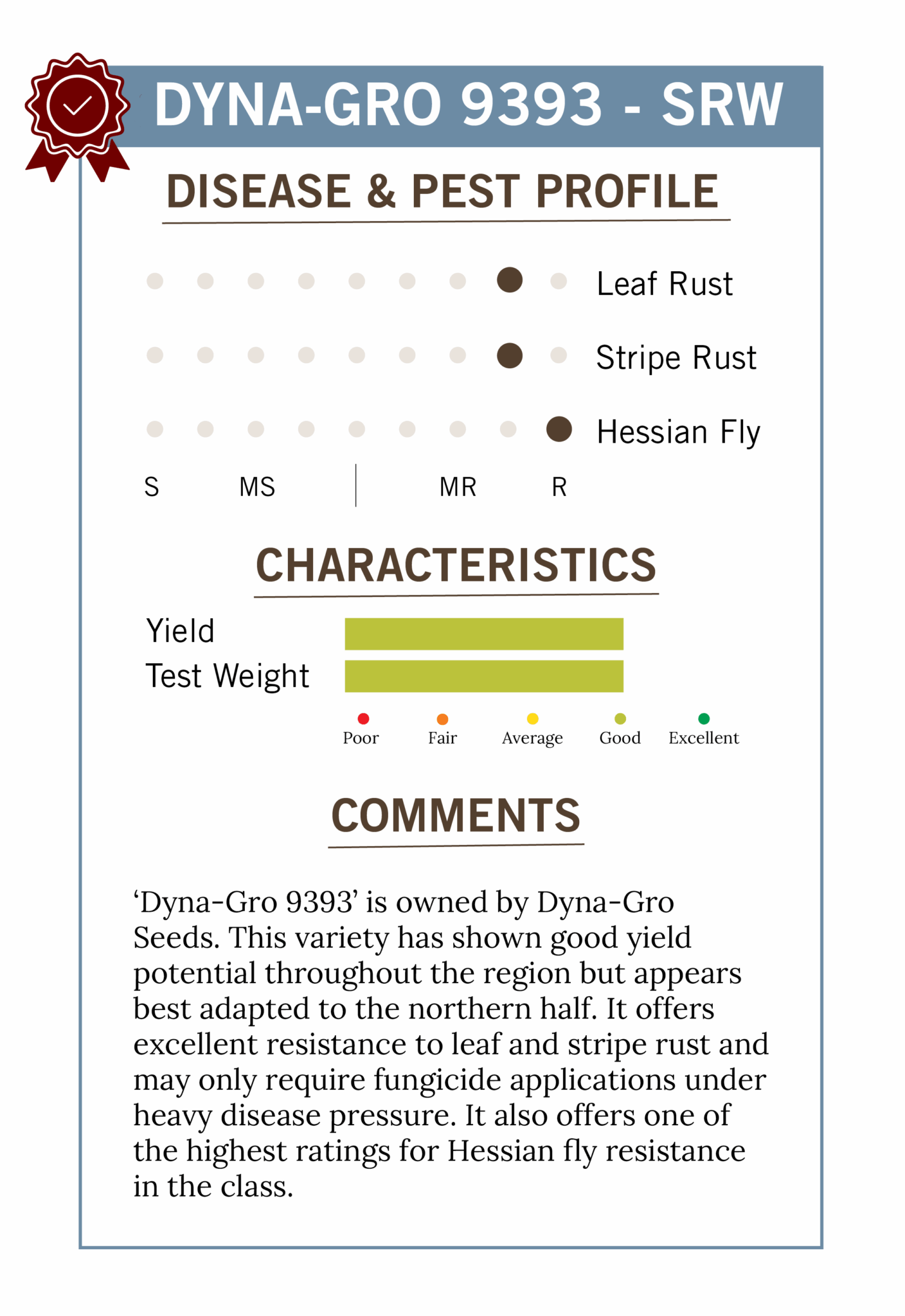
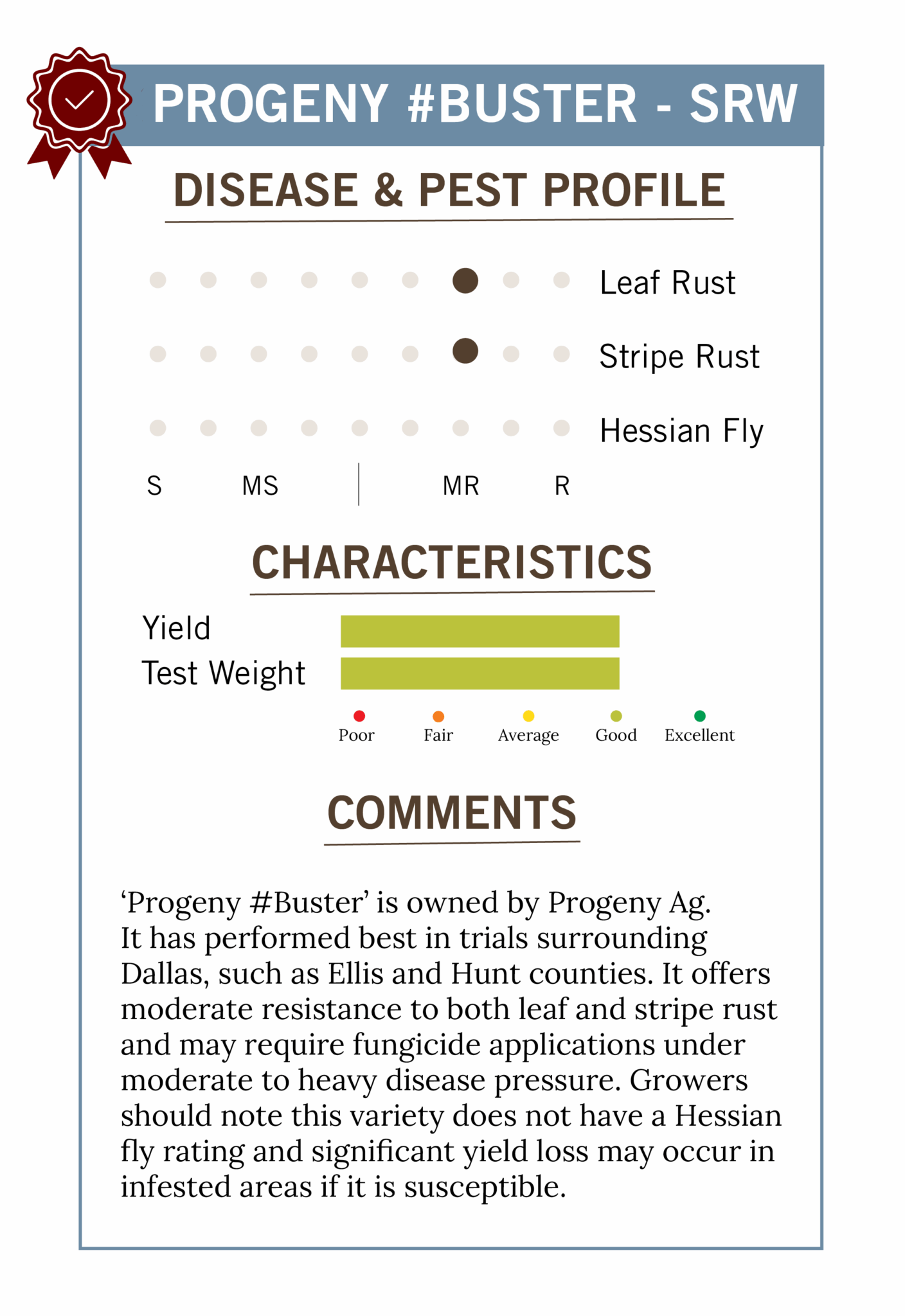
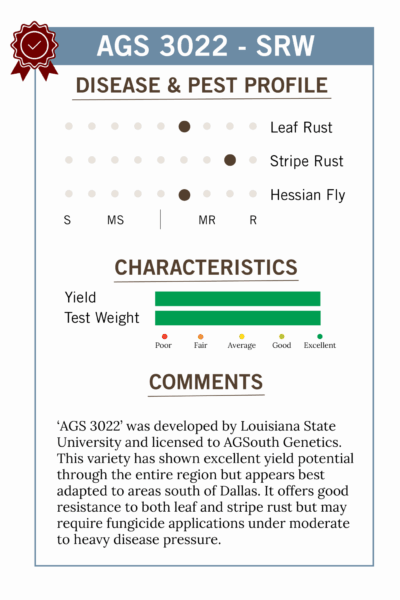
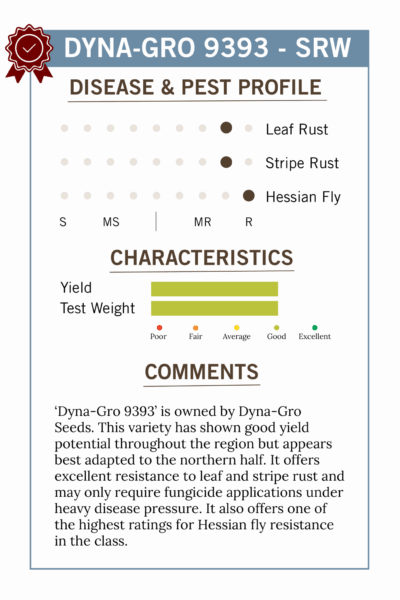
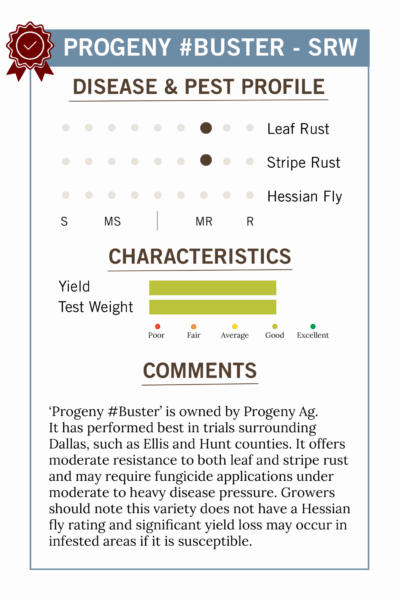
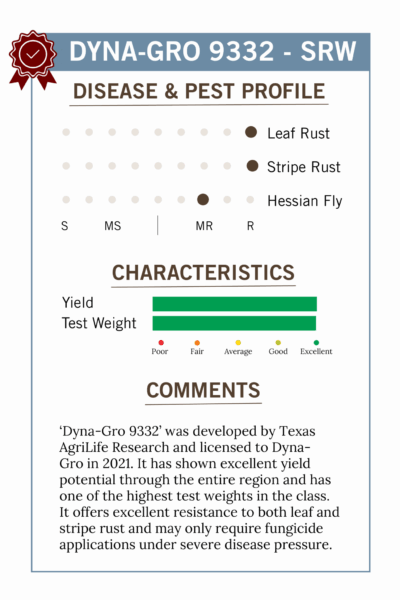
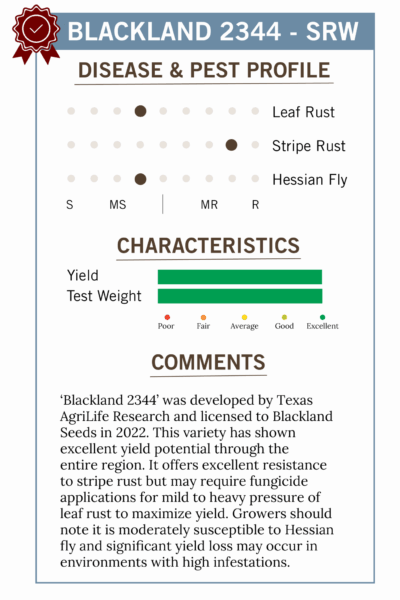
Variety testing sites located in Bell, McLennan, Hill, Ellis, Hunt and Cooke counties provided the data for this region. While grain yield is the most critical component in variety selection, other attributes that can affect profitability are also considered. 1) Test weight – while some varieties naturally have lower test weights, low test weights can also be an indication of other issues such as preharvest sprouting, both of which can result in elevator discounts or rejection. 2) Foliar diseases – varieties with poor resistance to stripe and leaf rust which are common in the Blacklands region can result in additional or more expensive fungicide applications, decreasing profitability. 3) Hessian fly – while data has shown that seed treatments and later planting dates can significantly reduce Hessian fly infestations, selecting a resistant variety can also reduce yield losses, especially in warm seasons. 4) Standability – spring storms are not uncommon to the area and varieties that easily lodge can result in increased harvest times and decreased yields/test weight.
Regional Overview
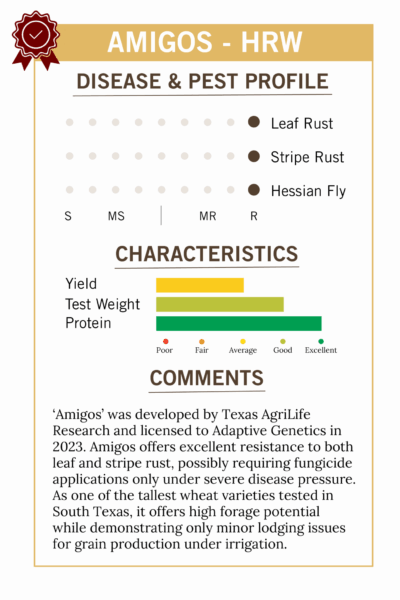
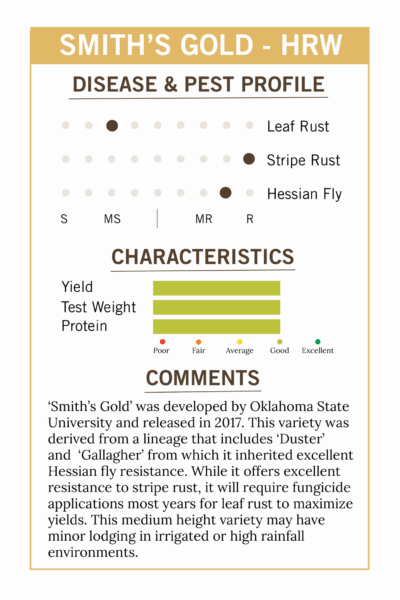
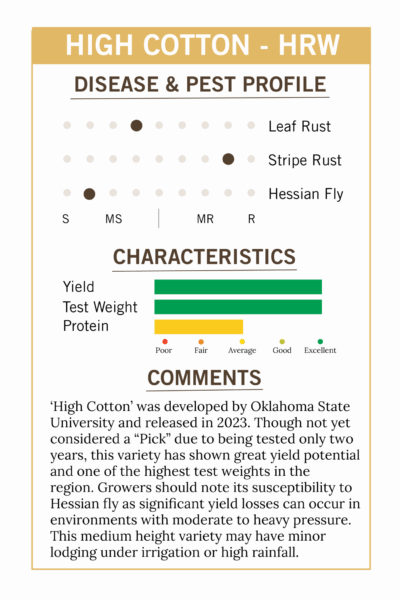
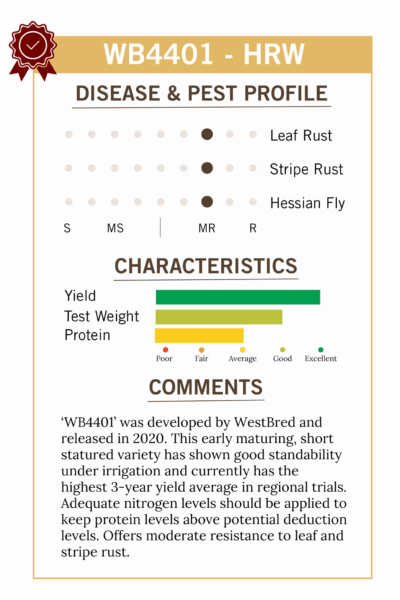
Variety testing sites located in Burleson (dryland), Medina (irrigated) and Uvalde (irrigated) counties provided the data for this region. While grain yield is the most critical component in variety selection, other attributes that can affect profitability are also considered. 1) Test weight – while some varieties naturally have lower test weights, low test weights can also be an indication of other issues such as preharvest sprouting, both of which can result in elevator discounts or rejection. 2) Foliar diseases – varieties with poor resistance to stripe and leaf rust which are common in south Texas can result in additional or more expensive fungicide applications, decreasing profitability. 3) Hessian fly – while data has shown that seed treatments and later planting dates can significantly reduce Hessian fly infestations, selecting a resistant variety can also reduce yield losses, especially in warm seasons. 4) Standability – spring storms are not uncommon to the area and varieties that easily lodge can result in increased harvest times and decreased yields/test weight. 5) Vernalization requirements – Wheat varieties that require a relatively high number of chilling hours may not reach that goal during warm seasons which can reduce or delay heading, resulting in potentially significant yield reductions.
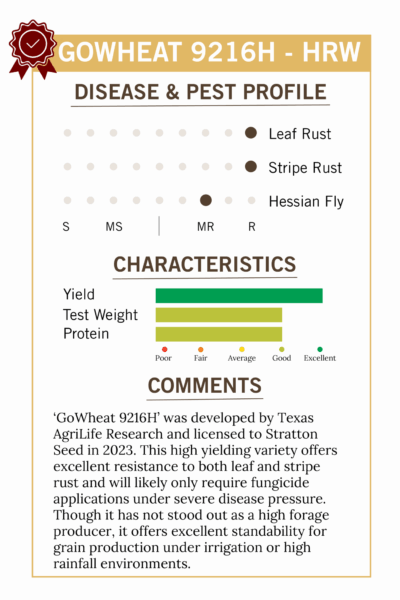
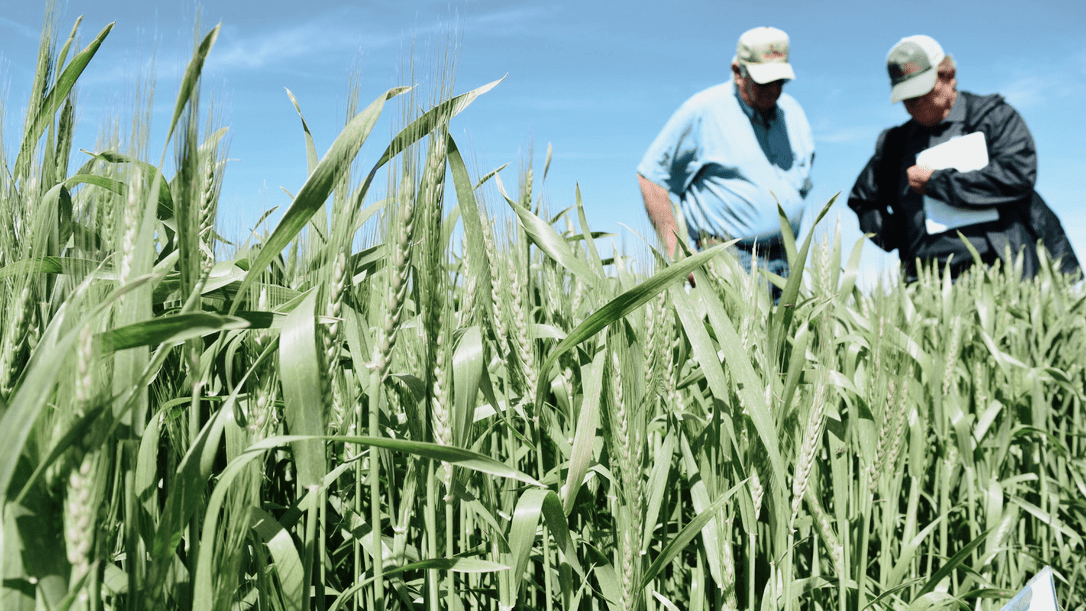
2025 Picks List
Review the Texas A&M AgriLife wheat variety picks list based on regional variety trial data.
2025 Certified Seed Directory
Find the list of Certified seed dealers across the state and their varieties for sale.
2025 Forage Guide
Review data collected from dual-purpose and forage variety trials conducted across the state.
Research Updates


Field Days
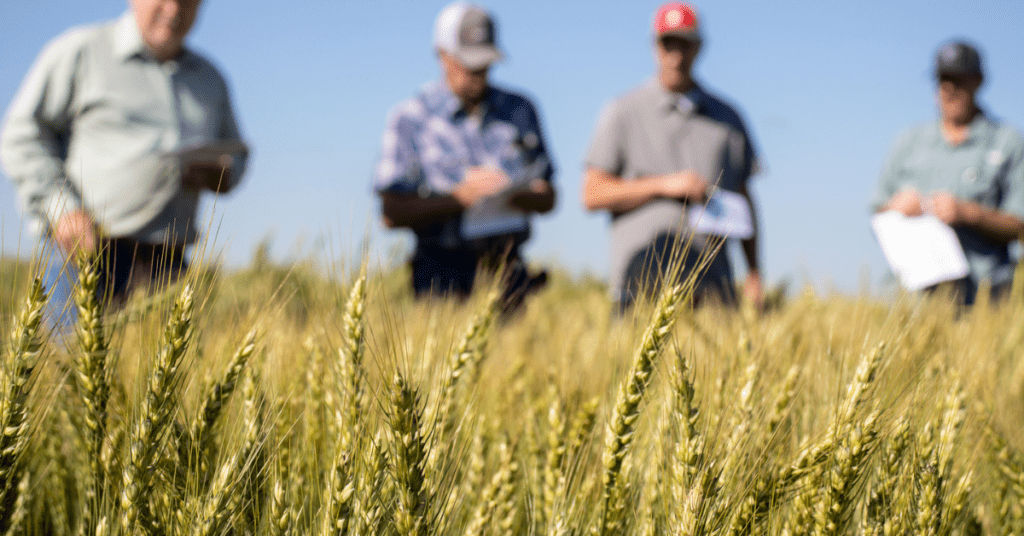
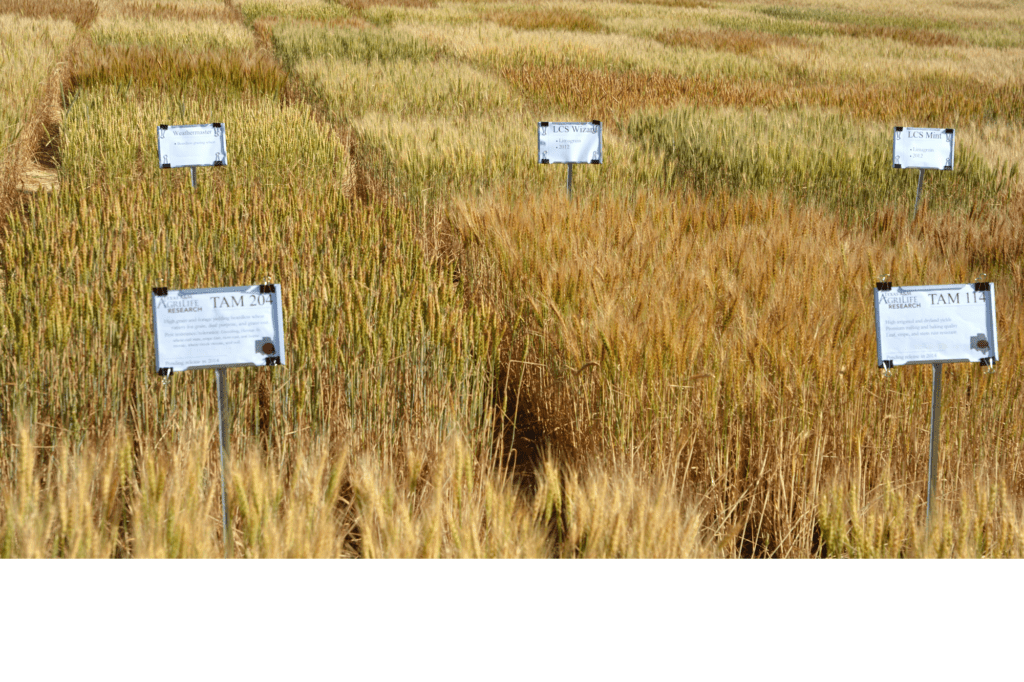
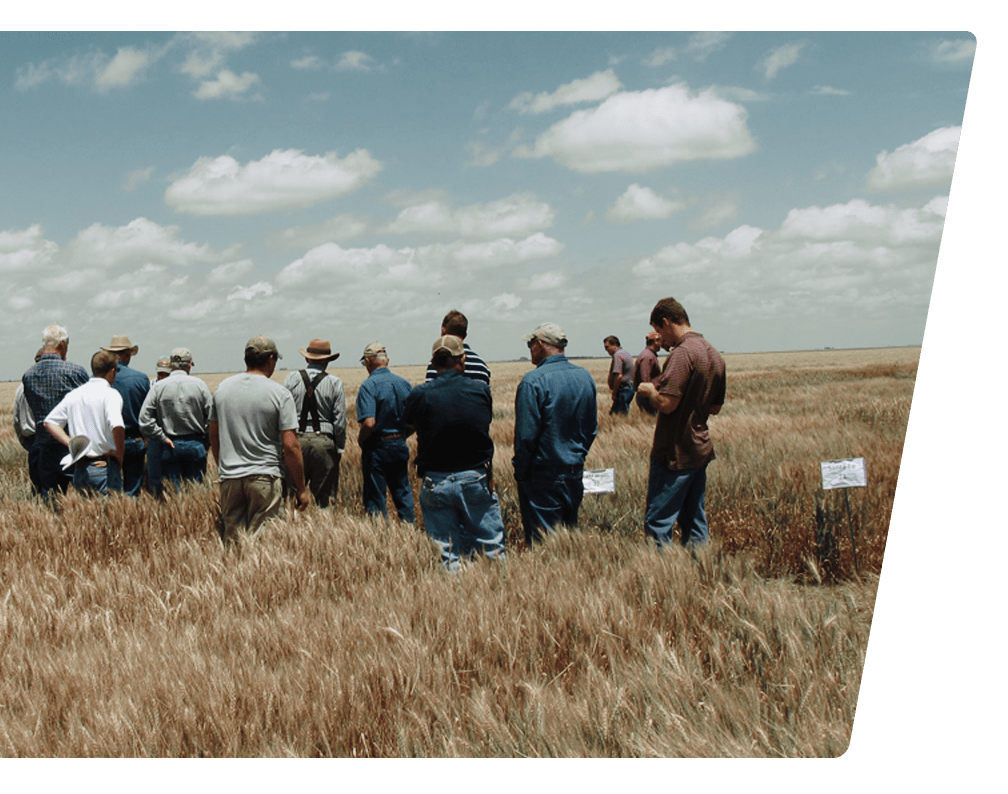
Attend local field days in your area to see variety performance in your area. Field days are hosted by Texas A&M AgriLife Research & Extension are typically held April through May. The field day schedule will be posted in the events calendar as dates become available.