
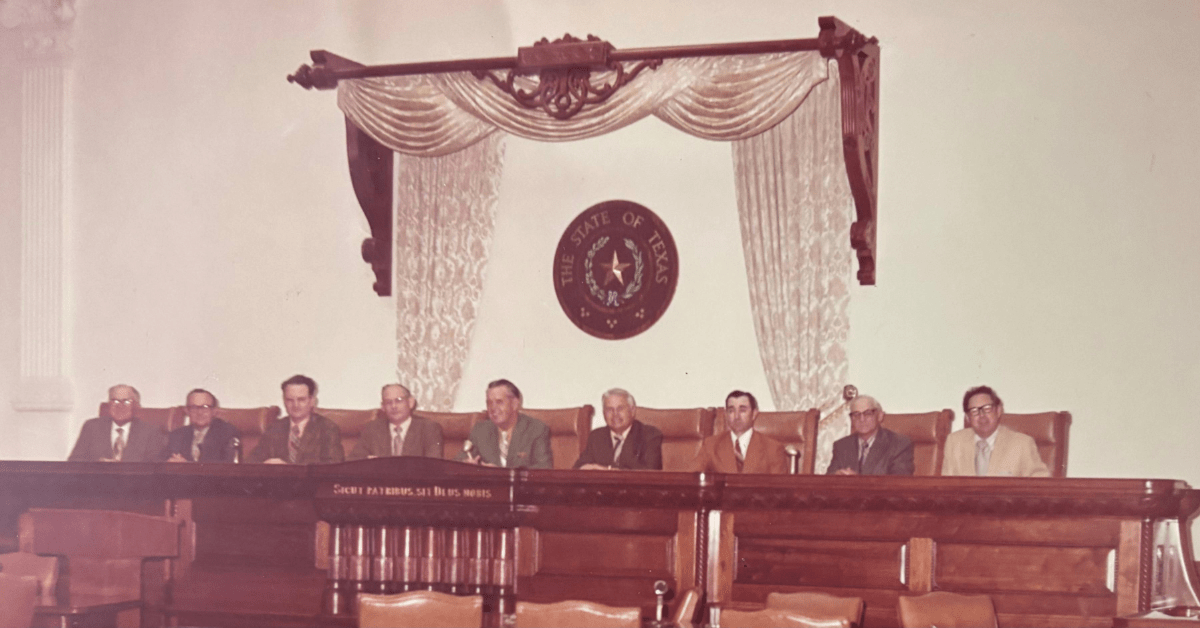
Wheat has been a cornerstone of Texas agriculture since the early 1800s, with the first commercial crop planted near Sherman in 1833. As settlers moved west and new wheat varieties were introduced, production expanded rapidly, transforming the state’s agricultural landscape. By the late 19th century, Texas was producing millions of bushels annually, and the rise of flour mills in cities like Fort Worth, Dallas and Sherman solidified wheat’s role in the state’s economy.
The 1920s marked a dramatic shift, as advances in farming technology and strong postwar demand fueled the “Great Plow-Up,” nearly doubling wheat acreage. However, the prosperity was short-lived. The Dust Bowl and Great Depression decimated both the land and economy, and in response, the government implemented New Deal programs that introduced acreage restrictions and soil conservation measures. By the 1940s, producers faced persistent droughts, volatile market conditions and government quotas that limited the number of acres each farmer could plant annually.
In response to the challenges of the time, farmers began to meet locally and then regionally, forming groups like the High Plains Wheat Producers Association and the Tri-District Farm Bureau Association. Recognizing the power of a collective voice, these groups banded together to form the Texas Wheat Growers Association (TWGA), which was officially chartered in 1950. In the early days of the organization, producers met every other month and delegates were chosen to represent each of the 18 wheat-producing counties in the Texas Panhandle, with five producers chosen to be on the first executive committee – R.V. Converse (Spearman), James Gunter (Claude), L.R. Conner (Farnsworth), K. Kendrick (Stratford), J.W. Cox (Tulia). To fund the new organization, representatives implemented a voluntary quarter cent per bushel membership assessment. Any producer who paid the assessment was eligible to serve as a TWGA director.
In 1969, the Texas state legislature passed an amendment allowing producer associations to collect voluntary assessments with the stipulation that all funds be used for marketing, promotion, research and education relating to the commodity.
The organization entered a new era in the 1970s when the group changed its name to Texas Wheat Producers Association (TWPA) and, in 1971, established the Texas Wheat Producers Board (TWPB). This allowed for a clear distinction between legislative advocacy, which was the primary focus on the association, and assessment funds supporting the board’s efforts of research, education, market development and promotion. One of TWPB’s first acts was to join GPW as a voting member, a sign of the group’s dedication to the export market.
During the first joint meeting of the Texas Wheat Producers Board and Association in 1971, executive vice president Bill Nelson stated, “This is a great and eventful day – not only for the present, but for the future of Texas Wheat! We are aware however that we aren’t starting today – but continuing what has been planned and what has gone before by so many who have made great contributions to such interests by their time, efforts and money.”
While the 1980s brought a challenging farm economy with extreme market volatility due to global instability, it also ushered in new opportunities. Proposition 3, also known as the Commodity Referendum Law, was passed in the Texas legislature in 1983 allowing agricultural producer boards to collect refundable assessments. The TWPB set the assessment rate for one half cent per bushel. This legislation significantly changed the landscape for commodity associations by providing a more consistent stream of income and therefore allowing for greater impact. Texas Wheat saw another significant organizational shift in 1985 when producers across the state voted in favor of expanding the assessment to all counties in Texas. In addition to implementing a statewide checkoff program, this measure also expanded the board from nine to fifteen directors.
Seventy-five years after those Panhandle farmers first gathered, the mission of Texas Wheat remains as vital as ever. While the industry and production practices have changed significantly since 1950, the core challenges—drought, market volatility, regulatory pressures and global uncertainty—still demand strong, unified advocacy.
Through every turn in the road, Texas wheat producers have led with resilience, collaboration and purpose. From dusty cafés to the halls of Congress, their efforts have built an enduring legacy that is rooted in service, strengthened by generations and committed to the future of wheat in Texas.
Learn more about TWPA’s history, read stories of service and view pictures from the past by visiting the 75th anniversary webpage. Stay tuned for articles, social content and more throughout the year to celebrate 75 years of advocacy.