
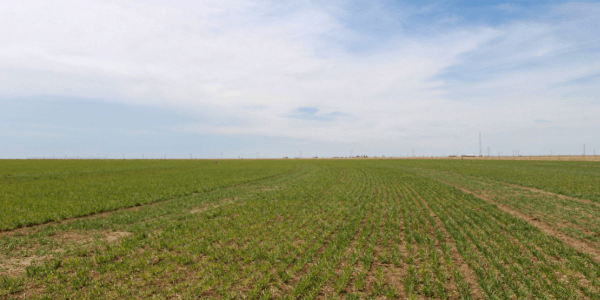
Across Texas, this year’s wheat crop is shaping up to be anything but uniform. In some parts of the state, fields still show promise, but in the Panhandle and much of the Rolling Plains, the outlook is far less certain. Persistent drought, above-average temperatures and a series of compounding stressors are steadily chipping away at crop conditions, leaving many growers weighing difficult decisions as the season unfolds.
Drought and Temperature Concerns
“These hot temperatures are never favorable for wheat prior to grain maturity,” said Calvin Trostle, Texas A&M AgriLife Extension agronomist. “I remind farmers and colleagues, ‘wheat is a cool-season grass.’”
That reality is becoming increasingly apparent across the state. Temperatures pushing beyond 86°F during key growth stages are accelerating soil moisture loss and shortening the window for grain development. For a crop already under moisture stress, the margin for error continues to narrow. Additionally, reports of vernalization issues have been noted as far north as Johnson County, with more pronounced concerns in South Texas. Without sufficient chilling, head development may be delayed or reduced, further limiting yield potential.
Faced with warmer temperatures, crop progress advanced ahead of schedule leaving fields vulnerable to freeze damage when temperatures plummeted in mid-March. Fields that had already reached, or were approaching, jointing were particularly vulnerable. In some fields, freeze damage was extensive, adding yet another layer of uncertainty to an already stressed crop.
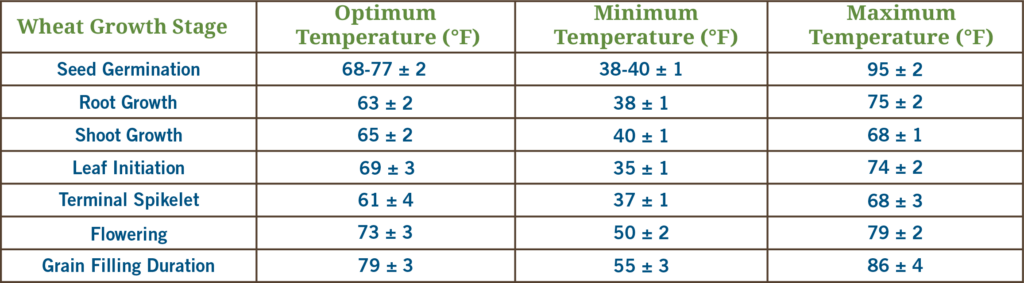
Table courtesy of Calvin Trostle
Stress Compounds Pest and Disease Pressure
The same conditions stressing the crop are also creating opportunities for pests and disease to gain ground. Warmer-than-normal temperatures combined with stressed plants can weaken the effectiveness of genetic resistance, particularly for traits that are temperature-sensitive. Varieties that have historically performed well are showing increased vulnerability under sustained heat and drought stress.
Leaf rust is one of the most notable concerns emerging across the state.
“Growers should continue to check for rust development, even in resistant varieties,” said Brandon Gerrish, Texas A&M AgriLife Extension Specialist. “Drought conditions or Hessian fly infestations can reduce the effectiveness of genetic resistance and temperature-sensitive genes may be a factor.”
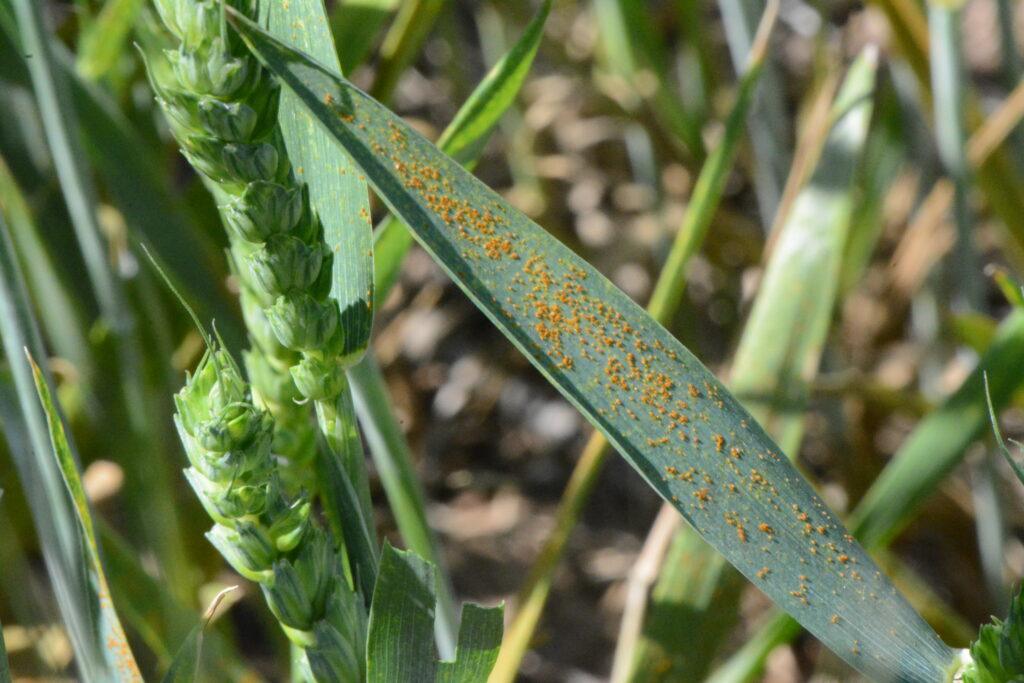
Photo courtesy of Tyler Mays
Even under dry conditions, reports of leaf rust are increasing. Infectedplants often experience reduced vigor, fewer kernels and smaller grain size, impacting both yield and forage value. The situation underscores the importance of continued scouting, particularly in a year when typical disease patterns are less predictable. Hessian fly pressure is also raising concerns, especially in the Blacklands. Agronomists have observed infestations in varieties previously considered resistant, including Gallagher, GoWheat 9216H and Amigos. Rather than signaling a shift in pest biotypes, the trend is more likely tied to environmental stress reducing the plant’s ability to defend itself.
Tyler Mays, Texas A&M AgriLife Extension Program Specialist for Integrated Pest Management, cautions that current infestations could carry over into next year’s crop if not properly managed. To help reduce risk, Mays recommends a combination of practices, including managing volunteer wheat and post-harvest residue and delaying planting until early November. Planting top-performing resistant varieties like Amigos (HRW) and Dyna-Gro 9393 (SRW) can also be effective in reducing the negative impacts of a Hessian fly infestation.
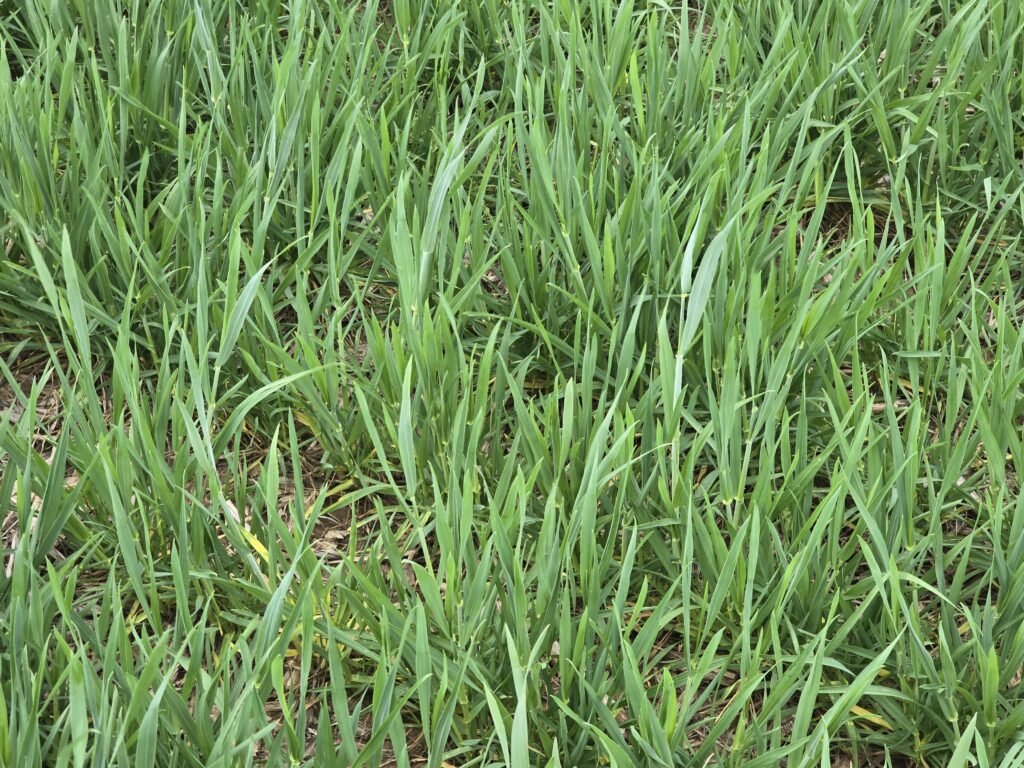
Photo courtesy of Tyler Mays
Less visible, but equally concerning, are wheat curl mites and the viruses they transmit, including wheat streak mosaic. Dry conditions tend to favor mite movement, increasing the likelihood of infection. Symptoms such as yellow streaking, stunting and reduced tillering can easily be mistaken for other stress-related issues, making accurate diagnosis essential.
Research Continues to Guide Decisions
As conditions evolve, ongoing research remains a critical tool for producers navigating an increasingly complex environment.
Uniform Variety Trials, supported in part by the Texas Wheat Producers Board, continue to provide insight into how different varieties perform under varying conditions, including drought and pest and disease pressure. Resources such as the Texas Leaf Rust Ratings offer valuable comparisons that can help guide future planting decisions.
Through board-supported research, Texas A&M AgriLife specialists like Tyler Mays are taking a closer look at evolving pest challenges, including Hessian fly, and refining integrated pest management strategies to better equip growers in the field. While long-standing recommendations such as delayed planting and volunteer wheat control remain critical, recent work has also explored the utility of seed treatments, particularly for early forage production or when planting varieties known to be susceptible.
Research efforts are digging deeper into viral diseases including Wheat Streak Mosaic, Triticum Mosaic and High Plains disease and the wheat curl mites that spread them. The long-term wheat breeding and genetic-improvement program in the state include key components focused on identifying and incorporating genetic resistance through multiple means. In 2024, the board joined the Wheat Genetic Resource Center, a research consortium of wheat industry partners and land grant universities which enhanced regional efforts to tackle large scale, region-wide impacts like those seen from the curl mite-vectored diseases.
Uncertainty Shapes On-Farm Decisions
For many growers, the combination of weather challenges, pest pressure and high input costs have forced careful evaluation of both management and marketing strategies. Decisions that might typically be straightforward — whether to invest additional inputs, graze out a field or carry a crop through harvest — were weighed against an unpredictable outlook and tightening margins.
The Texas Wheat Producers Association remains engaged with regional USDA Risk Management Agency contacts to ensure current field conditions are understood as acres continue to be assessed. At the same time, the association is working to keep congressional and administrative leaders informed about the broader state of the farm economy. With rising fuel and fertilizer costs adding pressure, the association is also supporting efforts to secure additional economic assistance and advocating for greater oversight and cost-reduction measures.
While this season has presented its share of challenges, it is also reinforcing the importance of adaptability. From variety selection to pest management and planting decisions, each lesson learned this year will help shape the next. As conditions continue to evolve, so too will the strategies growers rely on to manage risk and protect productivity.