
With the sales closing date looming on September 30, you’ve probably been visiting with agents about what coverage should look like for 2027. If you’ve looked at the Supplemental Coverage Option (SCO) or Enhanced Coverage Option (ECO) in the past and passed on them, the math has changed enough that it’s probably worth another look.
What’s Changed?
To put it simply, the premium subsidy has increased in your favor.
It happened in two steps. RMA raised the ECO subsidy from 44% to 65% administratively for the 2025 crop year. Then the One Big Beautiful Bill Act, signed July 4, 2025, took both SCO and ECO to an 80% premium subsidy beginning with the 2026 crop. Both endorsements now carry the same 80% rate, which makes them a more attractive piece of the risk management puzzle.
SCO and ECO Basics
As a refresher, both endorsements sit on top of your individual farm policy and are triggered on county results. Neither one replaces your underlying coverage; both just help you fill in the deductible above it. As Texas farmers know, that deductible space is often big, and it’s where you get hurt the most.
The two differ in where they sit. SCO fills the gap from your underlying coverage level up to 90% (new in 2027). The lower your RP election, the wider the band SCO covers. ECO stacks on top of that, running from 90% to 95%. Because ECO’s band sits closer to your full revenue guarantee, it’s triggered by smaller county losses and pays more often. This is great for additional coverage, but it also costs more per dollar of coverage due to the elevated risk. You can elect one, the other, or both.
What are the Neighbors Doing?
Reviewing RMA-published data for Texas, Oklahoma and Kansas shows that wheat farmers across the Southern HRW wheat belt have increased adoption of these policies in response, with a significant jump in 2026.
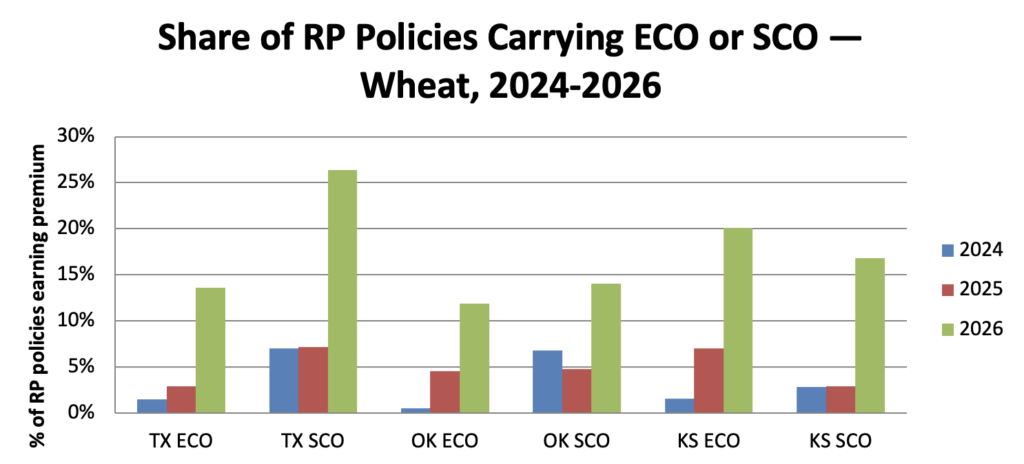
FIGURE 1 — Share of RP policies carrying ECO or SCO, wheat, 2024–2026
In Texas, the share of wheat RP policies earning premium carrying SCO went from 7.0% in 2024 to 26.3% in 2026. ECO went from 1.5% to 13.6%. Despite the increase, there is still room to grow. The national ECO adoption rate on wheat is 37% of RP acres while Texas is below 20%.
There’s good reason for the jump. Where a producer once covered 56 cents of every ECO premium dollar and 35 cents on SCO, that share is now 20 cents on both. That applies to every operation regardless of what your own premium comes out to.
The Honest Caveats
We understand that crop insurance can be a big-ticket item in the budget. Also, area coverage is not individual farm coverage, which changes the mental gymnastics a bit.
That said, Texas farmers have only to look to 2026 for an example of what widespread crop disaster looks like. RMA data shows the 2026 loss ratio on Texas wheat Revenue Protection at 1.92, with roughly 72% of policies earning premium receiving an indemnity. It’s a stark reminder that all risk management options on the table deserve fair evaluation.
How We Got Here
In closing, it’s worth mentioning that these subsidy rates didn’t appear on their own. Making crop insurance more affordable has been a stated priority of farm organizations for years.
One thing worth understanding about how changes get accomplished: Texas law prohibits check-off dollars from being used to influence legislation. The advocacy that helped produce these results, and many other improvements to farm policy, is funded by Association membership dues paid by farmers across Texas who made a choice to fund a seat at the table.
If you take a look at SCO or ECO this fall and the increased subsidy makes it pencil, we consider that a win worth investing in.