Is Beardless Wheat Right for You?
Find out if your management system could benefit from a beardless variety here, and read the full article for more details.
This Extension Education Tip is provided by Dr. Jourdan Bell, Texas A&M AgriLife Extension Agronomist, Amarillo, (806)-341-8925, jourdan.bell@ag.tamu.edu.
Beardless Wheat
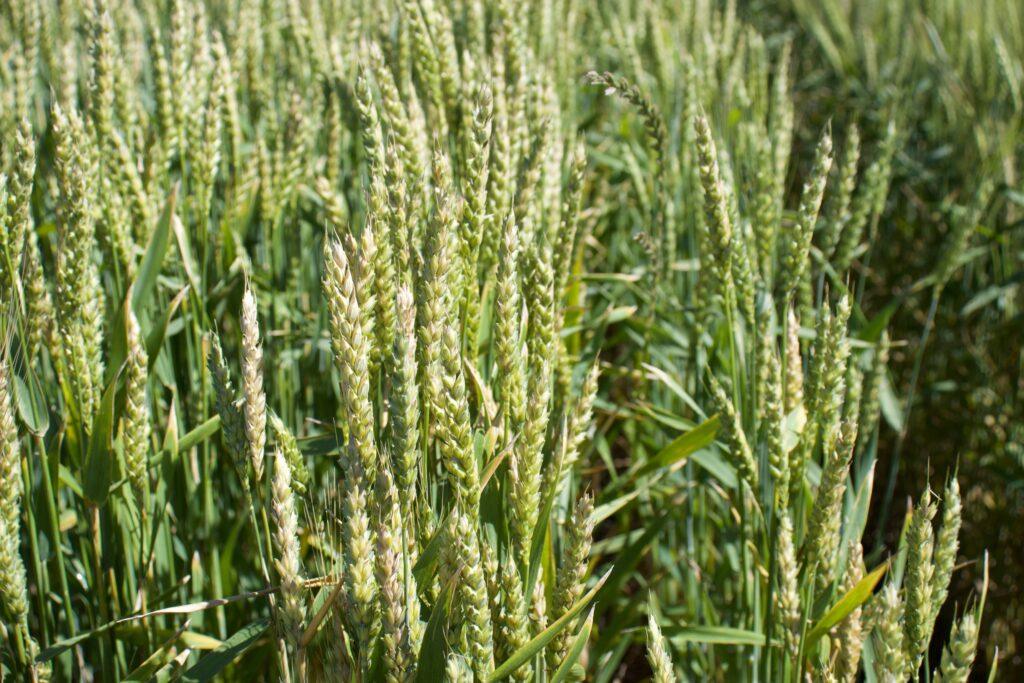
Beardless (awnless) wheat is a popular forage option because varieties have no awns. Beardless varieties are often desired as a forage, because stiff, sharp awns can cause mouth sores and reduce forage intake. However, reduced palatability is a function of the growth stage when grazing or harvested. Some varieties with a shorter awn are marketed as “awnletted.”
 Forage Types
Graze Out Wheat
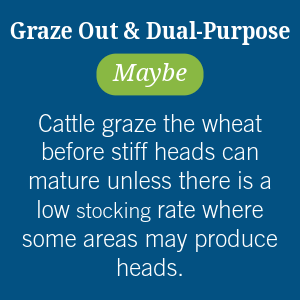
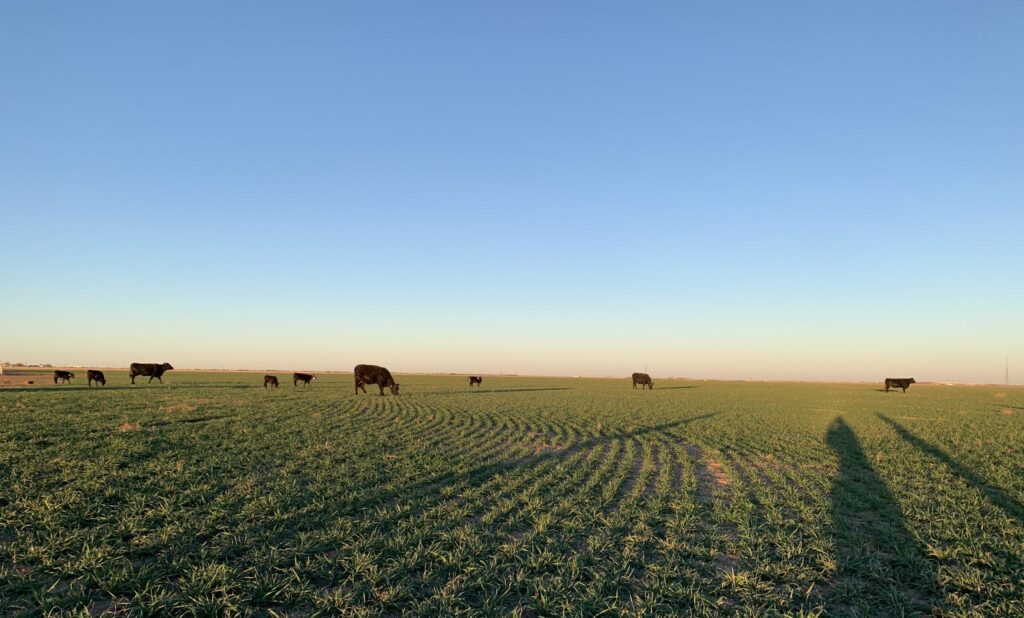
If the wheat will be grazed out, the wheat will rarely produce grain heads because cattle grazing past first hollow stem consume developing heads. Because there are few heads, if any, that reach maturity, either bearded or beardless wheat are fine for graze-out systems. Stocking rates can impact percentage of wheat heading out. At low stocking rates, there may be patches that continue to produce heads, which may drive some producers to select beardless varieties for graze out systems.
 Dual Purpose Wheat
A system where a single wheat crop provides both grazing for livestock and grain production. In dual purpose systems, cattle are stocked during vegetative stages and ideally removed before the crop transitions to reproductive development to minimize grain yield reductions. Since the wheat has not headed during the grazing window, beardless wheat varieties are not necessary for dual purpose systems.
Hay
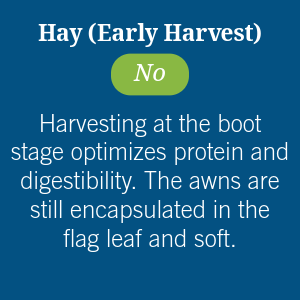
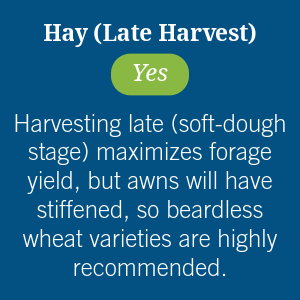
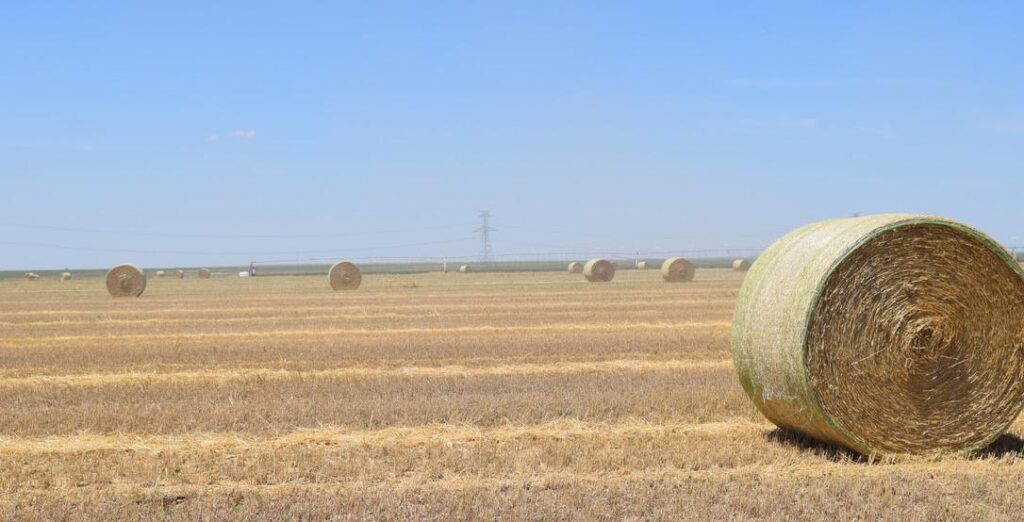
If harvesting for hay, producers must consider nutritive value or yield potential. It is recommended to harvest at the boot stage to optimize protein and forage digestibility, but forage yield will increase as the plant matures. At boot stage, awns are encapsulated in the flag leaf and still soft, so there is no concern for reduced palatability. Harvesting at soft-dough when beards have stiffened will maximize yield, and in this scenario, a beardless variety is the recommended option.
 Green Chop
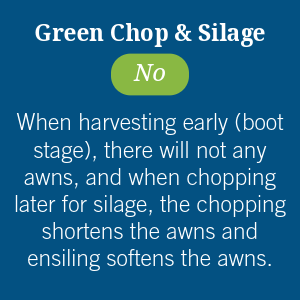
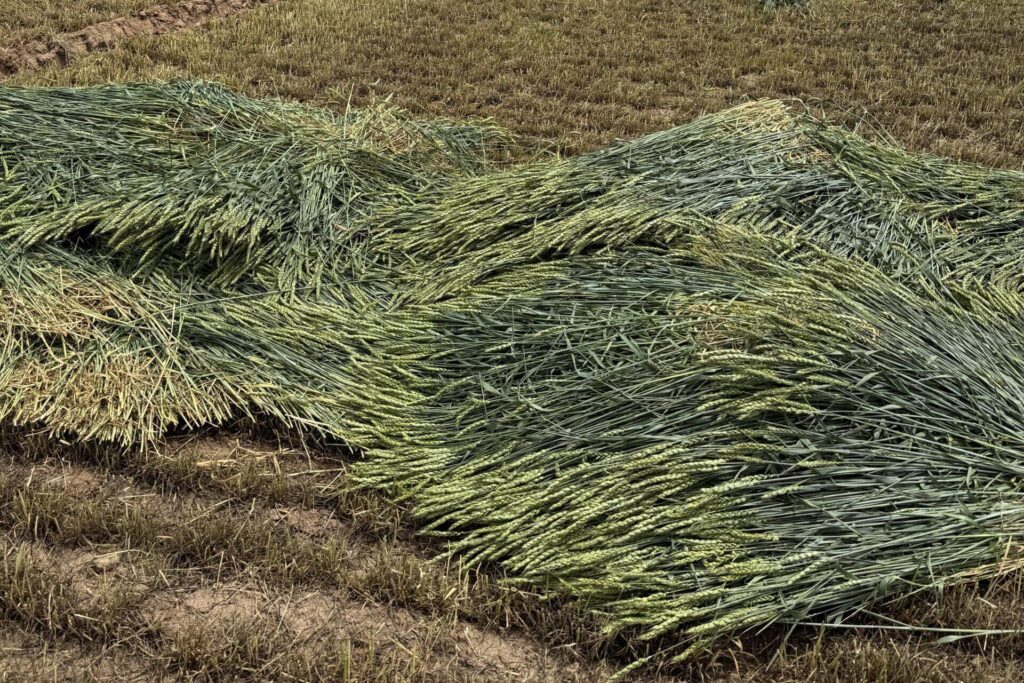
If harvesting for green chop, the forage is generally harvested in the boot stage. The forage is chopped but fed fresh rather than ensiled. Because of the physiological stage, there are rarely any awns that would negatively impact intake.
Silage
If the forage is harvested for silage (wheatlage), any issues with the awns are likely insignificant. Wheatlage harvested at a boot to milk stage must be wilted to achieve the appropriate moisture content for packing. Awns will have stiffened by the milk or soft-dough stage but will be chopped along with the rest of the forage. The ideal chop length is 0.5- to 0.75-inches, and if ensiled, the awns will soften during the ensiling process.
 Beardless Wheat and Grain Yield
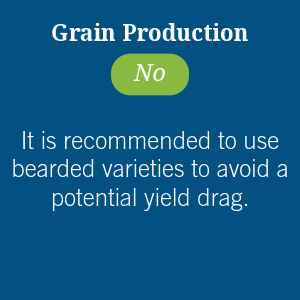
Years of Texas A&M AgriLife grain yield data consistently shows that as a group beardless wheat grain varieties yield 6 to 11% less grain yield vs. all other bearded grain varieties in the same trials. When beardless wheat yields are compared to our annual “Pick” grain varieties, the yield reduction is greater, about 8 to 15%. A bearded variety is recommended if grain harvest is the goal.
For more information, refer to The Trap of Beardless Wheat and Forage Quality and Beardless wheat for Texas Forage Systems.