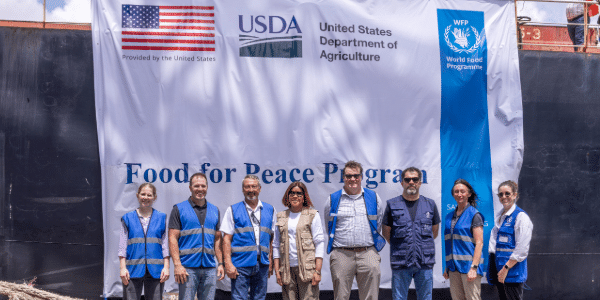
More than 70 years ago, farmers envisioned a way to put America’s agricultural abundance to work fighting hunger around the world. Their idea helped lay the foundation for the Food for Peace program. Since then, U.S. wheat has played a vital role in international food assistance, accounting for approximately half of bulk in-kind food aid and an estimated 36.7 million bushels of U.S. wheat annually.
That legacy was on full display as Hard Red Winter wheat made its way from U.S. fields to the TEMCO export elevator in the Port of Houston for final destination in the Port of Mombasa in Kenya, where 1.7 million bushels of U.S. Hard Red Winter wheat and rice were unloaded from the Liberty Grace. From Mombasa, the commodities were entrusted to the United Nations World Food Programme (WFP) for distribution to people facing food insecurity across the region.
For Idaho farmer Jamie Kress, president of the National Association of Wheat Growers (NAWG), and Kansas farmer Gary Millershaski, chairman of U.S. Wheat Associates (USW), witnessing the delivery brought the purpose of food assistance into focus.
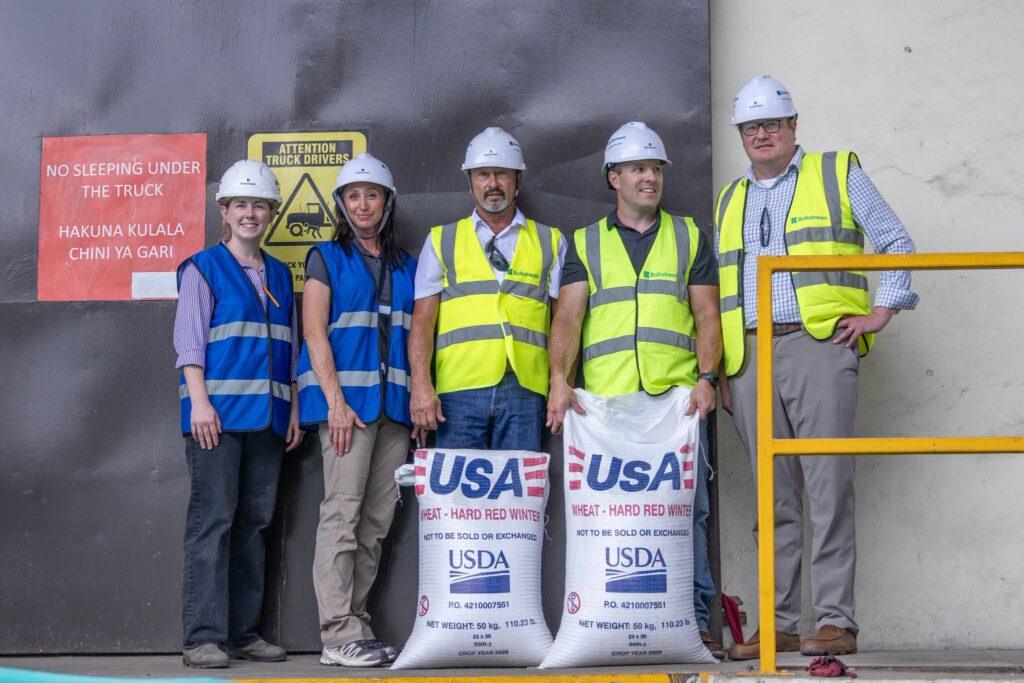
Photo courtesy of U.S. Wheat Associates
From American Harvests to Families in Need
Following its arrival, the wheat was bagged in 110 pound sacks, emblazoned with USA on the front, and prepared for distribution across the region, including Kakuma Refugee Camp. Kress and Millershaski visited the camp as part of a U.S. Department of Agriculture (USDA) Foreign Agricultural Service mission to see firsthand how American-grown commodities support food assistance efforts.
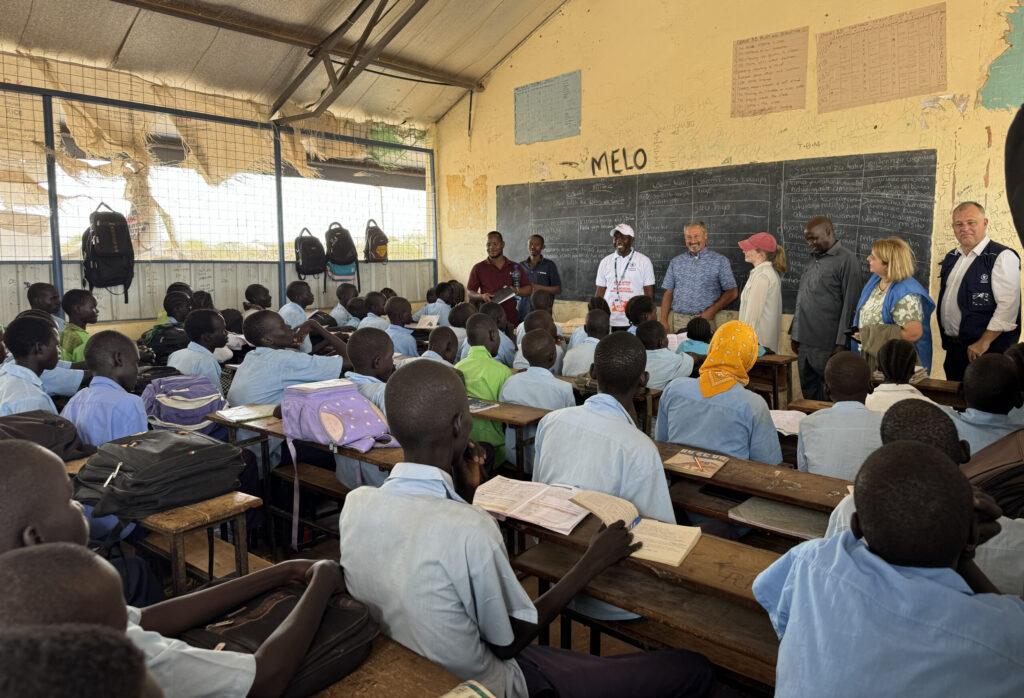
Photo courtesy of U.S. Wheat Associates
A refuge for people displaced by conflict and food insecurity across East Africa, Kakuma currently houses approximately 300,000 refugees, with its population growing by an estimated 400 people each week. The 128,000 bushels of wheat allocated to Kakuma will help support the camp’s food supply as it prepares for potential El Niño-related flooding and continues to accommodate new arrivals.
“From the hands of American farmers who grow this wheat to the hands of families receiving it in Kakuma, this contribution creates a tangible connection across continents,” remarked Betty Kaw, WFP country director in Kenya. “WFP connects the dots, bringing together the logistics and partnerships needed to deliver this wheat to families who depend on it. We thank American farmers for helping provide the next meals to refugees in Kenya.”
For U.S. and Texas wheat farmers, that connection demonstrates how their work extends beyond domestic markets to help address food insecurity around the world.
A Return to Food for Peace’s Roots
The Liberty Grace shipment was the second bulk vessel to arrive in Africa under the current administration, signaling a renewed emphasis on delivering U.S.-grown commodities through international food assistance programs. In recent years, Food for Peace shifted away from purchasing bulk commodities in the United States, relying instead on purchases from foreign suppliers to address hunger challenges worldwide. That approach limited opportunities for American-grown commodities to reach people through the program.
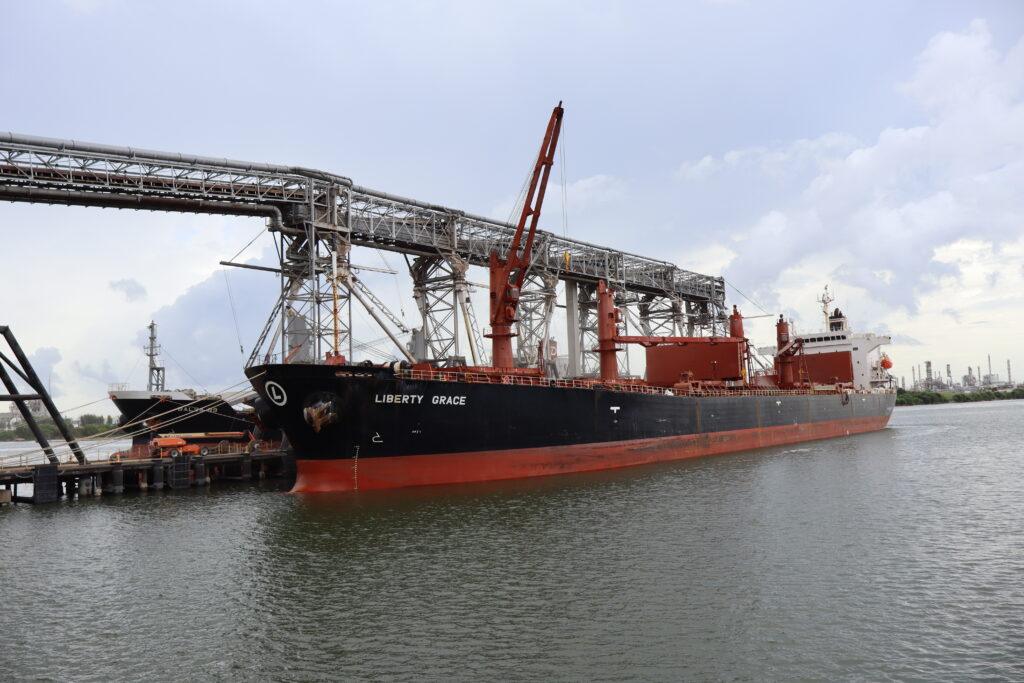
Photo courtesy of U.S. Wheat Associates
After consistent and considerable efforts by agricultural organizations, including USW, NAWG and member states like the Texas Wheat Producers Board and Association, the U.S. Department of State and USDA announced an interagency agreement in January 2026, allowing USDA to operate the Food for Peace program. Under the agreement, all commodities must be grown in the U.S., which creates sustainable market demand for U.S. wheat and high-quality, reliable food sources for hunger-stricken populations around the world.
“Seeing U.S.-grown wheat back in these programs is incredibly exciting for me,” Kress reflected. “In the past, it was heart-wrenching to be thinking about our harvest in the United States—knowing we have such an abundance of food—while mothers on the other side of the world were struggling to provide even the most basic amount of food for their children. To see that wheat being unloaded at the port in Kenya and know it will help feed hungry families made this trip especially meaningful.”
The transition, however, is not yet permanently codified in law. Establishing USDA’s authority to administer Food for Peace remains one of the Texas Wheat Producers Association’s key legislative priorities in the pending farm bill.
Securing the Future of U.S. Food Assistance
While permanent authorization remains a priority, USDA has continued to advance international food assistance efforts. In October, the department announced $825 million in funding for international food assistance through the Food for Progress, Food for Peace and McGovern-Dole Food for Education programs. These investments support communities facing food insecurity while creating opportunities for U.S. agricultural commodities to reach international markets.
The Liberty Grace shipment represents more than a delivery of wheat. It is a powerful symbol of U.S. wheat farmers doing what they do best—delivering high-quality nutrition at home and worldwide. As policymakers consider the future of Food for Peace, the shipment serves as a reminder of what is possible when agricultural production and humanitarian assistance work together. For wheat farmers, a strong and stable food assistance program offers a way to support families facing hunger while boosting demand for American-grown wheat.