
This Extension Education Tip was developed in collaboration with Blayne Reed, Texas A&M AgriLife Program Specialist – IPM, Plainview, (806) 292-1496, blayne.reed@ag.tamu.edu and Tyler Mays, Texas A&M AgriLife Extension Program Specialist-IPM, Hillsboro, (254) 582-4022, tyler.mays@ag.tamu.edu.
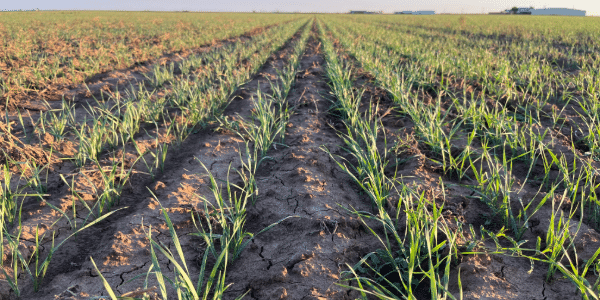
Early fall scouting helps protect wheat stands, identify damaging insects and weeds and reduces the risk of problems carrying into spring. AgriLife experts recommend scouting after emergence and continue through tillering, especially before wheat enters winter dormancy.
Break the Green Bridge
Volunteer wheat, summer grasses, weeds and pasture can support insects and disease transmission between crops. Reed recommends controlling volunteer wheat and other plant life at least two weeks before planting, when possible. Learn more about controlling volunteer wheat here.
The green bridge can be broke by using herbicide or tillage to kill actively growing weeds in the field, but the best method is to avoid planting until after a killing freeze. However, early planting may be necessary for grazing or to take advantage of available moisture. In those situations, consider insecticidal seed treatments and increase scouting frequency.
Know the Growth Stage
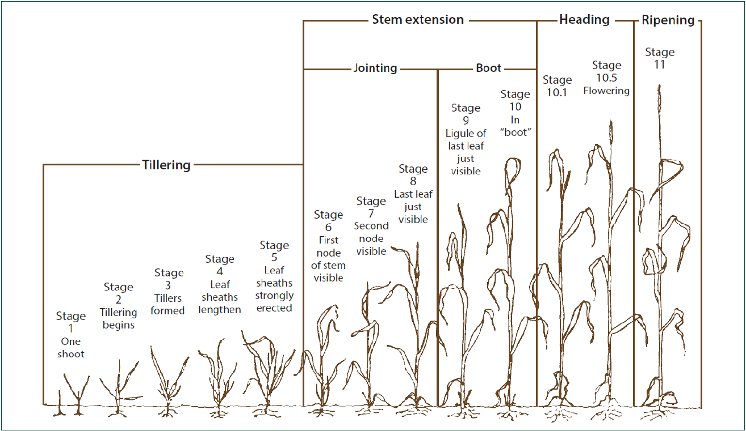
Use the Feekes scale to track crop development. In fall, focus scouting on early growth:
- Feekes 1: Seedling emergence
- Feekes 2: Tillering begins
- Feekes 3: Tillers have formed
Courtesy of Blayne Reed
Stand loss, insect feeding, weeds and disease-vector concerns can have lasting effects in these early stages.
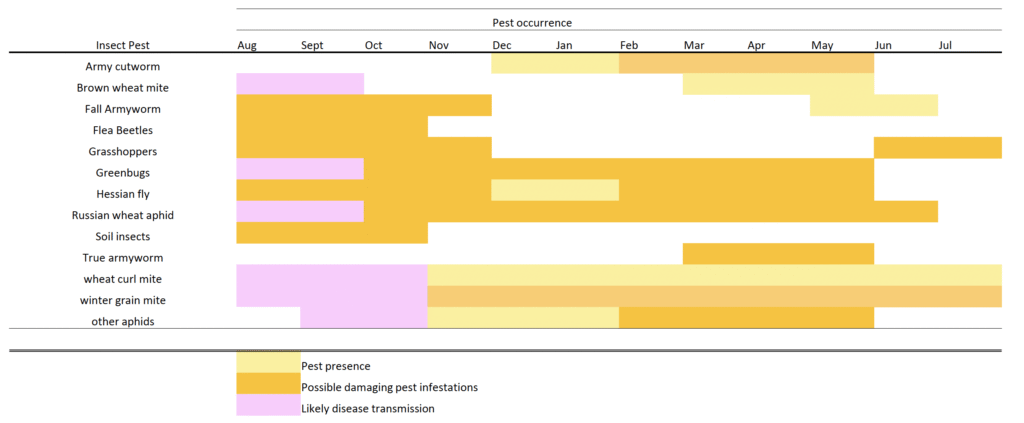
What to Look For
Courtesy of Blayne Reed
When scouting, inspect several plants throughout the field, not just the edge.
- Stand Establishment
- Identify patterns. Look for skipped rows or blank spots, thin areas or plants that are dying soon after emergence. Grubs can feed on roots and take out stands, while wireworms can prevent emergence. Hessian fly can cause death of tillers and/or entire seedlings.
- Disease Transmission
- Disease occurs when piercing or sucking pests feed in the fall prior to a freeze. If not properly managed, aphids and mites can cross the green bridge, which can lead to infection.
- Root Injury
- Pull plants from damaged areas or the edge of damaged areas and inspect roots for pruning, feeding injury, grubs or wireworms. Healthy roots should be firm, white to light-colored and well developed.
- Foliar Feeding
- Watch for clipped leaves, ragged foliage, leaf chewing or defoliation from fall armyworms and other pests.
- Weeds and Uneven Crop Growth
- Note patches of weeds, yellowing, stunting or uneven growth. Consider irrigation patterns, soil variation, planting depth, compaction and previous herbicide applications.
How to Scout
Walk fields as needed when wheat is emerging and at least bi-weekly for the extent of the fall, especially if troubling patterns appear. Most pests at this early stage prefer warm weather. The heat of the day is favorable to scout for insects or problems before they become serious. Avoid relying on drive-by observations only.
Scout random and multiple areas of each field to eliminate outlier variables, such as:
- Field edges effects
- Low spots and high ground
- Areas near volunteer wheat, pasture or grassy weeds
- Places with different soil types, irrigation patterns or planting conditions
While it’s recommended to scout during the warmest part of the day, some insects feed primarily at dusk or overnight. A double check at this time can catch the culprit in the act for easy identification.
When scouting, have the tools readily available for any scouting need. Be prepared to make detailed observations and to utilize standard sampling methods. Have a shovel (pulling and evaluating roots), pocketknife (plant dissection), hand lens (magnification for pest or disease ID), collection bags (for lab sampling) and a dark colored clipboard, drop cloth or vacuum sampler (rapid sampling of high numbers of plants) handy.
Proactive Scouting Can Have Lasting Impact
Preventative scouting and management in the fall can lead to payoffs in the spring. By taking the time to explore wheat fields for signs of pests, damage or stress, farmers can reduce the need for more extreme interventions later in the season.
Wheat scouting should intensify around Feekes Stage 6 in late winter to early spring. Stay tuned for more resources related to scouting, pest and disease identification and agronomic management, and reach out to Blayne Reed at blayne.reed@ag.tamu.edu or (806) 291-5267, Tyler Mays at tyler.mays@ag.tamu.edu or (254) 582,4022 or your local Extension agent or IPM specialist with questions about your wheat crop.