Nathan Melson is a STEAM/CTE teacher at Dodd City High School. Nathan was an early adopter of the Fields of Learning resources and is actively involved in other educational outreach programs, including his service as a Farm Bureau Agriculture in the Classroom Educator Ambassador. Read the article to learn how he implemented the Fields of Learning lessons into his STEAM program, and for more information, contact Nathan at nathan.melson@doddcityisd.net.
As a small family farm agriculture producer, as well as a high school STEAM/CTE teacher living in Northeast Texas, I’ve always been interested in connecting my students to agriculture. Understanding agriculture on some level is important for our next generation of Americans.
My wife and I have operated a small beef cattle and hay production operation for almost 20 years, utilizing low-input production practices and native tall grass prairie species when possible. Farming has been a part of my life since I was four or five years old, sitting on my Papaw’s lap guiding the steering wheel on his IH 966 cab tractor while we plowed and planted his wheat and Sudan hay fields.
Today, I teach 75 to 90 students each year at Dodd City High School, instructing them in CTE and STEAM courses and coaching robotics teams. Dodd City ISD is a small, rural, Title I school district in Northeast Texas, but we believe in offering innovative experiential learning courses for our students, ranging from welding and metal fabrication, floral design, robotics, and scientific research and design.
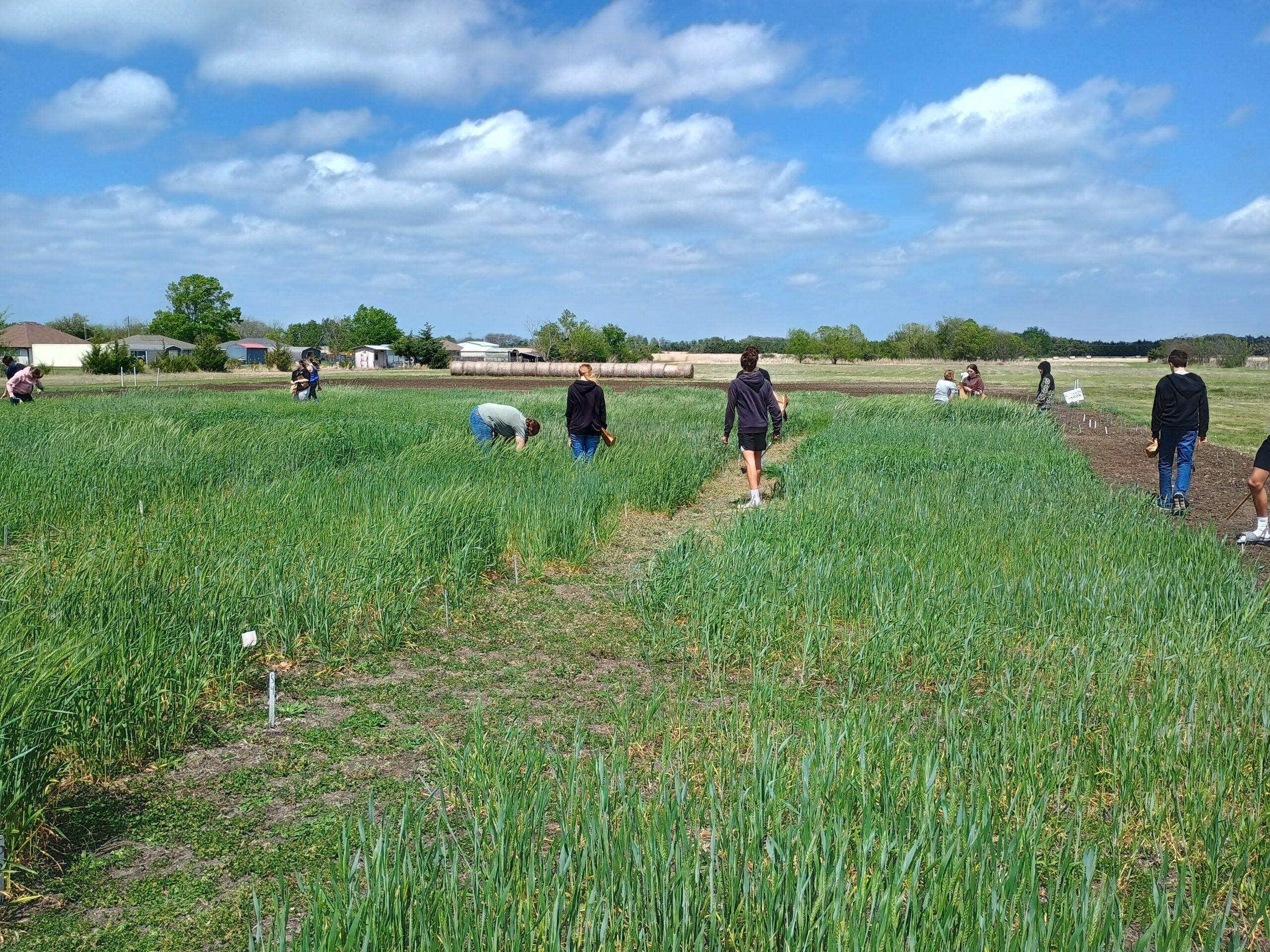
During the 2024-2025 school year, I encouraged our district to collaborate with Texas A&M AgriLife Research on a student-led research project. This project focused on forage research and plant breeding for livestock and hay production, which is a vital part of agriculture in the area. The research project included 48 small-grain research test plots. After the success of that first year, we, in collaboration with Texas A&M AgriLife plant breeders, decided to expand the project to include a student field teaching garden, along with 150+ forage research plots for experimental and released small grains breeding lines. I have also worked to develop a lab experience that includes our “Field to Bread” bread baking lab. We continue to grow and expand the class and project each school year, giving our students at a small, rural school the opportunity to participate in real-world agricultural field-plot research and food production.
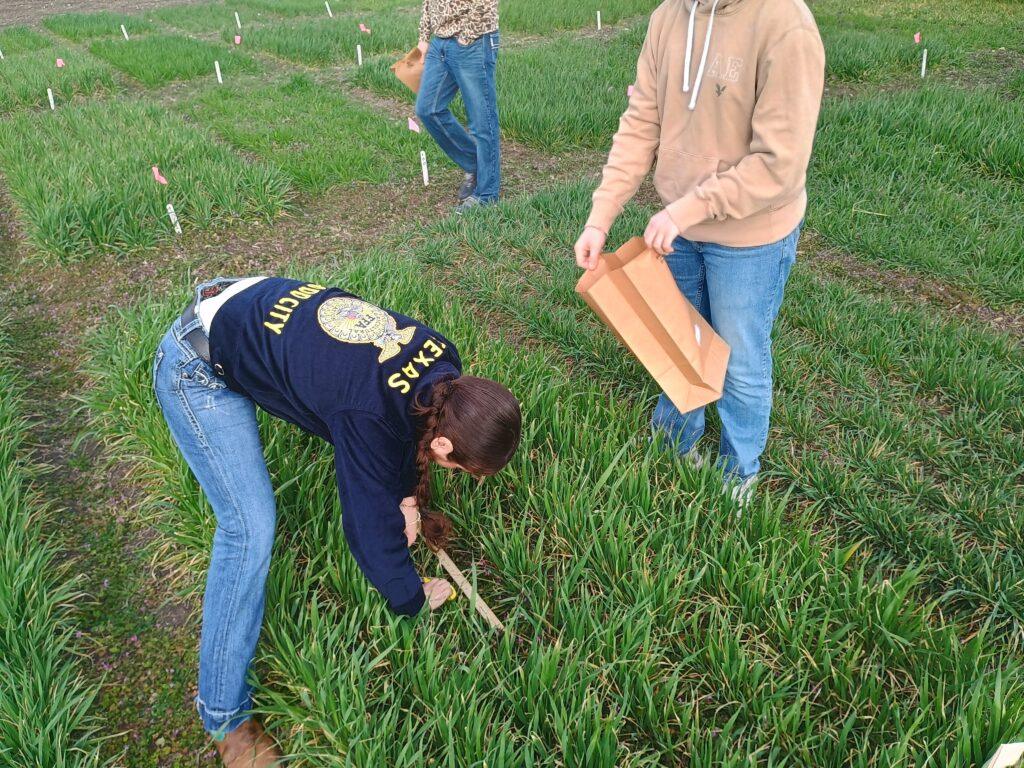
Dodd City students taking forage yield samples. Photo courtesy of Nathan Melson.
This “Field to Bread” lab experience and Field to Table garden continues to provide experiential learning through agricultural research and food production for our high school science classes, while exposing other students in our district to the real-world implications of growing food. The majority of high school students today, even in rural areas, are at least one generation removed from farms and farming for the production of food, fiber and fuel.
In our “Field to Bread” lessons, our students hand-harvest different varieties of wheat, oats, barley and triticale from the forage plots in the late spring each year once the forage trial has concluded. Then the harvested grain is threshed and cleaned by our partners at Texas A&M AgriLife Research at the Commerce field lab location who bring the cleaned and threshed grains back to be milled by our students during the following school year.
This allows the students taking this course to experience the science and art of bread making in countertop bread machines and experience “Field to Bread” over the entire growing season. For the 25-26 school year, A&M AgriLife donated some grains they harvested during the 2025 harvest, and we started milling and baking bread in donated bread machines and were able to secure a grant for a tabletop grain mill. These courses are ongoing each school year, giving students the opportunity to participate in real-world agricultural field-plot research and food production and potentially develop projects for FFA agriscience fairs.
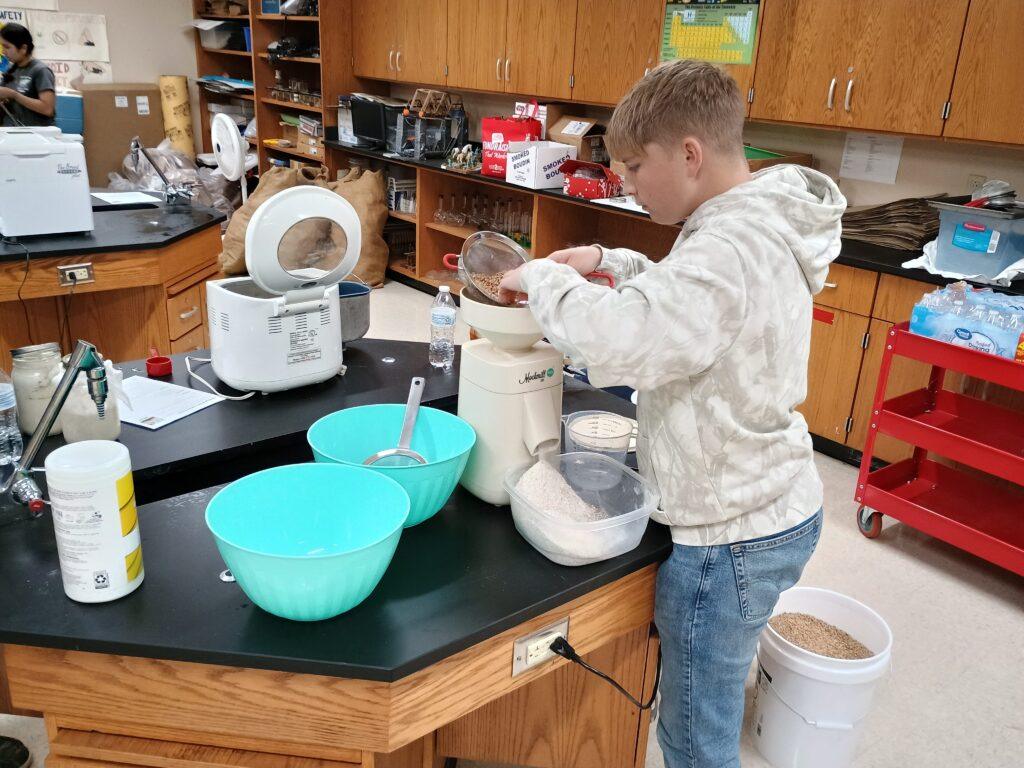
Dodd City student milling flour. Photo courtesy of Nathan Melson.
I have been working as a Fields of Learning Champion to test Texas Wheat’s new curriculum in a school setting. I’m proud to say that I have been pretty impressed with the units of the curriculum so far, including the learning outcomes that I’m seeing with my scientific research & design class that focuses on agronomy, soil science, plant science, food science, and crop science. The curriculum’s coverage of wheat anatomy, crop physiology, wheat production and processing, and uses in food works great for teaching plant biology, biochemistry, agricultural science, and even economic concepts.
I’m looking forward to using the curriculum with my new crop of students this school year. In fact, I even went on the road as a Fields of Learning Champion this summer to help promote the curriculum at the National Agriculture in the Classroom Annual Conference sponsored by the American Farm Bureau in Providence, Rhode Island and funded by the Texas Farm Bureau Agriculture in the Classroom program. I was able to present the curriculum to many teachers from across the country, and based on the feedback provided on my presentation, several of them plan to use some of the lessons in their classrooms. The Texas Wheat Producers Board is doing some amazing things. At Dodd City ISD, we are proud that our students have been given the opportunity to be a small part of this collaboration and get a chance to have a direct impact on the “real world.”
To learn more about the Fields of Learning program and download the lessons, click the button below:
Explore the Curriculum